For decades, public universities in Nigeria have faced numerous challenges, including inadequate infrastructure, unstable academic calendars, and funding constraints. However, the administration of Governor Sheriff Oborevwori in Delta State is working to change this narrative. The governor's latest interventions in state-owned tertiary institutions aim to address these issues and position Delta as a major education hub. This approach combines infrastructure development, staff welfare, academic stability, and institutional governance.
The student population in Delta's state-owned universities has doubled from 50,000 in 2023 to over 100,000 in 2026, reflecting growing demand for tertiary education. Rather than viewing this expansion as a burden, the Oborevwori administration sees it as an opportunity to reposition Delta's education sector. To address the challenges posed by this growth, the governor has approved the construction of two hostels for each of the nine state-owned tertiary institutions, with each hostel accommodating 480 students.
In addition to infrastructure development, the governor has announced a new salary structure for academic staff of the four state-owned universities, effective from August 2026. A new structure for non-academic staff and other tertiary institutions will take effect from September. This move aims to improve staff welfare, which is closely tied to academic stability. The governor noted that the academic calendars of Delta's state-owned universities have not been disrupted by staff strikes or student unrest for 17 years.
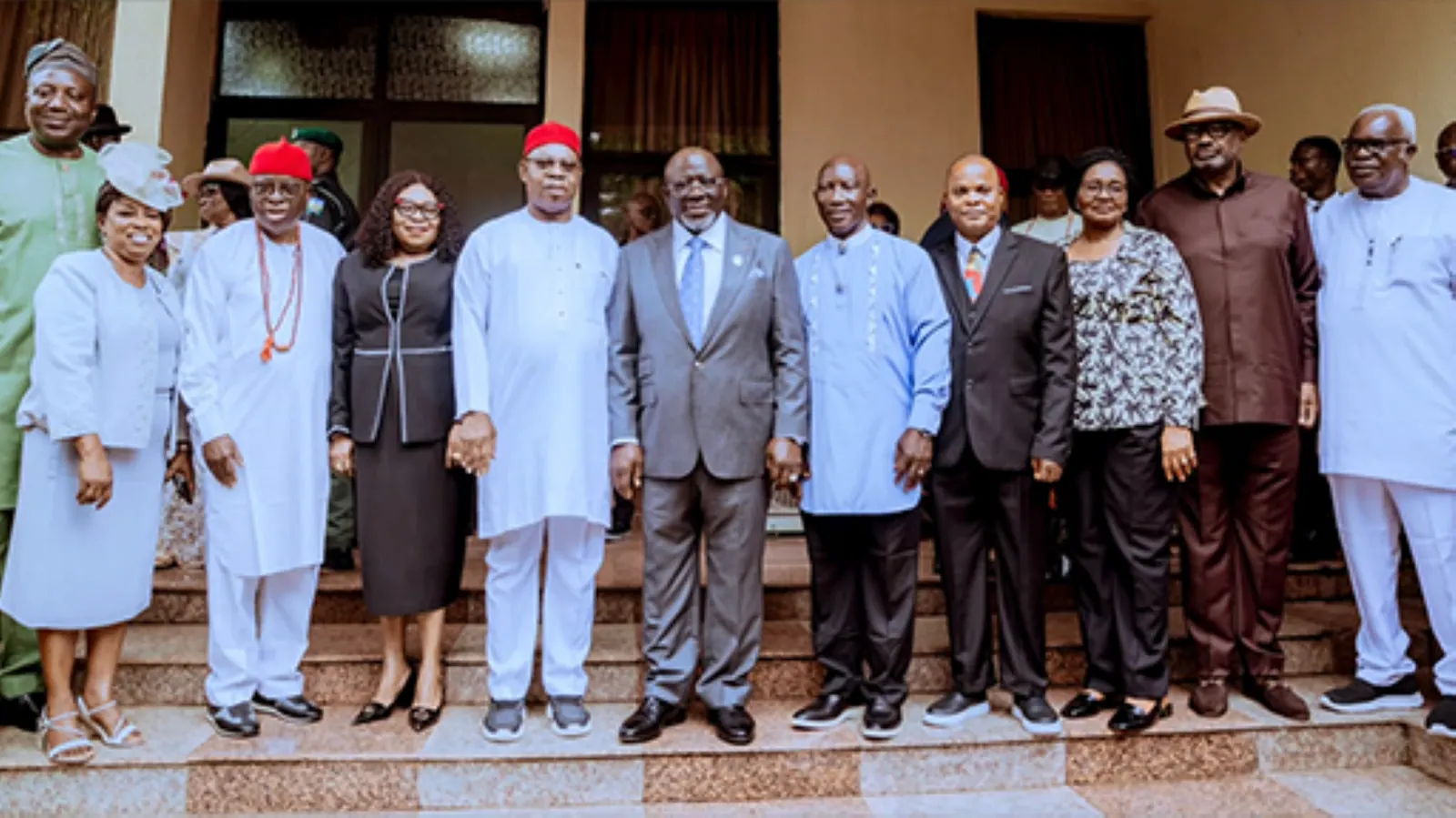
Delta's four state-owned universities now offer professional programs such as medicine, law, nursing, and accountancy, with nearly all courses oversubscribed. The governor has inaugurated new governing councils for the universities, which are expected to strengthen corporate governance, improve planning, and ensure accountability. The councils were selected based on their discipline, competence, resourcefulness, integrity, and ability to work as teams.
The governor has charged the new governing councils with addressing issues such as sexual harassment, examination malpractice, cultism, and corruption. He also emphasized the need for the universities to move towards financial independence, as government funding cannot sustainably carry the entire burden of university education. The institutions are encouraged to develop the capacity to attract private-sector investment, partnerships, and other legitimate revenue streams.
Chairman of the Governing Council of Dennis Osadebay University, Professor Patrick Muoboghare, has proposed a collaborative funding model involving the state government, universities, communities, local governments, and the State Legislature. This model would involve strategically investing contributions to generate sustainable returns, with proceeds shared among participating universities. The proposal introduces a new dimension to Delta's education conversation, shifting from expenditure to investment.
The quality of Delta's tertiary institutions will have implications beyond the campuses, influencing the employability of young Deltans, the ability of businesses to access skilled manpower, and the state's capacity to attract investment. Oborevwori's interventions, including hostels, improved staff remuneration, professional programs, and stronger university governance, represent a significant step towards achieving this goal. The emerging conversation around education financing and investment will be crucial in shaping the future of Delta's education sector.
Key points
- The governor has approved the construction of 18 new hostels for the nine state-owned tertiary institutions in Delta State.
- The academic calendars of Delta's state-owned universities have not been disrupted by staff strikes or student unrest for 17 years.
- The universities are encouraged to move towards financial independence by attracting private-sector investment and partnerships.