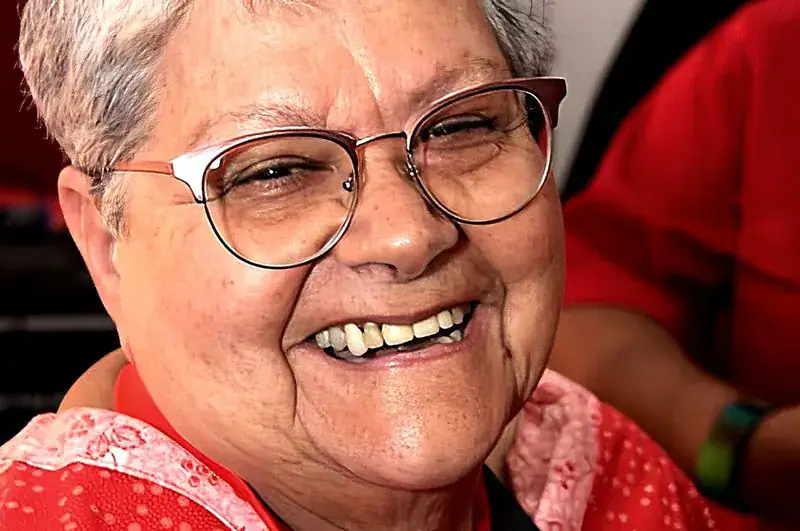
Sheila Barsel, who died in Cape Town on 31 October 2026 at the age of 82, was a stalwart of the anti-apartheid movement, dedicating her life to fighting oppression and advocating for social justice. Her life was marked by a series of small acts of defiance, which collectively made her a daunting presence to those in power. One such instance was when she was visited by Sergeant Spyker van Wyk, a notorious torturer, at her home in Cape Town.
Barsel's early life was shaped by her family's complex dynamics and her experiences with authority. Born Sheila Lapinsky in Johannesburg on 3 July 1944, she grew up in a conventional, lower-middle-class Orthodox Jewish family. Her parents were wary of associating with relatives who were communists and active in the liberation movement. However, her relatives, particularly her uncle Hymie and his wife, Esther Barsel, would become central to her understanding of political courage.
Esther Barsel, Sheila's aunt, was a committed left-wing activist who was arrested and tried in the Bram Fischer Treason Trial in 1964. Sheila later changed her surname from Lapinsky to Barsel in her aunt's memory. The security police's surveillance of the family was often farcical, with repeated confusion between Sheila and one of her cousins. This experience would shape Sheila's ability to challenge authority and develop her sense of justice.
Barsel's childhood was also complicated by her experience of early sexual abuse by her maternal grandfather, which had a profound impact on her sense of home and family interactions. Despite this, she found solace in her father's capacity for loving and connecting with people, which helped shape her own sense of justice. She attended Parktown Girls' High School and later enrolled at the University of the Witwatersrand, where she initially studied science but preferred student politics.
Barsel's activism led her to serve as chair of the local committee of the National Union of South African Students (Nusas) and later as its regional secretary in the then Transvaal. She began working full-time for Nusas in Cape Town, eventually becoming its secretary-general. Much of her work involved organising, gathering people, and speaking her mind, even under restrictions that curtailed her movements, work, and friendships.
Throughout her life, Barsel's political activism extended beyond the anti-apartheid struggle to include feminism, lesbian and gay organising, public health, trade unionism, and the South African Communist Party. Her contribution was often practical and behind the scenes, involving arranging scholarships, helping prisoners study, and maintaining networks. Her legacy is one of practical courage, political conviction, and defiance.
Barsel's message to young people was simple: "Fight." Not violence, but the stubborn, daily refusal to be shaped by what power expects of you. Her life serves as a testament to the power of individual activism and the importance of challenging authority. As a champion of social justice, Barsel's impact will continue to be felt for generations to come.
Key points
- Sheila Barsel died on 31 October 2026 at the age of 82, leaving a legacy of defiance and practical courage.
- Barsel's activism spanned multiple causes, including anti-apartheid, feminism, and LGBTQIA+ rights.
- Her message to young people was to "fight" against oppression, but through non-violent means.