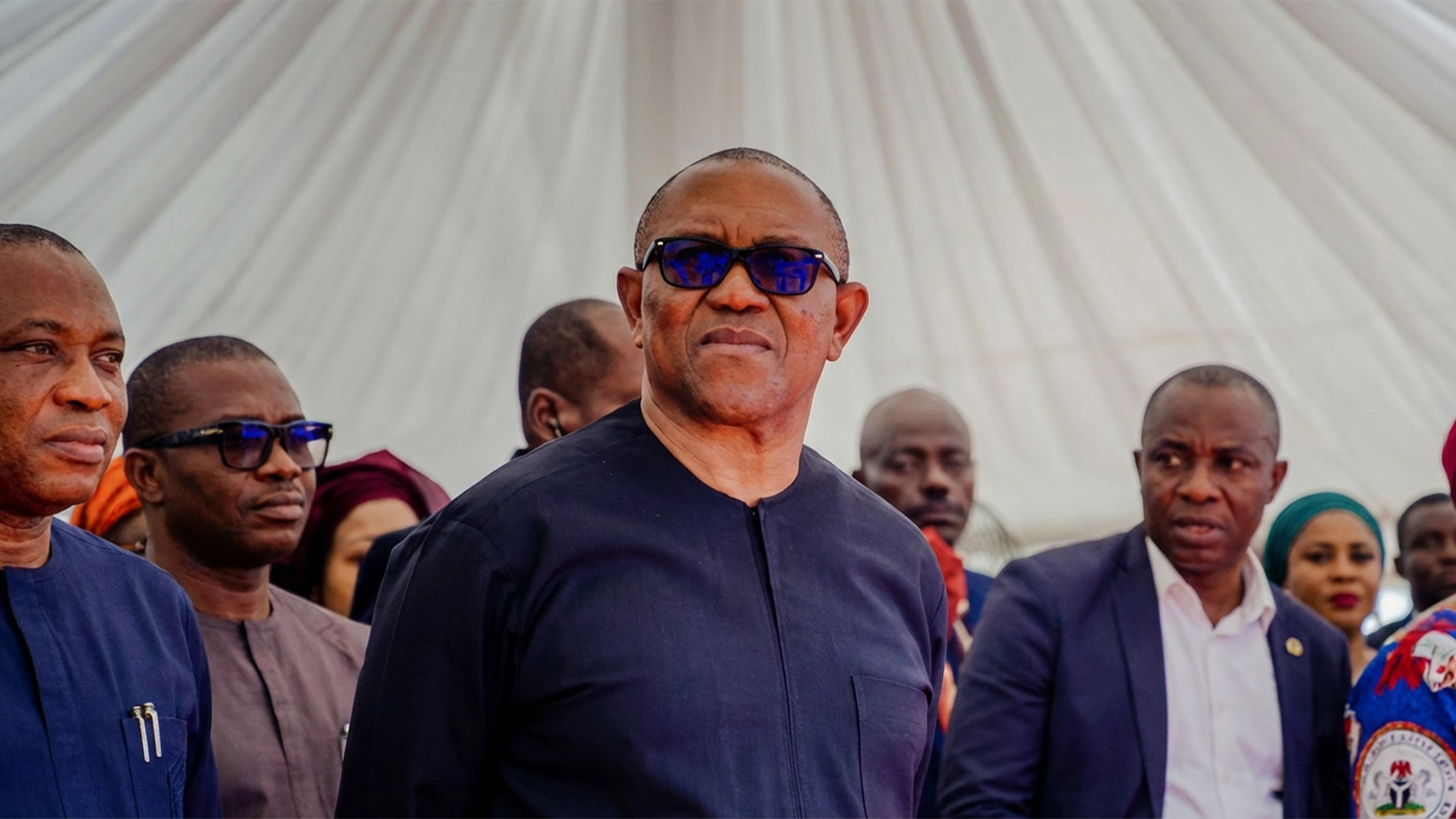
Peter Obi, the presidential candidate of the Nigeria Democratic Congress (NDC), is facing a significant challenge in his home region, the South-East, ahead of the 2027 general election. Despite having a strong grassroots following, Obi has not been able to secure endorsements from most of the region's governors and political leaders. In fact, at least five of the six governors in the region have publicly aligned with President Bola Tinubu, dealing a blow to Obi's chances.
The South-East region's political establishment is increasingly moving in favor of Tinubu, with several former governors and senior political figures joining his camp. Anambra Governor Chukwuma Soludo has openly backed Tinubu, arguing that it is futile for the region to deploy its votes behind Obi. Similarly, Minister of Works David Umahi has urged Ebonyi people not to vote for Obi, citing that the South-East cannot produce a president through its votes alone.
Enugu Governor Peter Mbah and Ebonyi Governor Francis Nwifuru have also aligned with the All Progressives Congress (APC), while Imo Governor Hope Uzodimma has led mobilisation efforts for Tinubu. In July, Uzodimma claimed that all five South-East governors had resolved to support Tinubu, although Abia Governor Alex Otti rejected the claim, insisting that he could speak only for himself.
Despite the growing support for Tinubu in the region, some stakeholders believe that Obi still has a chance to win the hearts of the electorate. Retired Catholic Archbishop of Abuja, John Onaiyekan, recently argued that South-East voters should be free to choose their preferred candidate rather than have governors make the decision for them.
The pro-Tinubu camp points to Federal Government projects, appointments, and infrastructure as evidence that cooperation with Abuja can produce tangible benefits. However, Obi's supporters argue that his grassroots movement and personal influence can translate into electoral victory. Chekwas Okorie, a founding National Chairman of APGA, described Obi as the most successful opposition politician in the country so far.
The argument for an Obi presidency is also framed in terms of regional justice, with some stakeholders arguing that the South-East deserves a chance to produce the president. National Chairman of the Igbo socio-political group, Njiko Igbo Forum (NIF), Okechukwu Obioha, said fairness demanded that the South-East produce the president, citing that the region had not controlled executive power at the federal level since independence.
As the 2027 general election approaches, it remains to be seen whether Obi's grassroots movement can overcome the growing support for Tinubu in the South-East. While some stakeholders believe that Obi's personal influence and the NDC's growing followership can translate into electoral victory, others argue that the region's political establishment speaks for the electorate.
Key points
- Peter Obi faces significant challenges in his home region, the South-East, as most governors and political leaders align with President Bola Tinubu.
- The South-East region's political establishment is increasingly moving in favor of Tinubu, dealing a blow to Obi's chances.
- Obi's supporters argue that his grassroots movement and personal influence can translate into electoral victory, despite the growing support for Tinubu.