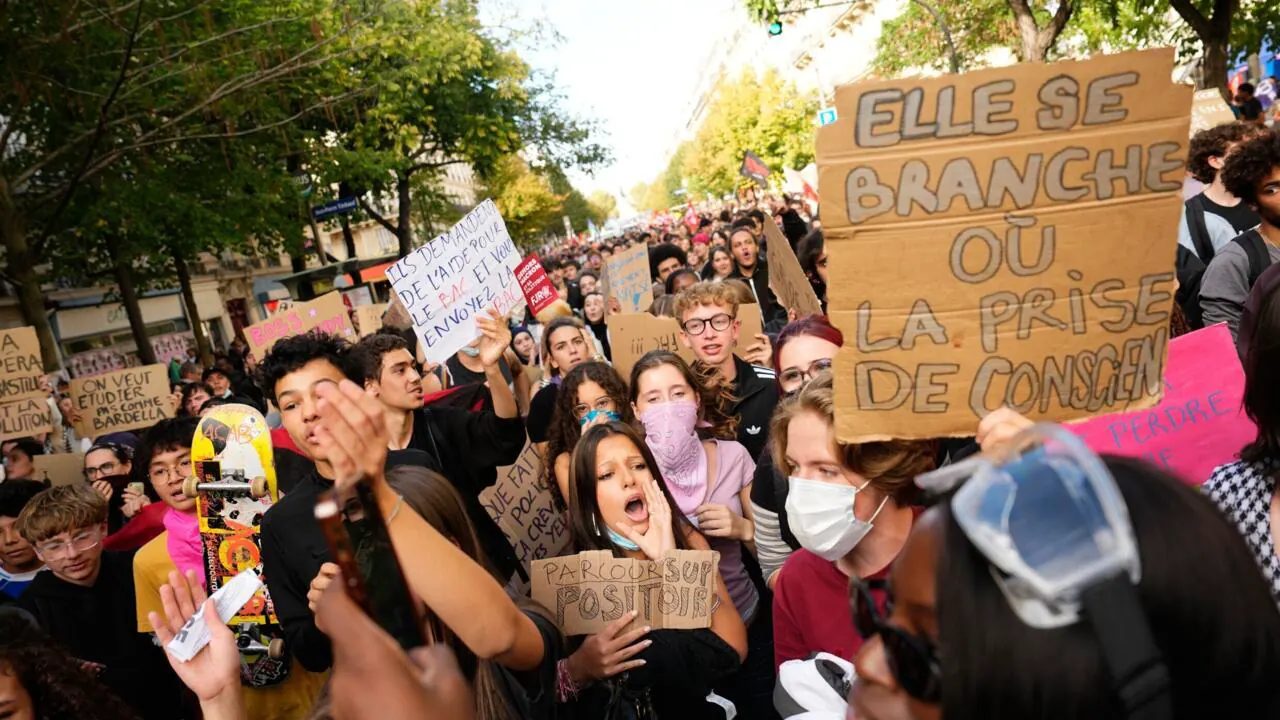
French Prime Minister Sébastien Lecornu has stated that there can be no tolerance for violence amidst widespread student protests over school conditions. The protests, which saw tens of thousands of demonstrators take to the streets across France, resulted in injuries to at least 215 students and 715 police officers. Lecornu condemned the violence, emphasizing that it has no place in a functioning democracy.
The protests, which student unions estimated drew around 450,000 participants nationwide, including 100,000 in Paris, were marked by clashes between riot police and students in several cities, including Rennes, Lyon, and Strasbourg. The Interior Ministry put the figure at 256,000 across France. Riot police used water cannons to disperse students in Rennes. The government reported that 891 out of 3,700 high schools had either suspended or partially cancelled lessons due to the protests.
During a question session in Parliament, Lecornu emphasized that high schools would clear their schedules to allow for democratic discussions about student grievances. He announced the suspension of classes to host a “period of internal democracy” with students. This move aims to ease tensions and provide a platform for students to express their concerns.
Lecornu accused the far-left party France Unbowed (LFI) of attempting to create chaos ahead of the 2027 presidential election. He defended the police against claims of excessive force, dismissing the term “police violence” as a false political directive. The Prime Minister highlighted an online consultation platform launched by Education Minister Edouard Geffray for students to express their concerns.
To further address the situation, Paris’s socialist mayor, Emmanuel Grégoire, announced that town halls would welcome students to gather and organize their movement democratically. University presidents are calling for a “national forum on youth” to acknowledge young people as vital contributors to public debate, especially as the country approaches the presidential election.
The protests are taking place in a politically charged atmosphere marked by rising costs and budget cuts affecting the youth. Two student unions are planning another day of action on Thursday. The government and local authorities are working to find a resolution to the situation, with a focus on promoting democratic engagement and addressing student concerns.
The student protests have brought attention to the challenges faced by young people in France, including concerns about school conditions, rising costs, and budget cuts. The government’s response, including the suspension of classes and online consultation platform, aims to provide a peaceful and democratic outlet for students to express their grievances and contribute to public debate.
Key points
- French Prime Minister Sébastien Lecornu condemns violence at student protests, vows democratic discussions.
- At least 215 students and 715 police officers injured in protests over school conditions.
- Government reports 891 high schools affected by protests, student unions estimate 450,000 participants nationwide.