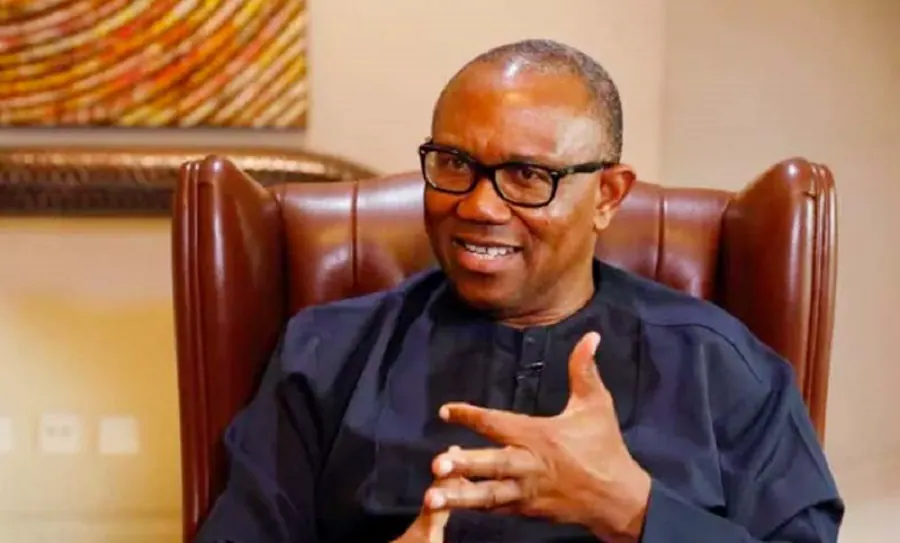
The crisis over control of the 2027 campaign machinery of the Nigeria Democratic Congress (NDC) deepened as presidential candidate Peter Obi backed the party leadership and rejected the 59-member campaign council unveiled by the Obi-Kwankwaso (OK) Movement. Obi, speaking on Arise Television, said the OK Movement, Obidient Movement, Kwankwasiyya and other platforms supporting his presidential bid were support groups and should not operate as parallel structures to the political party.
Obi's position directly contradicts the OK Movement's insistence that it is an independent political organisation entitled to establish and manage its own campaign structure. The OK Movement had unveiled a 59-member Presidential Campaign Council, which the NDC leadership and Obi have disowned. Obi added that any activity undertaken in the name of the joint Obi-Kwankwaso ticket should have the express approval of both candidates.
The NDC had earlier disowned the 59-member council, while National Leader Seriake Dickson warned support groups against assuming the functions of the party. Dickson had described the establishment of a separate presidential campaign council by a support group as "unheard of" and "nonsensical", insisting that support groups should concentrate on grassroots mobilisation rather than compete with the party for political space.
The OK Movement, however, has refused to retreat, reaffirming that its campaign council remained "valid and operational" despite the positions expressed by the NDC leadership and Obi. In a statement by its National Director-General, John Ozyl Ughulu, the group maintained that its independent status meant its internal structures did not require the approval of NDC officials.
The OK Movement said its members were drawn from different political parties but were united by their support for Obi and Kwankwaso. It also rejected the suggestion that its campaign council amounted to an attempt to supplant the NDC. The group argued that neither the NDC nor its presidential candidate had exclusive authority over the internal organisation of an independent movement.
The dispute has consequently shifted from a disagreement over a campaign council to a broader contest over how independent political movements supporting the NDC ticket will relate to the party as the 2027 election campaign takes shape. The OK Movement said it was prepared to work with the NDC but would not accept what it described as attempts to subordinate or dismantle its structures.
The latest development places Obi himself squarely on the side of the NDC leadership in the dispute, after the presidential candidate explicitly disowned the campaign council and affirmed the party's authority over the formal campaign structure. The OK Movement has maintained that its support for the NDC ticket and its independent organisational identity can coexist.
Key points
- Peter Obi has backed the NDC leadership and rejected the OK Movement's 59-member campaign council.
- The OK Movement has refused to retreat, reaffirming that its campaign council remains valid and operational.
- The dispute has shifted to a broader contest over how independent political movements will relate to the NDC as the 2027 election campaign takes shape.