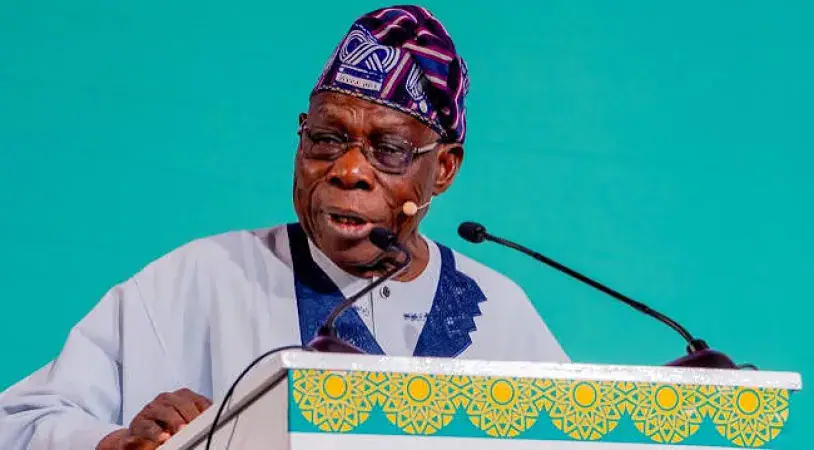
Former President Olusegun Obasanjo has shared his experience of rejecting an offer of political asylum from the United States and subsequently being arrested and imprisoned under the regime of General Sani Abacha. In a video published by BBC News Pidgin, Obasanjo recounted that the American government offered him asylum after receiving information that he would be arrested if he returned to Nigeria. However, he turned down the offer, insisting that he had committed no offence to warrant seeking refuge outside the country.
Obasanjo's decision to reject the asylum offer was based on his confidence that he had done nothing wrong. He had become the military Head of State on February 13, 1976, following the assassination of General Murtala Muhammed, and handed over power to civilian President Shehu Shagari on October 1, 1979. After leaving office, Obasanjo went into farming, but his life took a dramatic turn when he was arrested and imprisoned under Abacha's regime.
According to Obasanjo, the American ambassador in Nigeria called him and informed him of the asylum offer, but he declined, saying he had done nothing to warrant seeking refuge. When he returned to Nigeria, his passport was seized, and he was later invited for questioning by an Assistant Inspector-General of Police (AIG). Obasanjo rejected the invitation, but eventually drove himself to the police station, where he was informed that he had been instructed to arrest him.
Obasanjo's imprisonment was a result of Abacha's decision to liquidate him, which he only later found out. He was moved from confinement to house arrest following an intervention by former United States President Jimmy Carter, who appealed to Abacha on his behalf. However, his relief was short-lived, as security operatives arrived at his residence at about 1am and took him away to prison.
Obasanjo's imprisonment under Abacha's regime lasted until the former military ruler's death on June 8, 1998. After his release, Obasanjo went on to win the 1999 presidential election, becoming the first elected president of the Fourth Republic. He served two terms in office, leaving power on May 29, 2007. Obasanjo's experience under Abacha's regime is a significant part of Nigeria's history, and his story serves as a testament to the challenges faced by those who dare to challenge authoritarian rule.
Abacha's regime was marked by human rights abuses and authoritarianism, and Obasanjo's imprisonment was just one of many instances of the regime's brutality. Despite the challenges he faced, Obasanjo has continued to play a prominent role in Nigerian politics, and his story serves as an inspiration to those who value democracy and human rights.
Obasanjo's revelation about his experience under Abacha's regime is a reminder of the importance of protecting human rights and promoting democracy. His story highlights the need for leaders to prioritize the welfare and safety of their citizens, and to respect the rule of law. As Nigeria continues to navigate its complex history, Obasanjo's experience serves as a significant reminder of the challenges faced by those who fought for democracy and human rights.
Key points
- Obasanjo rejected US asylum offer, citing lack of wrongdoing
- He was imprisoned under Abacha's regime, but released after Abacha's death
- Obasanjo later became the first elected president of Nigeria's Fourth Republic