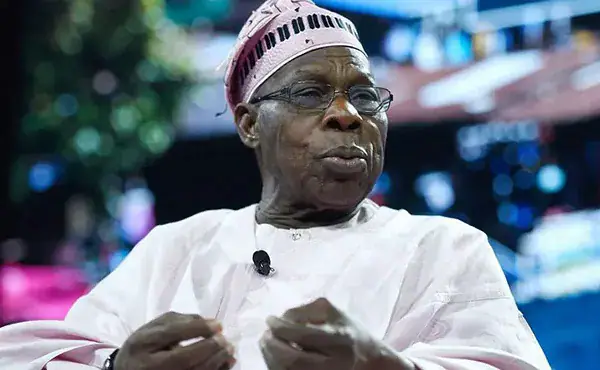
Former Nigerian President Olusegun Obasanjo has disclosed that he turned down an offer of political asylum from the United States during the regime of former military Head of State, General Sani Abacha. Obasanjo revealed this in a video published by BBC News Pidgin, recounting his experience under Abacha's government. He stated that the American ambassador in Nigeria informed him of the offer due to concerns that he would be arrested upon his return. Obasanjo, however, declined the offer, citing that he had not committed any offense.
Obasanjo was warned that he would be arrested if he returned to Nigeria, but he chose to do so anyway. He mentioned that he was traveling and the American ambassador called him to convey the message. The ambassador stated that the US had offered him political asylum due to concerns about his safety. Obasanjo expressed his dilemma, stating that he did not believe he had done anything wrong and therefore did not want political asylum.
After retiring from the Nigerian Army at 42, Obasanjo ventured into farming. Having attained the rank of a four-star general and served as Nigeria's military ruler from 1976 to 1979, he felt he had reached the highest point of his military career. He decided to pursue agriculture, which was going well until his arrest under Abacha, who seized power in November 1993.
Obasanjo recounted the events leading to his arrest. He was returning to his farm when one of his security personnel informed him that government forces had surrounded the premises. A police officer dressed in mufti later approached him and said he had been invited by an Assistant Inspector-General of Police. Obasanjo initially rejected the invitation but eventually drove to the police station.
At the police station, Obasanjo was told that he had been instructed to arrest him. However, former US President Jimmy Carter intervened on his behalf, appealing to Abacha. This intervention led to Obasanjo being placed under house arrest. Security operatives later took him to prison during a late-night operation while he was playing squash at about 1 am.
Obasanjo was eventually released following Abacha's death in June 1998. He went on to contest and win the 1999 presidential election, becoming Nigeria's first elected president under the Fourth Republic. He served two terms and left office in May 2007.
Obasanjo's decision to reject US asylum and face imprisonment in Nigeria had significant consequences. His experience under Abacha's regime and his subsequent release paved the way for his future political career. Obasanjo's story highlights the complexities of Nigerian politics and the difficult choices that leaders sometimes have to make.
Key points
- Obasanjo rejected US asylum offer due to concerns about his safety upon returning to Nigeria.
- He chose to face imprisonment in Nigeria, citing that he had not committed any offense.
- Obasanjo's experience under Abacha's regime ultimately led to his release and his future political career.