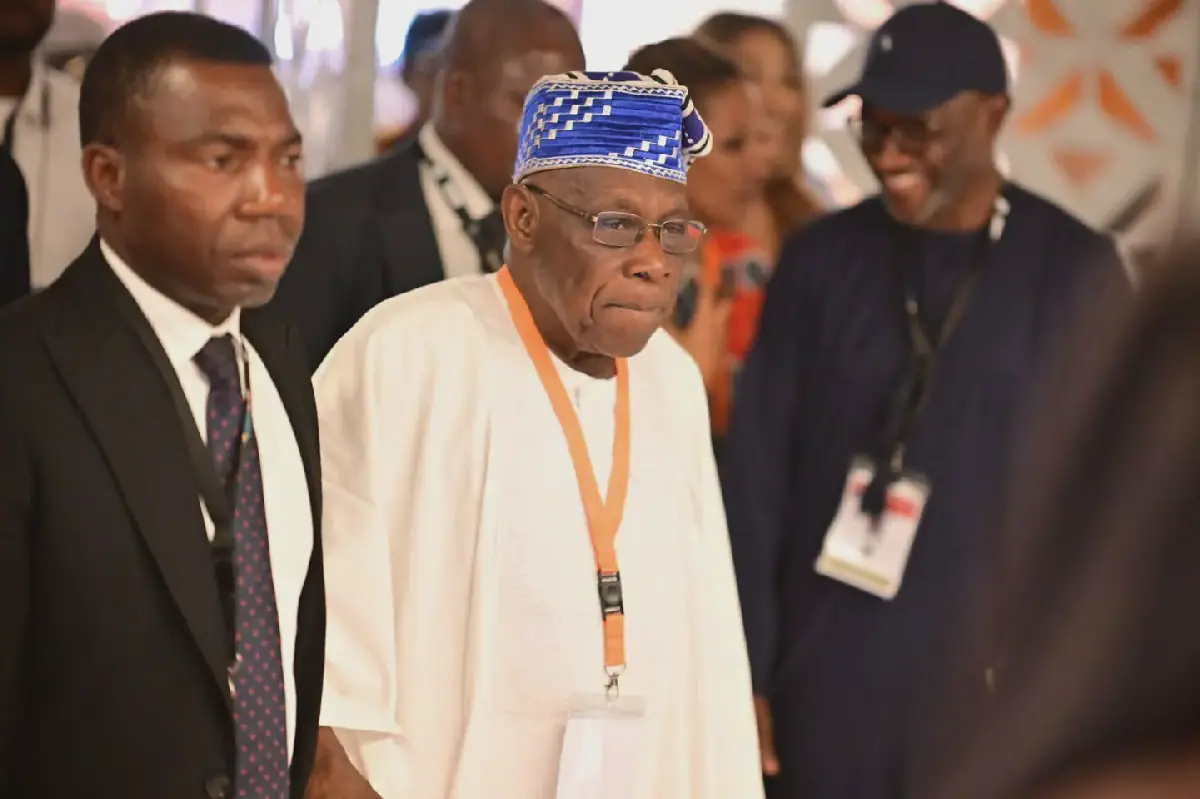
The Creative Africa Nexus Weekend (CANEX WKND) 2026 in Lagos recently hosted a session titled “A Conversation Inspired by Lest We Forget”, where speakers, including former President Olusegun Obasanjo, Dr. Ralph Gonsalves, and Professor Paulette Angela Ramsay, discussed the slave trade, colonialism, and reparations. Obasanjo emphasized that Africans and people of African descent must never forget the slave trade, stating that forgiveness should only follow if those responsible show remorse.
Obasanjo compared the slave trade to the Holocaust, highlighting that millions of Africans died in the slave trade. He stressed that global Africans, including those in the Caribbean, the Americas, and the Pacific, should remember their shared heritage and unite in their own interest for prosperity. The session was inspired by the book Lest We Forget: Slavery, Slave Trade, Colonization, Emancipation and Reparation, which Ramsay said grew out of Obasanjo’s call for an insider’s account by African and diaspora scholars, politicians, and policymakers.
Dr. Ralph Gonsalves, former Prime Minister of St Vincent and the Grenadines, noted that the United Nations General Assembly acknowledged the transatlantic slave trade and racialized chattel enslavement of Africans as the greatest crime against humanity on March 25, 2026. He stated that reparations aim to repair the present-day legacies of underdevelopment, harm, and pain. Gonsalves mentioned that the Caribbean Community (CARICOM) has a 10-point plan for reparatory justice, including a full formal apology, debt relief, and financial compensation.
The 10-point plan also covers health, education, housing, poverty, technology, memorials, and the return of stolen artifacts. According to Gonsalves, the British government has expressed willingness to consider some matters but does not refer to them as reparations. He distinguished reparations from the Sustainable Development Goals, emphasizing that reparations require a special, multi-generational approach.
Professor Paulette Angela Ramsay emphasized that reparations should not be limited to financial compensation. She stated that they must include an apology, restitution, the return of artifacts held in museums abroad, and an end to the ongoing exploitation of Africa’s resources. Ramsay mentioned that Ghana presented a resolution on the matter at the United Nations on March 25, 2026, and that reparations concern all global Africans, not only those in the Caribbean.
Ramsay called on governments to protect Africans’ intellectual and creative production through legal frameworks and to incorporate African history into school curricula. She highlighted that the African people’s story is one of survival and that the past should be remembered “without bitterness”. The speakers at the CANEX WKND session stressed the importance of acknowledging the past and working towards reparations.
The discussion on reparations at CANEX WKND 2026 highlights the ongoing efforts to address the legacies of slavery and colonialism. The session demonstrated the commitment of leaders like Obasanjo and Gonsalves to push for reparations and to keep the conversation alive.
Key points
- Former President Olusegun Obasanjo and Dr. Ralph Gonsalves emphasize the importance of reparations for the slave trade and colonialism.
- The Caribbean Community (CARICOM) has a 10-point plan for reparatory justice.
- Reparations should include an apology, restitution, and the return of stolen artifacts, according to Professor Paulette Angela Ramsay.