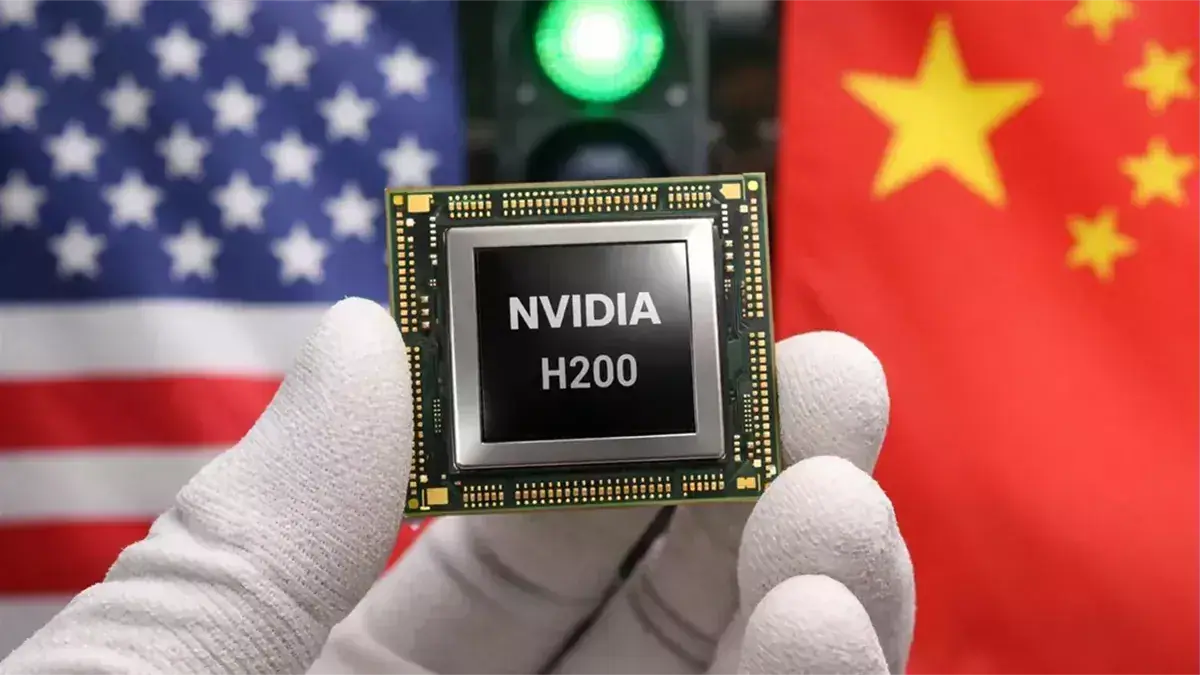
Nvidia has reportedly asked its manufacturing partners to halt shipments of servers equipped with its chips to four Southeast Asian countries: Malaysia, Singapore, Thailand, and Indonesia. This move comes as the company navigates new US export restrictions on its processors, particularly those bound for China. According to sources, manufacturing partners such as Dell and Supermicro have informed buyers in these countries that Nvidia will not permit the shipment of their server orders.
The decision to suspend shipments is linked to the US government's recent tightening of export controls on advanced chips, which are crucial for artificial intelligence and other high-performance computing applications. These restrictions aim to limit China's access to cutting-edge technology that could be used for military or surveillance purposes. As a result, Nvidia and its partners are seeking ways to comply with these new regulations.
The four Southeast Asian countries have become preferred destinations for Chinese AI developers seeking access to Nvidia's latest chips. The region represents a significant market for Nvidia, with the company reporting $104 billion in revenue through its Singapore subsidiary in 2025, a 72% increase over the previous year. This revenue includes sales from Taiwan and China, which are routed through Nvidia's Singapore unit.
Chinese groups have been finding ways to circumvent US export controls by leasing access to Nvidia chips through cloud computing service providers that purchase servers equipped with these chips. This workaround allows Chinese companies to tap into the advanced computing power of Nvidia's processors without directly importing them.
The export restrictions have significant implications for Nvidia, which has become a leader in the global AI chip market. The company's high-performance chips are in high demand for applications ranging from AI model training to data center operations. However, navigating the complex landscape of international export controls poses a challenge for Nvidia and its partners.
It remains unclear whether the decision to halt shipments to Southeast Asia is temporary or a long-term strategy. Nvidia and its partners are likely working to establish new mechanisms that comply with the latest US export regulations. This may involve developing new products or modifying existing ones to meet the criteria set by the US government.
The situation highlights the intricate relationship between global technology supply chains and geopolitical tensions. As governments increasingly focus on controlling the export of sensitive technologies, companies like Nvidia must adapt to these changing regulatory environments. The impact of these developments on the global tech industry and the future of AI development will be closely watched.
Key points
- Nvidia halts chip shipments to Malaysia, Singapore, Thailand, and Indonesia amid new US export restrictions.
- Chinese companies are using cloud computing services to access Nvidia chips despite export restrictions.
- The export restrictions could have significant implications for Nvidia's business and the global AI chip market.