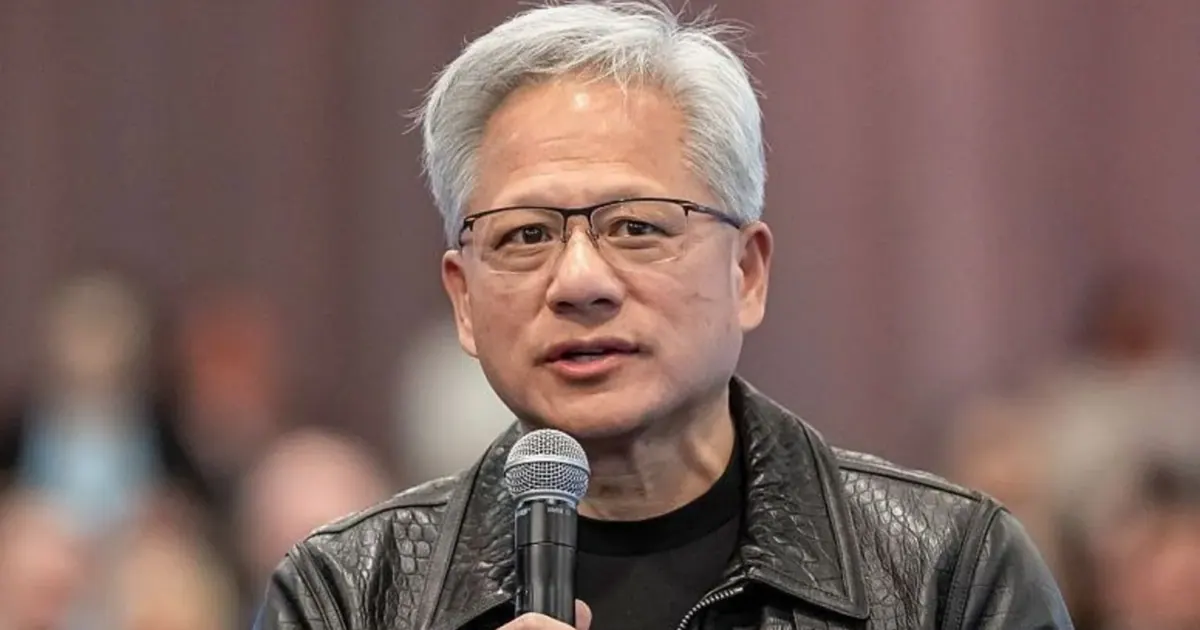
Nvidia CEO Jensen Huang has downplayed concerns that artificial intelligence (AI) could lead to humanity's extinction by the next decade. In an interview with CBS News, Huang described warnings about AI's potential risks as "doomsday narratives". He emphasized that it is unnecessary and irresponsible to scare people with such predictions. Huang's comments come amid a growing debate about AI safety, with some industry executives calling for a slowdown in developing AI models.
Huang's remarks contradict claims made by former Anthropic researcher Jacob Coxon, who sparked debate about AI's risks on social media. Coxon stated that AI developers believe the technology "could kill us all by the end of the decade". His concerns were echoed by top executives like Anthropic boss Dario Amodei and OpenAI's Sam Altman, who urged for AI's development to slow down. Huang, however, believes that such predictions are "not grounded in science".
As a key player in the AI industry, Nvidia develops cutting-edge computer chips crucial for making AI models. Huang emphasized that the company's success is directly connected to the safe deployment of its products and services. He suggested that AI firms talking about a "slow down" may be seeking liability protections for harms their products may cause. Huang's comments indicate that Nvidia prioritizes responsible AI development.
The AI industry is currently subject to various regulations and restrictions. Nvidia's most powerful chips face restrictions in China due to measures imposed by both Washington and Beijing. US export controls aim to slow China's military and AI progress, while Chinese regulations encourage reliance on domestically produced technology. Huang's comments come as US Treasury Secretary Scott Bessent and Chinese Vice Premier He Lifeng hold talks in New York to discuss deals on AI, tariffs, and critical minerals.
The debate about AI safety has also involved world leaders. King Charles hosted a UK summit where Huang appeared, warning tech leaders of the "existential dangers" of AI. The King emphasized that the task before tech leaders is not merely to advance technology but to ensure it remains in the service of humanity, community, and the natural world. In contrast, US President Donald Trump has downplayed concerns about AI's risks.
Trump's views on AI were echoed in a surprise phone call to Huang during a tech conference in Los Angeles on September 14. During the call, Trump criticized calls to slow the pace of AI development and dismissed fears as a "hoax". Huang's comments and Trump's views on AI have sparked concerns about the potential risks and benefits of the technology.
As the AI industry continues to evolve, companies like Nvidia face increasing scrutiny over their role in developing AI models. Huang's emphasis on responsible AI development and his dismissal of extinction fears highlight the ongoing debate about AI safety. The industry's future development and regulation will likely be shaped by the discussions and decisions made by leaders like Huang, Trump, and King Charles.
Key points
- Nvidia CEO Jensen Huang believes there's 0% chance AI will lead to humanity's extinction by 2030.
- Huang's comments contradict claims made by former Anthropic researcher Jacob Coxon about AI's potential risks.
- The AI industry is subject to various regulations and restrictions, including US export controls and Chinese regulations.