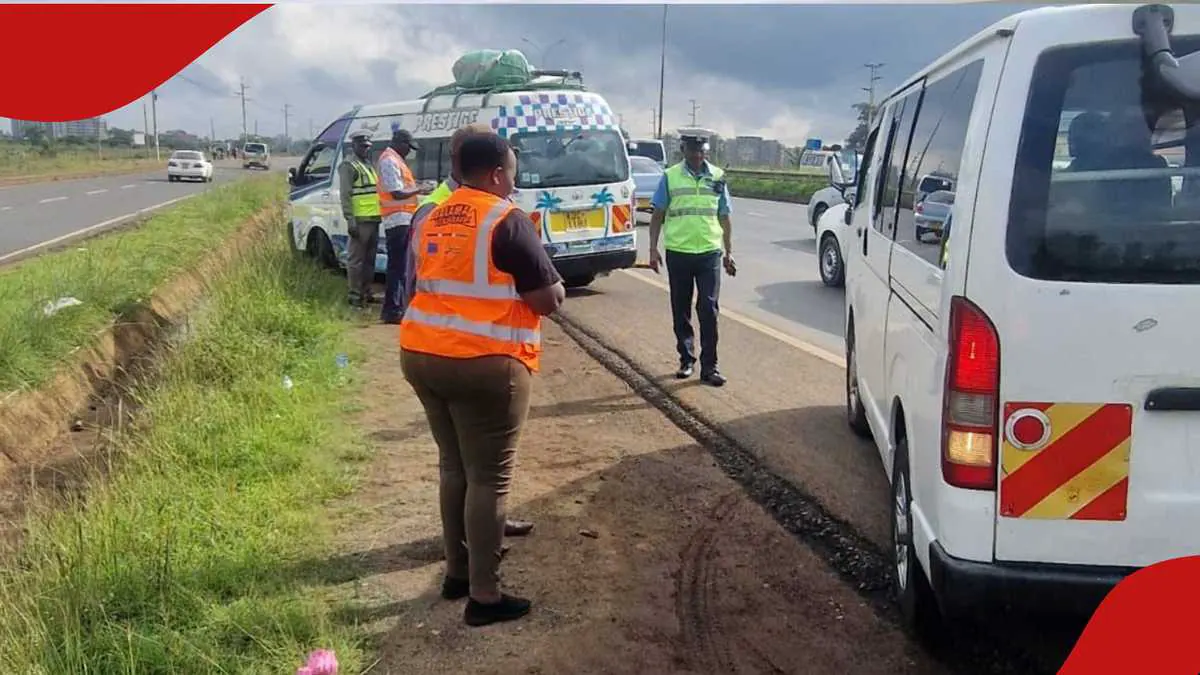
The National Transport and Safety Authority (NTSA) in Kenya has unveiled six personal commitment guidelines for public service vehicle drivers who completed its ongoing professionalisation training. The guidelines were announced on October 6, 2026, following the conclusion of the latest phase of its Public Transport Professionalisation and Capacity Building Programme. This programme aims to professionalise the PSV sector, raise safety standards, and prevent avoidable road accidents.
The six guidelines that drivers who completed the programme are expected to uphold include applying knowledge and skills gained during training in daily driving, taking personal responsibility for safe, defensive, and professional driving, and complying with NTSA requirements, traffic laws, SACCO procedures, and passenger safety requirements. Drivers are also expected to manage fatigue and personal wellness responsibly, report vehicle defects and safety hazards promptly, and use feedback to continuously improve driving performance.
The guidelines place the onus squarely on individual drivers to internalise and act on what they learned during the programme, rather than treating the training as a one-off exercise. This move comes as Kenya continues to grapple with high road fatality rates, with matatu and PSV operators frequently cited as a key concern by traffic authorities and road safety advocates.
The NTSA has been running the free programme in phases, targeting more than 4,000 PSV drivers, SACCO managers, supervisors, and operators nationwide. The most recent cohort underwent training in Nakuru, Uasin Gishu, and Trans-Nzoia counties between September 28 and October 1, 2026. The programme covers a wide range of subjects, including defensive driving and hazard perception, passenger care, vehicle safety checks, and traffic law compliance.
Sessions also covered fatigue management, emergency response, fuel-efficient driving, digital systems, and fleet and financial management for operators. Graduates of the programme are expected to serve as safety champions within their respective SACCOs and transport companies. The NTSA initiative aims to professionalise the PSV sector, raise safety standards, and prevent avoidable road accidents.
The announcement of the guidelines follows Kenya's ongoing efforts to reduce road crashes and improve safety on its roads. The country has been working to address high road fatality rates, with a focus on improving safety standards and enforcing traffic laws. The NTSA programme is part of these efforts, targeting PSV drivers, SACCO managers, and operators.
The NTSA's professionalisation training programme is designed to equip drivers with the necessary skills and knowledge to operate safely and professionally. By completing the programme, drivers have demonstrated their commitment to upholding the six guidelines and contributing to improved road safety in Kenya. The programme will continue to be rolled out in phases, targeting more PSV drivers and operators nationwide.
Key points
- NTSA issues six safety guidelines for matatu and PSV drivers who completed its professionalisation training.
- The guidelines aim to promote safe, defensive, and professional driving practices among PSV drivers.
- The programme targets over 4,000 PSV drivers, SACCO managers, and operators nationwide.