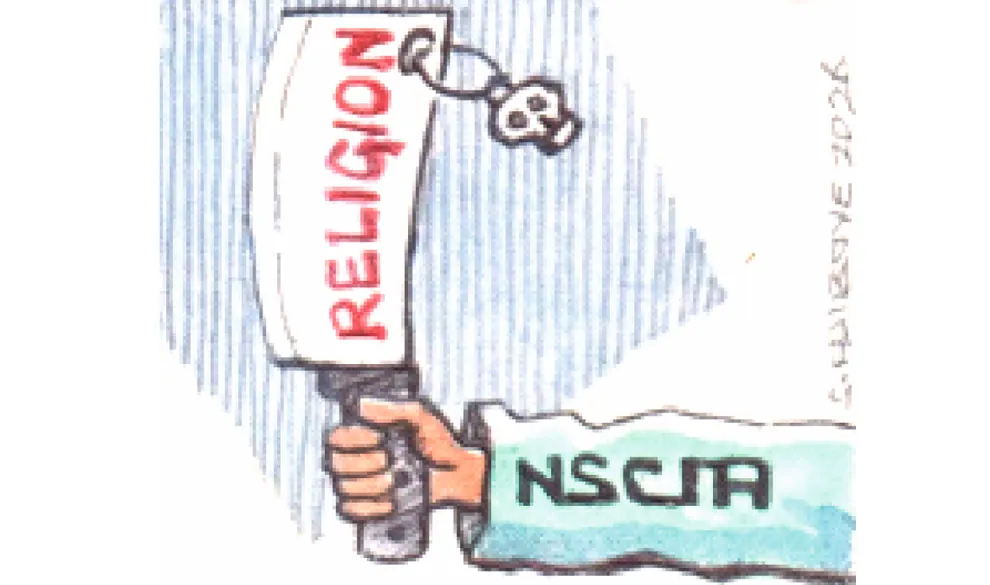
The Nigerian Supreme Council for Islamic Affairs (NSCIA) has issued a statement on the ongoing prosecution of former Kaduna State governor Nasir el-Rufai for corruption and wiretapping. The statement, released on September 8, expressed concerns that the trial may be influenced by religious bias. The NSCIA called on the federal government and the judiciary to ensure that individuals with vested religious interests do not interfere with the trial. The council also urged the public to refrain from making incendiary comments that could prejudice the fair trial of el-Rufai or exacerbate the security situation in the country.
The NSCIA's intervention in the trial has raised eyebrows, with some questioning the council's motives. The council had previously refrained from commenting on the trial, considering it a standard judicial process. However, recent developments have led the council to suspect that there may be an underlying religious bias against el-Rufai. The council cited the background of one of the trial judges and the comments made by Defence Minister Gen. Christopher Musa as evidence of this bias. Musa had accused el-Rufai of bigotry and sectionalism during a television programme.
Gen. Musa's comments were made in the context of el-Rufai's time in office, not in relation to his trial. The NSCIA has seized on these comments, suggesting that they are evidence of a sectarian agenda against el-Rufai. The council's statement has been seen as puzzling by some, who argue that it could be perceived as an attempt to defend el-Rufai on religious grounds. The council's actions have also raised questions about the role of religion in the trial and whether it is being used as a factor in the prosecution.
The trial of el-Rufai has been widely followed, with many Nigerians expressing concern about the allegations of corruption and wiretapping against him. El-Rufai has been a polarizing figure in Nigerian politics, with many critics accusing him of intolerance and authoritarianism. His supporters, however, argue that he is being unfairly targeted and that the trial is politically motivated. The NSCIA's intervention has added a new dimension to the trial, with some arguing that it could further polarize the country along religious lines.
The NSCIA's call for the public to refrain from making incendiary comments has been seen as a positive step. However, some have argued that the council's own statement could be seen as inflammatory. The council's suggestion that religious bias may be at play in the trial has raised concerns about the potential for sectarian tensions to escalate. The trial is being closely watched, with many Nigerians hoping that justice will be served and that the country will not be further divided along religious lines.
The court has fixed April 14 for a ruling on el-Rufai's bail application. The former governor is facing trial for alleged financial crimes and self-confessed cybersecurity crimes. The prosecution has presented its case, and the defence is yet to present its arguments. The trial is expected to continue in the coming weeks, with many Nigerians eagerly awaiting the outcome.
The NSCIA's statement has sparked a national debate about the role of religion in Nigerian politics and the judiciary. The council's allegations of religious bias have been met with skepticism by some, who argue that the trial should be based on evidence and not on sectarian considerations. The outcome of the trial will have significant implications for Nigerian politics and the country's fragile sectarian balance.
Key points
- NSCIA alleges religious bias in Nasir el-Rufai's trial
- Trial has sparked concerns about sectarian tensions in Nigeria
- Court to rule on el-Rufai's bail application on April 14