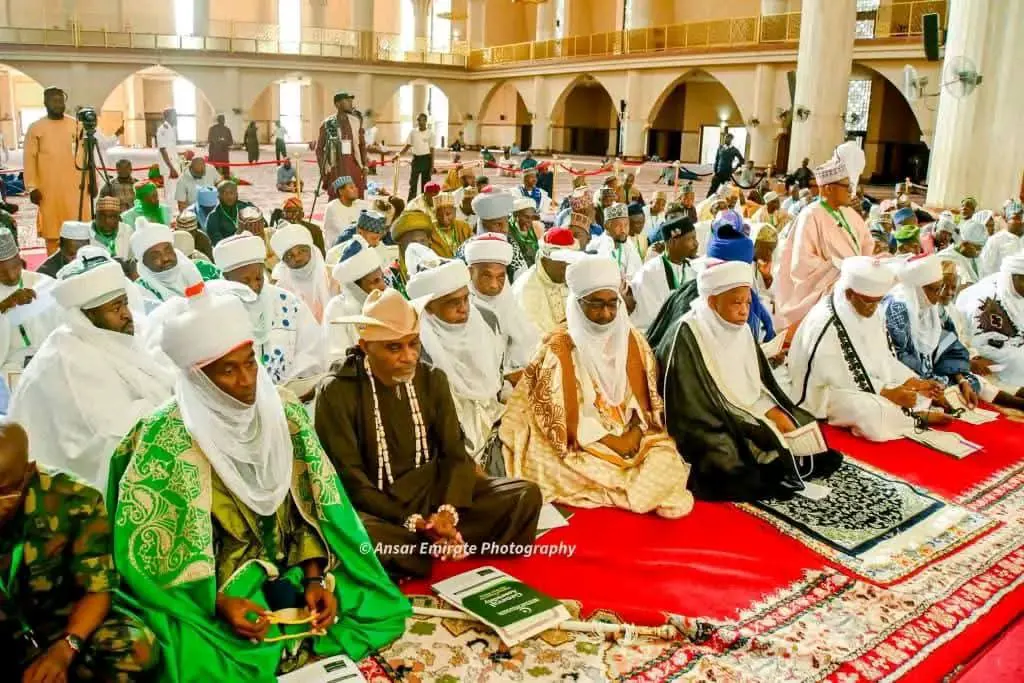
The Nigerian Supreme Council for Islamic Affairs (NSCIA) recently held a special national prayer for Nigeria ahead of the country's 66th Independence Anniversary. The event, which took place at the National Mosque Complex in Abuja, brought together prominent Muslim scholars, imams, and faith leaders from across the country. The gathering, attended by the Sultan of Sokoto and President-General of the NSCIA, Alhaji Muhammad Sa'ad Abubakar III, focused on Nigeria's security, stability, and development.
The national prayer, which was part of a two-day programme, featured speakers who stressed the importance of citizens, religious leaders, and traditional institutions working together to address the country's challenges. NSCIA Secretary-General, Prof. Is-haq Olanrewaju Oloyede, emphasized that praying for Nigeria was both a religious and civic responsibility. He urged Muslims to strengthen their relationship with Allah and improve their conduct, noting that prayer should be accompanied by actions that contribute to national development.
Oloyede highlighted the diversity of the country during the supplications, noting that prayers were offered in different Nigerian languages. He explained that while Arabic is required for certain canonical acts of worship, Islam permits personal supplications in languages through which people can best express themselves. The Secretary-General of Jama'atu Nasril Islam (JNI), Prof. Khalid Aliyu, also spoke on the importance of nation-building, urging Nigerians to contribute meaningfully to the development of the country.
Aliyu cited Prophet Ibrahim's supplication for the safety and prosperity of Makkah and the Prophet Muhammad's love for the city as examples of the importance of concern for the wellbeing of one's community. He emphasized that nation-building was a responsibility emphasised in the Qur'an and urged religious leaders to guide their followers towards constructive participation in national development. The Olowu of Owu Kingdom, Oba (Professor) Saka Adelola Matemilola, called on traditional rulers to use their influence to promote peace and prevent conflicts from escalating in their communities.
Matemilola urged traditional rulers to remain non-partisan, particularly during periods of political tension, saying their close relationship with the people placed them in a position to provide balance and promote peaceful coexistence. He identified poverty and economic deprivation as factors that could contribute to insecurity and other social problems, calling for greater cooperation among traditional rulers, political leaders, and communities in addressing these challenges.
Imam Eze Haroun of the National Mosque, Abuja, said the gathering provided an opportunity to commit Nigeria and its people to Allah while seeking divine intervention in the difficulties facing the country. He stressed the need for guidance and sincerity among the country's leaders, describing the participation of religious and traditional leaders from different parts of Nigeria as significant. The NSCIA's General Assembly meeting is set to hold on Thursday, October 1, at the National Mosque Conference Hall, Abuja.
The Assembly, which is the Council's highest decision-making organ, will bring together representatives of State Councils for Islamic Affairs, Islamic organisations, Muslim public office holders, and other prominent Muslim personalities for consultations on issues affecting the Muslim community and the country. The event was sponsored by Nigerian Muslim Personalities of the Year 2024/2025 and Global Muslim Personalities of the Year 2024/2025.
Key points
- Muslim leaders in Nigeria have called on citizens to complement prayers with responsible action for national development and stability.
- The NSCIA's national prayer focused on Nigeria's security, stability, and development, with speakers stressing the responsibilities of citizens, religious leaders, and traditional institutions.
- The event was attended by prominent Muslim scholars, imams, and faith leaders from across the country, including the Sultan of Sokoto and President-General of the NSCIA, Alhaji Muhammad Sa'ad Abubakar III.