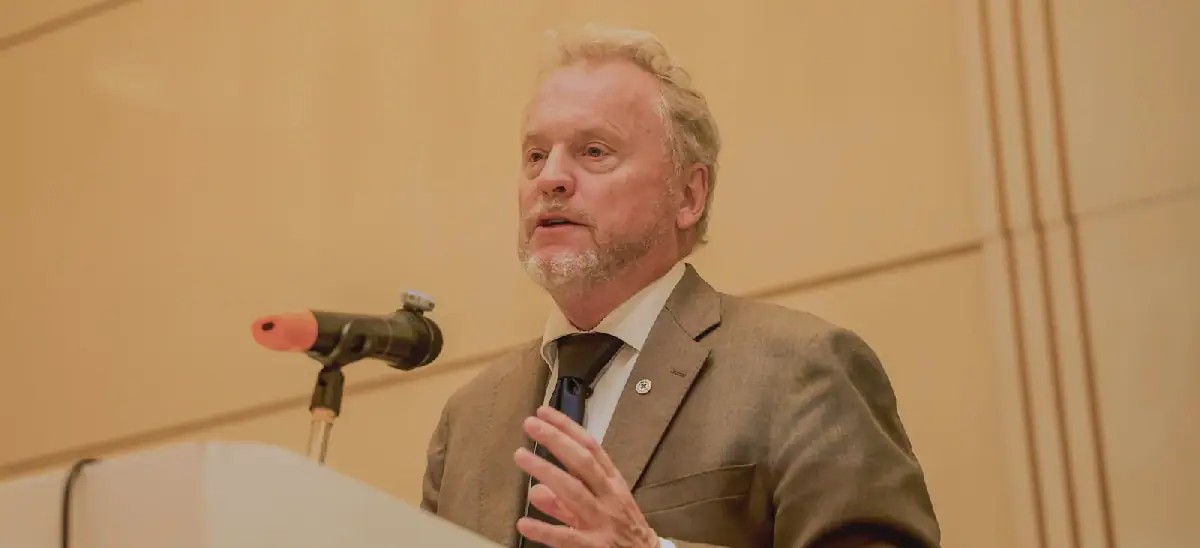
Norwegian People's Aid (NPA) has marked 40 years of humanitarian and development work in South Sudan. The organization began its engagement in the country in 1986, when a convoy carrying food crossed from Kenya into Eastern Equatoria to assist communities affected by civil war. NPA Secretary-General Raymond Johansen said the organization had chosen to maintain its independence rather than participate in an operation in Sudan. This decision was made to ensure that its humanitarian work was not dictated by those responsible for oppression.
The 40th anniversary celebrations were attended by former Vice President Rebecca Nyandeng De Mabior, government officials, diplomats, development and humanitarian partners, civil society representatives, former NPA staff, and a visiting delegation from Oslo. Speakers recognized NPA's contribution to humanitarian assistance, peacebuilding, community resilience, and development over four decades. Johansen said NPA had supported healthcare, agricultural development, women's empowerment, humanitarian assistance, and efforts to strengthen democratic institutions. The organization has helped more than 800,000 patients receive treatment in hospitals.
NPA established a training centre in Yei, where farmers learned improved techniques that were later introduced in communities across the country. The organization also introduced ox-plough technology in the 1990s, helping farmers increase production while reducing the time and labour required for cultivation. Johansen said NPA continued to promote improved farming methods to strengthen food security and reduce dependence on humanitarian assistance. This support has enabled farmers to increase their yields and improve their livelihoods.
In women's empowerment, NPA has helped an estimated 150,000 women benefit from training programmes aimed at raising awareness of their rights and increasing their participation in public and political affairs. Johansen stressed the importance of women's involvement in leadership and decision-making. He said women can play a crucial role in promoting peace and stability in the country. NPA has also worked in mine action, although insecurity previously forced it to suspend operations in the country.
Johansen said NPA currently supports more than 20 South Sudanese civil society organizations operating in different parts of the country. The partnerships extend from Juba to Yambio, Bentiu, and Kapoeta, supporting groups working on peacebuilding, women's rights, media freedom, freedom of expression, civic participation, and accountability in natural resource management. He urged the government and international partners to continue investing in local organizations, describing them as essential to sustainable peace and democratic governance.
Johansen warned that South Sudan faces serious humanitarian challenges driven by renewed conflict, declining international assistance, and restrictions on humanitarian access. The situation is being compounded by the war in neighbouring Sudan, which has placed additional pressure on communities and humanitarian operations. He expressed concern about declining international assistance despite persistently high humanitarian needs, warning that conditions could deteriorate further without stronger intervention by the government and international partners.
With general elections approaching, Johansen called for meaningful engagement before, during, and after the polls. He said civil society organizations, journalists, and other stakeholders must be allowed to participate freely without intimidation or unnecessary restrictions. An inclusive electoral process would be essential to building public confidence, strengthening democratic accountability, and advancing the country's political transition. Johansen reaffirmed NPA's commitment to a peaceful, inclusive, and democratic South Sudan.
Key points
- NPA has supported over 800,000 patients receive treatment in hospitals and helped 150,000 women benefit from training programmes.
- The organization has worked in mine action and established a training centre in Yei to promote improved farming methods.
- Johansen urged the government and international partners to continue investing in local civil society organizations.