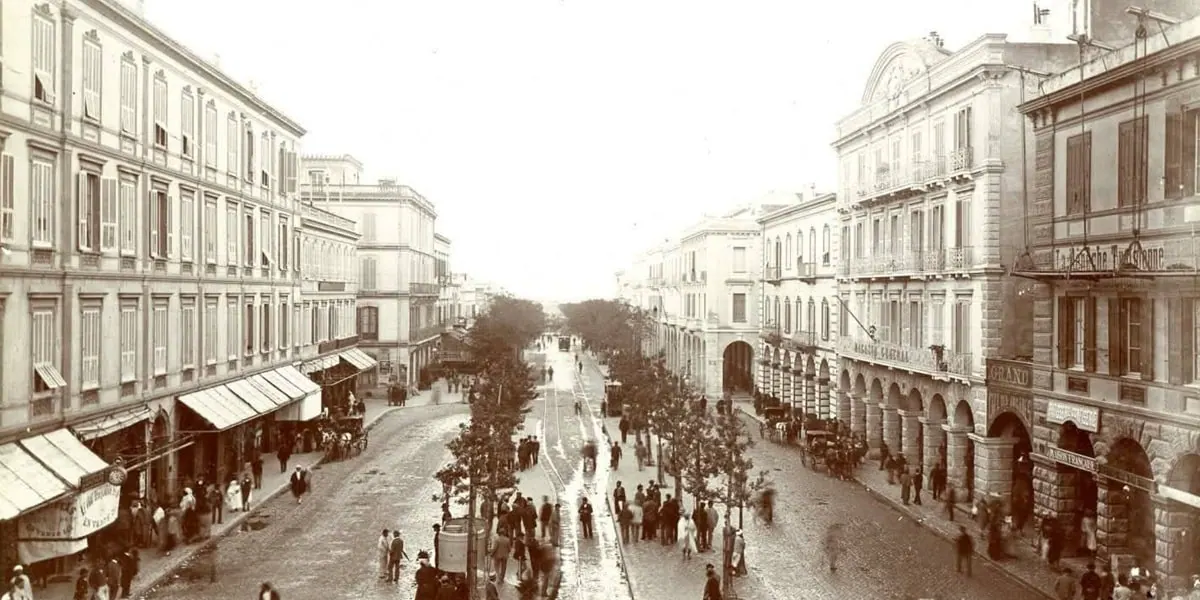
The Avenue de France in Tunisia, once a vibrant and bustling street, is now a nostalgic memory for many. The street's arcades, located across the road, bring back images of children sliding on the mosaic-covered walkways. As one reminisces, the sounds of vendors calling out to passersby and the smell of traditional treats fill the air. The street was once lined with various businesses, including shoeshine boys and azerole vendors who would set up shop in the autumn.
The street was also home to news vendors who would navigate through the crowded sidewalks, weaving in and out of flaneurs and horse-drawn carriages, to reach the lively cafes. One notable location was the corner of the old Rue des Maltais, near the optician Lumbroso's shop. This area was also home to the large Saliba bookstore and Namura's bookstore. The Maison des cadeaux, managed by the De Matteis family, was another popular destination on this side of the street, which led to the Rue de l'Ancienne poste.
The imposing Crédit foncier et commercial de Tunisie building dominated the next block, with its impressive Atlantes supporting the structure. The bank's account hall now houses a restaurant, while the building itself has been converted into the Tunisia Palace hotel. Nearby, the author had a favorite haunt at the Café du Maghreb, where they would meet their friend Taoufik Ben Smail. As students, they would spend hours exploring the area, visiting the press stand of Ali Ben Yahia and the Abdelgheni bookstore.
The area was also home to a variety of other businesses, including the Bouix leather goods store, where Hadj Ahmed worked, and a small stationery store filled with antique items and vintage images. Madame Cohen Tannugi, who lived in the building above the café, is another fond memory for the author. Further down the street, the Lux store was a popular destination for fashionable women. Over the years, some businesses have remained, while others have given way to new establishments.
The street has a rich history, with the famous Lehnert and Landrock photography studio once located in the area. The studio Soler, another photographer, also hosted early cinema screenings. Personal memories of the street's past linger, from the taste of lemonade and iced coffee to the experience of weighing oneself on a red scale in exchange for a 20-millime coin. The sounds of trolleybuses and the remnants of tramway rails are also remembered.
Despite the changes over the years, some landmarks remain, including the Porte de Bab Bhar and its two sides. The street's charm is still palpable, with the Galeries Simon and La Javanaise, a popular spot for ice cream and pastries, still attracting visitors. These iconic destinations evoke a sense of nostalgia, reminiscent of a Zola novel.
As one leaves the Rue d'Annaba, with its numerous fabric stores, and heads towards the end of the Avenue de France, the memories of the past come flooding back. The area's unique blend of history, culture, and personal experiences makes it a treasured part of Tunisia's heritage. The Avenue de France remains a significant part of the country's history, with its stories and memories continuing to captivate those who visit.
Key points
- The Avenue de France in Tunisia is a treasured part of the country's history, with its unique blend of culture, businesses, and personal experiences.
- The street's arcades and mosaic-covered walkways bring back fond memories of childhood for many.
- Despite changes over the years, some landmarks and businesses remain, including the Galeries Simon and La Javanaise.