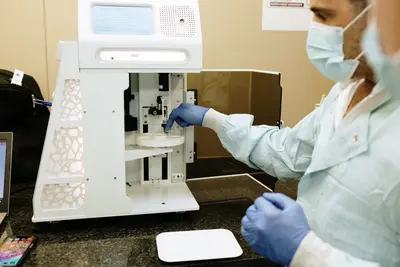
Researchers at South Africa's North-West University (NWU) are making significant strides in medical research by developing human-based models that replicate aspects of human physiology and disease. This innovative approach, led by Prof. Chrisna Gouws and her team, aims to reduce the need for animal testing in medical research. By utilizing human data, cells, tissues, and computational methods, the team is creating more accurate and predictive models for drug development and disease understanding.
The research, conducted at the Centre of Excellence for Pharmaceutical Sciences and the Desmond Tutu School of Medicine, is part of Human-Based Biomedical Research and New Approach Methodologies (NAMs). This approach prioritizes human-relevant models and data to study human biology and diseases, offering a more accurate and cost-effective way to develop new treatments. Prof. Gouws emphasizes that while animal models are still important, they have limitations, and human-based models can provide more accurate results.
One of the significant challenges with traditional animal testing is that results do not always translate to humans due to differences in anatomy, genetics, and metabolism. In contrast, human-based models can mimic human disease mechanisms more accurately, allowing for more effective drug development. The NWU team has developed various human-based models, including 3D cell cultures, cerebral organoids, and liver organoids, which can be used to study different diseases and test new treatments.
The NWU team has made notable progress in cancer research, developing human cancer models for lung, colorectal, skin, breast, brain, liver, and nasal epithelial cancers. These models can be used to test new treatments and predict patient responses. Additionally, the team is working on rare-disease models and skin models for transdermal drug delivery and wound healing. By using human-based models, researchers can study disease mechanisms and test treatments in a more accurate and controlled environment.
The research process involves creating a model representing the disease or biological mechanism being investigated. For example, cancer spheroids can be treated with varying concentrations and timeframes to measure effects on growth and viability. This approach allows researchers to eliminate ineffective compounds early and guide the choice of animal models. The team is also using bioprinted constructs and microfluidic chip technology to study tumor growth and disease progression.
Prof. Gouws notes that while the goal is to reduce animal testing, it is unlikely that animal testing can be completely replaced in the near future. However, by developing human-based models and using NAMs, researchers can reduce the need for animal testing and make medical research more accurate and effective. The NWU has been working with 3D cell culture since 2013 and has built a human-based biomedical research cluster with state-of-the-art facilities.
The NWU's innovative approach to medical research has the potential to bring research closer to the people it benefits. By developing models that can answer questions about human biology more directly, researchers can accelerate the discovery of new treatments and improve human health. However, Prof. Gouws notes that South Africa still faces challenges in adopting these technologies, including cost, technical complexity, regulatory uncertainty, and the need for greater standardization and validation.
Key points
- The North-West University is developing human-based models to reduce animal testing in medical research.
- The university's research focuses on creating more accurate and predictive models for drug development and disease understanding.
- The approach has the potential to bring research closer to the people it benefits and accelerate the discovery of new treatments.