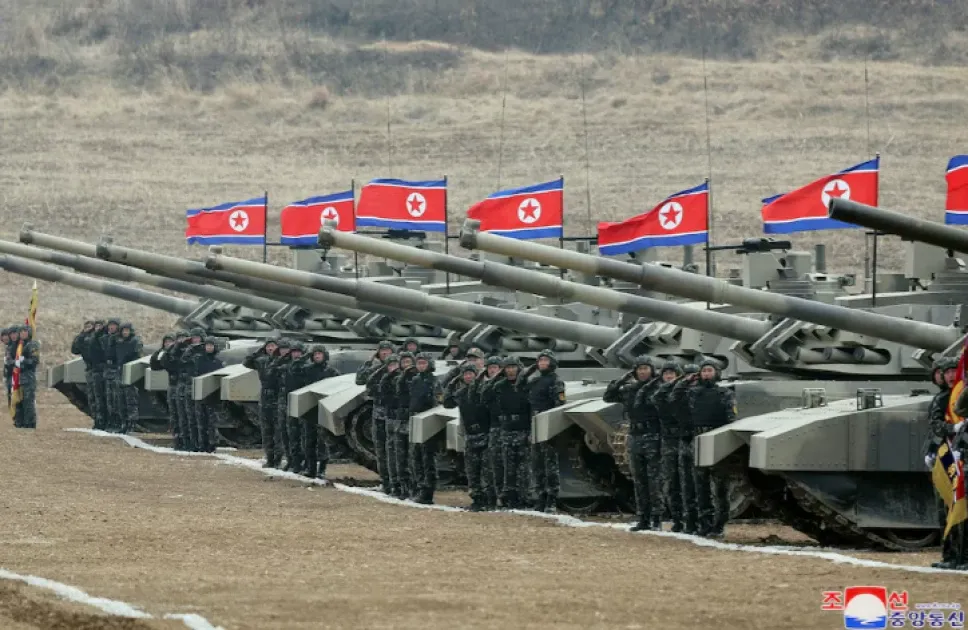
North Korea launched several ballistic missiles into the Sea of Japan on Monday, with South Korea's Joint Chiefs of Staff detecting multiple missiles from Pyongyang heading toward the East Sea. The launches occurred at about 09:20 local time, with some missiles traveling over 900 km. Japan's defence ministry confirmed the launch of at least one ballistic missile, echoing Seoul's observations.
The Joint Chiefs said that South Korea and the United States are analysing the missiles' specifications. The missile activity comes after weeks of heightened tension sparked by a land-mine explosion in the Demilitarised Zone that injured three South Korean soldiers. Both sides have linked the incident to recent missile-technology tests.
Following the launches, South Korea's National Security Office convened an emergency security meeting to review the country's military readiness. The meeting was held to assess the situation and determine the necessary response to the missile launches. North Korean official Kim Yo Jong denounced South Korean demands for an apology over the DMZ incident as "despicable" and rejected Seoul's offer of medical equipment.
The missile launches occur against a backdrop of ongoing diplomatic overtures by the United States, which have raised concerns in Seoul about being sidelined in any future nuclear talks with Pyongyang. The US has been engaging in diplomatic efforts to address the North Korean nuclear issue, but Seoul is worried about being left out of the negotiations.
Earlier in October, Pyongyang test-fired an intermediate-range ballistic missile that it said employed artificial-intelligence technology capable of altering its flight path at low altitude. This test was seen as a significant development in North Korea's missile capabilities.
Seoul announced a successful test of a domestically produced hypersonic glide vehicle, describing it as a new deterrence capability that can strike key targets within the Korean Peninsula's operational environment. This test was seen as a significant development in South Korea's military capabilities.
Both Koreas remain technically at war, as the 1953 armistice ended hostilities without a formal peace treaty, and the DMZ continues to be one of the world's most heavily fortified frontiers. The ongoing tensions between North and South Korea continue to pose a significant threat to regional stability.
Key points
- North Korea launched multiple ballistic missiles into the Sea of Japan on Monday.
- The launches prompted an emergency security meeting in Seoul to review the country's military readiness.
- The missile activity comes amid heightened tensions and ongoing diplomatic overtures by the United States.