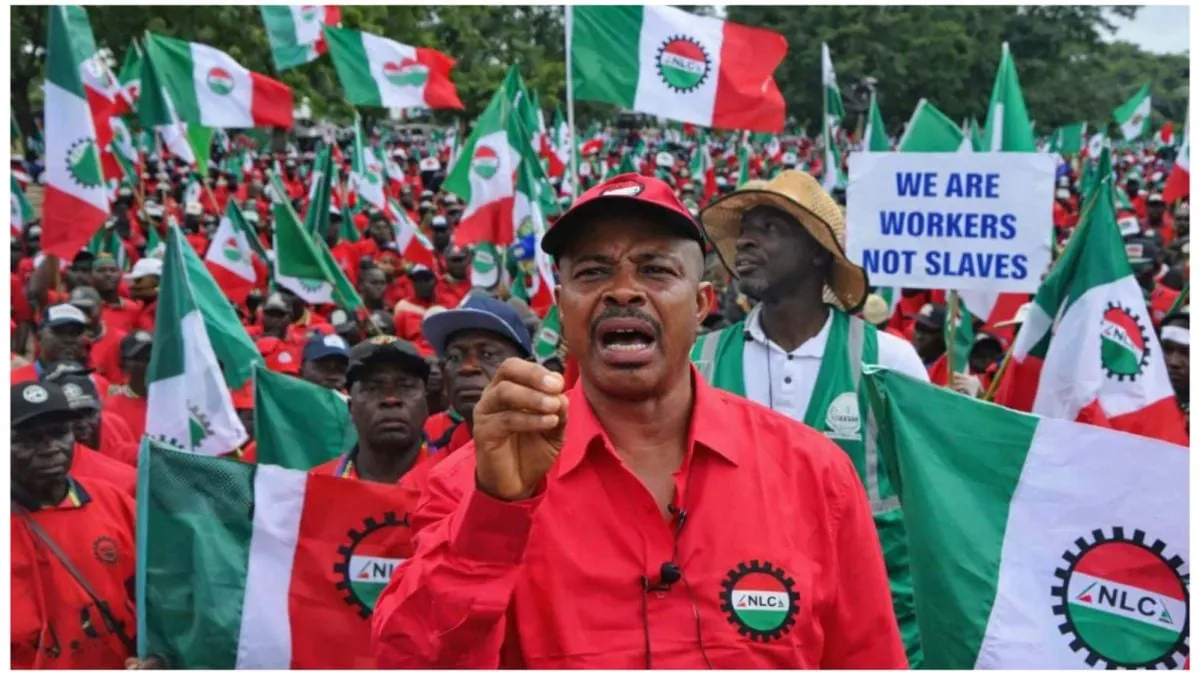
The Nigeria Labour Congress (NLC) has called on the Federal Government to take urgent steps to reduce the price of petrol, introduce a nationwide wage award, and begin discussions on a new national minimum wage for Nigerian workers. This demand was made in an Independence Day statement signed by NLC President, Joe Ajaero. The labour union emphasized that rising fuel prices, transportation costs, and inflation have weakened the purchasing power of workers and other citizens.
According to the NLC, petrol prices have surged to about N1,430 per litre or higher in major cities, with consumers in remote areas paying even more. The union stated that the increase in transportation costs has driven up the prices of food, school fees, rent, and nearly every necessity of life, while nominal wages remain stagnant. The NLC argued that an increase in petrol prices affects not only motorists but also has a ripple effect on food prices, rent, education, healthcare, and other essential services.
The labour centre demanded that the Federal Government take immediate steps to bring down the price of petrol, stating that any effort to ease the suffering of the people would be futile without addressing this issue. The NLC also asked the government to introduce a nationwide wage award for workers across the federal, state, and local government levels, as the purchasing power of workers has been severely weakened by inflation. The union emphasized that a wage award is not charity but an emergency intervention against the collapse of real income.
The NLC accused the government of failing to fully implement some of the commitments contained in the October 2023 agreement, particularly the implementation of tax relief measures. The union demanded that negotiations for a new national minimum wage begin immediately, calling for the establishment of a tripartite committee comprising government, labour, and employers to work on a new wage standard for 2027. The NLC argued that the current N70,000 minimum wage has already lost significant purchasing power due to inflation.
President Bola Tinubu approved the N70,000 minimum wage in July 2024 after negotiations involving the Federal Government, labour, and other stakeholders. At the time, the President agreed that the wage should be reviewed after three years. The NLC also called for a reduction in the cost of governance, greater transparency in the management of public funds, and government spending that reflects the economic difficulties faced by ordinary Nigerians.
The union questioned the failure to convert savings from petrol subsidy removal into visible improvements in infrastructure and social services, asking where the subsidy savings had gone. The NLC also expressed concern over Nigeria's dependence on imported refined petroleum products despite being a major crude oil-producing country, calling for greater investment in domestic refining capacity. The union emphasized that stronger domestic refining would help reduce Nigeria's exposure to international oil-market shocks and support employment and economic activity.
The NLC further demanded improved public services, including roads, functional hospitals, affordable education, and stronger social protection programmes. The labour body also expressed concern over the growing number of young Nigerians seeking opportunities outside the country, urging the government to create jobs and economic opportunities that would make young people more willing to build their future in Nigeria. The union linked insecurity with the country's economic challenges, calling for policies that would expand access to economic opportunities while improving security across the country.
Key points
- The NLC demands immediate action to reduce petrol prices and implement a new minimum wage.
- The labour union emphasizes the need for greater transparency in public fund management and a reduction in governance costs.
- The NLC calls for increased investment in domestic refining capacity and improved public services.