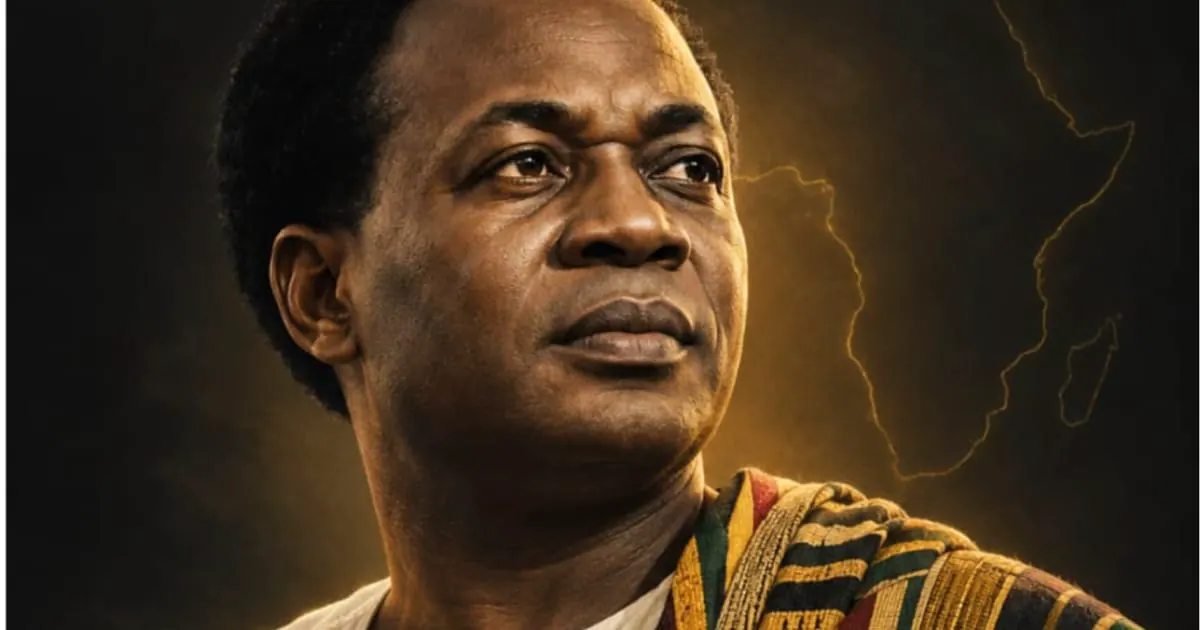
The life and legacy of Dr. Kwame Nkrumah, Ghana's first president, continue to inspire and influence the country's development and future. According to Kwesi Amoafo-Yeboah, a Ghanaian author, Nkrumah's life has become part of the accumulated intelligence of Ghana and Africa, transcending his physical death. His ideas, institutions, and possibilities have continued to shape the nation's trajectory long after his passing. Nkrumah's leadership played a crucial role in Ghana's independence in 1957, demonstrating that colonial rule was not permanent and that freedom could be achieved.
Nkrumah's achievement of leading Ghana to independence changed the narrative of what was possible for African nations. His success showed that an African people could govern themselves and determine their own future, giving other nations the confidence to pursue their own independence. Ghana's independence became part of the inheritance of other African nations, allowing them to begin from a different starting point. Amoafo-Yeboah notes that the value of Nkrumah's achievement lies not only in what he accomplished but also in the knowledge, courage, and example he provided for future generations.
The concept of continuity is central to understanding Nkrumah's lasting impact. Amoafo-Yeboah argues that continuity is not about preserving a person as an untouchable monument but about preserving the valuable state they created. It requires separating enduring value from historical limitation, retaining the courage, ambition, and long-range thinking of leaders while learning from their mistakes. This approach allows future generations to build upon the foundations laid by Nkrumah and other leaders.
Nkrumah's vision for Africa's future extended beyond Ghana's independence. He understood that true freedom and prosperity required a united, economically capable, and institutionally strong Africa. These questions remain relevant today, with African nations continuing to grapple with converting political freedom into economic capability and building institutions that can preserve knowledge across generations. Amoafo-Yeboah emphasizes that these challenges are not merely relics of Nkrumah's time but pressing concerns for the present.
The responsibility of remembrance is crucial in ensuring that Nkrumah's legacy continues to inspire and guide Ghana and Africa. Amoafo-Yeboah argues that September 21, Nkrumah's birthday, should be a day for reflection on what remains alive from the possibilities he opened. It should be a day for assessing what has been preserved, lost, or improved and what unfinished work remains to be carried forward. By doing so, Ghana and Africa can honour Nkrumah's memory and continue his work.
Amoafo-Yeboah emphasizes that the greatest tribute to Nkrumah is not to reproduce his era but to preserve and advance the valuable state he represented. This requires new institutions, technologies, and forms of leadership that can address the unique challenges of the present. By transferring ambition into institutions, independence into productive capacity, and education into innovation, Ghana and Africa can continue to build upon the foundations laid by Nkrumah.
Ultimately, Nkrumah's legacy continues to inspire and influence Ghana and Africa because his life has entered the continuity of the people. He remains present whenever an African believes that the continent can shape its own destiny, and his ideas continue to work long after his physical death. As Amoafo-Yeboah notes, Nkrumah never dies because a life that enters the continuity of a people can continue to have an impact long after the person is gone.
Key points
- Nkrumah's legacy continues to inspire and influence Ghana and Africa.
- The concept of continuity is central to understanding Nkrumah's lasting impact.
- Preserving and advancing the valuable state represented by Nkrumah's courage, vision, and leadership is crucial for Ghana and Africa's future.