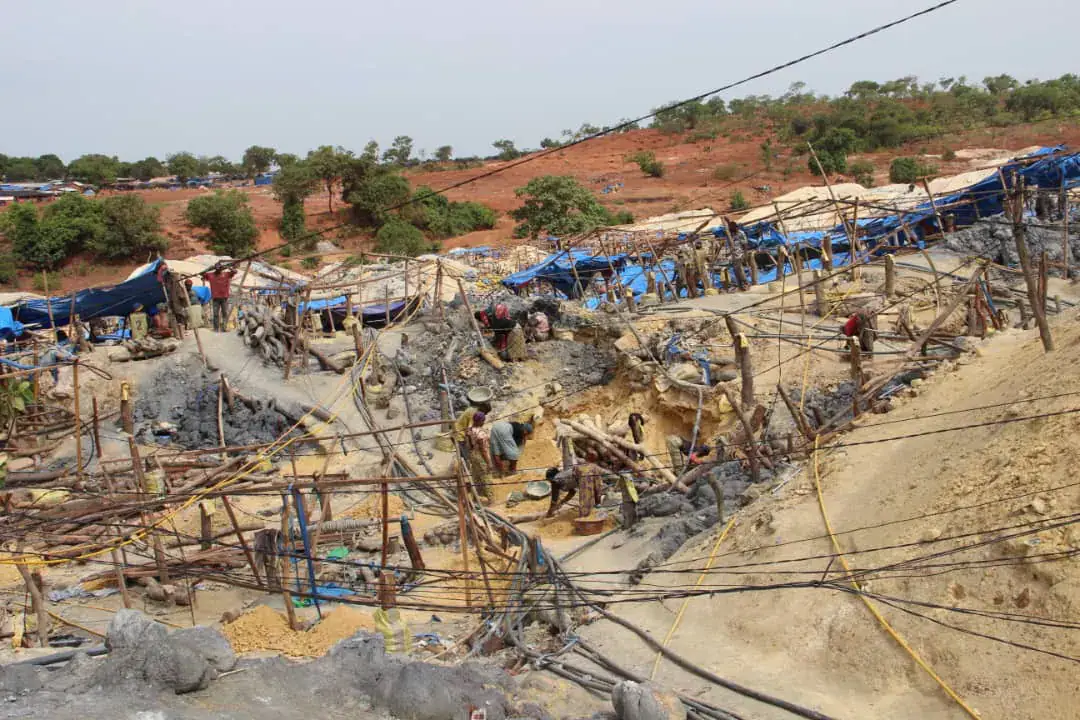
Nine individuals, including two Togolese and seven Burkinabe nationals, were convicted of illegal gold mining activities in Siguiri, Guinea. They were arrested in the Siguiri prefecture and presented before several courts in the Republic of Guinea. The defendants, identified as Wanda Nassirou, Maolane Ouedrago, Moumouni Bagagnan, Yondopape Kamité, Adama Tindreogo, Mahamadi Sawadogo, Emmanuel Kemité, Harouna Ganame, and Yassiya Belème, were charged with various crimes, including searching and exploiting mineral substances without a legal title or authorization.
During their interrogation, the defendants admitted to participating in illegal gold mining activities, with some stating they had been involved for several months. Yassiya Belème, a Burkinabe national, claimed to have arrived in Siguiri on October 17, 2026, and participated in gold mining activities for only two weeks. Wanda Nassirou, another defendant, stated that he had been working with Guineans in Fattaya, Siguiri, and had been paid as an employee for 29 days.
The defendants' testimonies revealed that they had been involved in gold mining activities in various locations, including Kouroudala and Fattaya. Some, like Moumouni Bagagnan, claimed to have worked with machines to crush and extract gold, while others, like Yondopape Kamité, stated that they had only participated for a short period, in this case, three days. Emmanuel Kemité, a Togolese national, stated that he had been working as a gold miner in Kourémalé for a month.
Adama Tindreogo, one of the defendants, denied any involvement in gold mining activities, claiming that he was a telephone salesman. However, the prosecution, represented by Sidiki Camara, requested that the court acquit Tindreogo due to lack of evidence. The prosecution also requested a five-year prison sentence for the other eight defendants, citing the serious consequences of illegal gold mining, including environmental degradation and health risks.
The court ultimately sentenced the nine defendants to prison terms ranging from 1 to 2 years and banned them from staying in Guinea for 5 years. The court's decision was based on the evidence presented and the serious nature of the crimes committed. The case highlights the issue of illegal gold mining in Guinea and the government's efforts to crack down on such activities.
According to the prosecution, illegal gold mining activities have severe consequences, including the destruction of the environment, pollution of water courses, and health risks to local populations. The prosecution also highlighted the social problems caused by these activities, including the exploitation of young girls.
The case demonstrates the collaboration between Guinean authorities and law enforcement agencies to combat illegal gold mining activities in the country. The conviction of the nine foreign nationals sends a strong message to those involved in such activities that they will be held accountable for their actions.
Key points
- The defendants were charged with various crimes, including searching and exploiting mineral substances without a legal title or authorization.
- The court sentenced the defendants to prison terms ranging from 1 to 2 years and banned them from staying in Guinea for 5 years.
- The prosecution highlighted the severe consequences of illegal gold mining activities, including environmental degradation and health risks.