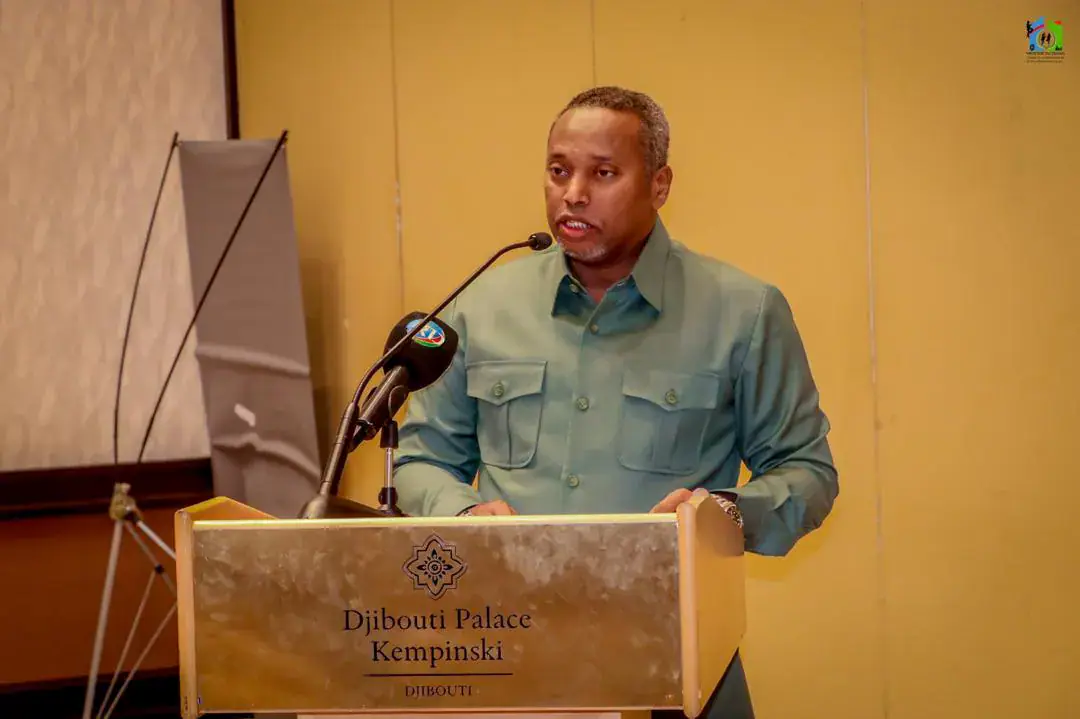
The government of Djibouti has initiated the final stage of revising its labor code, a project deemed a priority by the administration. The four-day workshop, which started on November 8 and will conclude on November 11, 2026, is being held at the Kempinski Palace Hotel. The event is part of the National Council for Labor, Employment, Health, and Safety at Work (CONTESS), a tripartite body comprising government, union representatives, and employer organizations.
The workshop was inaugurated by Minister of Labor, Formalization, and Social Protection, Yonis Ali Guedi. The minister emphasized the need for a modern, balanced, and nationally adapted legal framework that guarantees workers' rights and legitimate employer interests while promoting investment and decent job creation. The minister also stressed the importance of effective involvement from union and employer organizations in the revision process.
The revision of the labor code is taking place within the context of evolving employment markets, economic transformations, and emerging forms of professional relationships. The new code aims to provide a framework that balances the needs of both workers and employers. Participants at the workshop will review the draft project's provisions, focusing on workers' and employers' rights and obligations, improved professional relations, conflict prevention, and enhanced control mechanisms.
Discussions during the workshop will also address new forms of employment, workplace health and safety, and the progressive formalization of the labor market. The participants' observations and recommendations will be used to consolidate the project, with the goal of finalizing it and continuing the institutional adoption process. The workshop is being attended by high-level representatives from various organizations, including the European Union and the International Labor Organization (ILO).
The ILO and other international partners have reaffirmed their commitment to supporting the modernization of Djibouti's labor legislation, promoting decent work, and strengthening social dialogue. The government's efforts to revise the labor code demonstrate its commitment to improving the country's employment landscape and creating a more favorable business environment.
The revised labor code is expected to provide a more effective framework for addressing the challenges facing the labor market, promoting social justice, and protecting workers' rights. The government's collaboration with various stakeholders, including unions and employer organizations, is seen as crucial to the success of the project.
The final stage of the labor code revision is a significant step towards enhancing Djibouti's employment landscape. The government's commitment to engaging with various stakeholders and international partners underscores its dedication to creating a modern and effective labor code that benefits both workers and employers.
Key points
- The government of Djibouti has initiated the final stage of revising its labor code, a priority project aimed at creating a modern and effective employment framework.
Reporting sources
- Djibouti lance la dernière ligne droite de la révision de son Code du travail · agence djiboutienne d'information