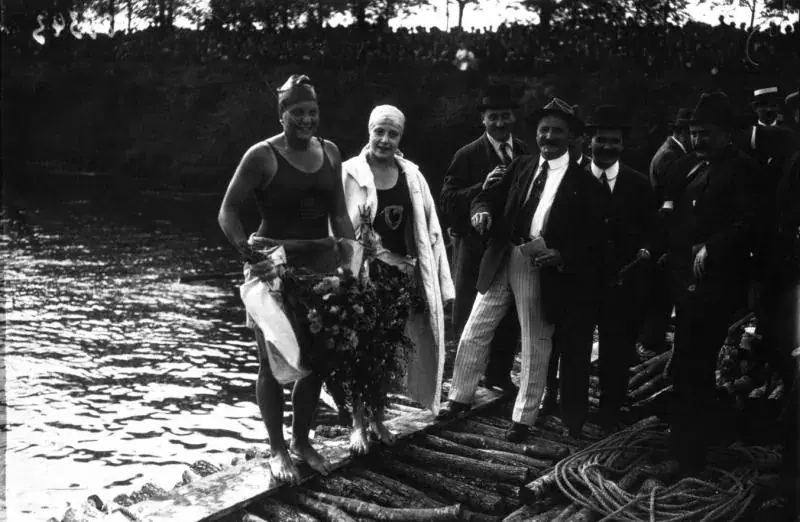
The 1920s marked a significant shift in the world of sports, with female athletes gaining unprecedented popularity. Historian Thomas Bauer has studied books and reviews from this era, focusing on the emergence of a new femininity. His research, "La sportive dans la littérature française des Années Folles," explores the intersection of sports, women's history, and literature. Bauer's work reveals that a generation of writers took an interest in female athletes, describing characters such as tennis players, skiers, and boxers.
Before the 1920s, women's sports were limited to activities like golf, horseback riding, and dance. Women from high society practiced sports that didn't compromise their elegance, while rural women engaged in more physically demanding activities. The division between men's and women's sports began to blur in the 1920s, driven by the liberation of morals and bodies following World War I. Women gained independence, earned money, and sought freedom for their bodies. They formed associations and organized sports events, leading to the institutionalization of women's sports in France.
The creation of the Fédération Sportive Féminine in 1919 and the efforts of Alice Milliat, a pioneer of women's sports, were instrumental in promoting female athletics. Milliat organized the first international women's sports competitions, including the 1921 event in Monte Carlo and the 1922 Women's Olympic Games in Paris. These events featured sports like athletics, which were previously reserved for men. However, many people still viewed women's sports as unconventional, and female athletes faced criticism and skepticism.
Bauer identifies several archetypes of female athletes in 1920s literature, including the Amazone, androgyne, and garçonne. These figures were often described as strong, muscular, and masculine. The Amazone was compared to ancient warriors and huntresses, while the androgyne was characterized by her muscular build and short hair. The garçonne was recognizable by her masculine style, including pants and shorts. These archetypes reflect the changing perceptions of women's roles in society and sports.
In contrast to these more masculine archetypes, Bauer also identifies feminine figures like the mondaine, sirène, and gracieuses. The mondaine was a elegant tennis player, while the sirène was a beautiful and alluring swimmer. The gracieuses were dancers who served as muses for artists. These characters represent the diverse ways in which women's sports were perceived and represented in literature during the 1920s.
The rise of women's sports in the 1920s was not without controversy. Many people viewed female athletes as unfeminine or unrespectable. Boxers, in particular, faced harsh criticism and were often stigmatized. Bauer notes that female boxers were frequently depicted as tragic figures in popular novels of the time. Despite these challenges, women's sports continued to gain popularity, paving the way for future generations of female athletes.
Bauer's research provides a unique window into the world of women's sports in 1920s France. By analyzing literary representations of female athletes, he sheds light on the social and cultural attitudes of the time. His work highlights the complex and multifaceted nature of women's sports during this period, revealing both the challenges and opportunities faced by female athletes.
Key points
- The 1920s saw a significant increase in women's sports participation and popularity in France.
- Historian Thomas Bauer has identified several archetypes of female athletes in 1920s literature, including the Amazone, androgyne, and garçonne.
- Women's sports in the 1920s were often viewed as unconventional and faced criticism and skepticism from the public.