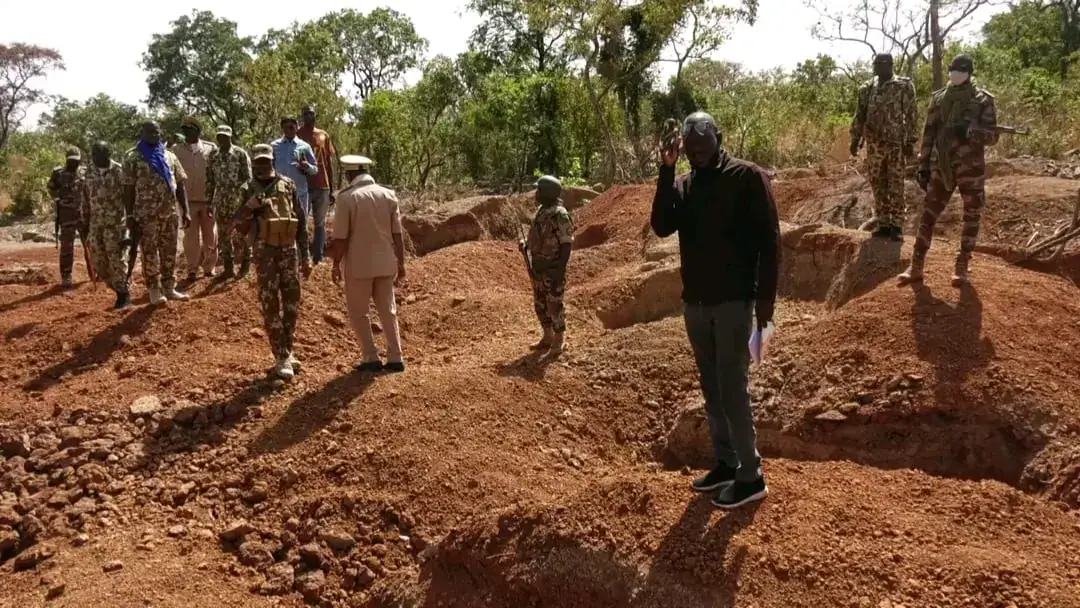
The protected forest of Limakolé in Mali's Kita region has been overrun by clandestine gold miners, prompting urgent action from regional authorities. A delegation led by Prefect Abdoulaye Cissé and accompanied by security forces was dispatched to Djiabasouroutou, a village on the Guinean border. The mission aimed to assess the situation, provide initial assistance, and facilitate the return of these foreign nationals to their home countries.
The influx of gold miners, primarily from Togo, Burkina Faso, and Benin, follows their expulsion from mining sites in Guinea. The Malian authorities, under the leadership of Governor Daouda Maïga, are seeking to address the issue while emphasizing the need to respect mining regulations. The situation on the ground remains challenging, with local stakeholders calling for initiatives to encourage young people to engage in alternative activities.
The delegation's visit to Djiabasouroutou was a direct response to the surge in unauthorized gold mining activities in the area. By engaging with the affected communities and providing some financial assistance, the authorities aim to mitigate the immediate impact of the crisis. However, long-term solutions will require a more comprehensive approach to tackle the root causes of this phenomenon.
The gold miners' invasion of the Limakolé forest has significant environmental and socio-economic implications. The protected area is crucial for local ecosystems, and the presence of these unauthorized miners poses a threat to the region's biodiversity. Furthermore, the situation highlights the complexities of managing transnational migration and informal economic activities in the region.
Governor Daouda Maïga's initiative underscores the Malian government's commitment to addressing the issue. By collaborating with local stakeholders and international partners, the authorities hope to develop effective strategies for managing the flow of migrants and promoting sustainable economic activities. The involvement of security forces also signals a determination to enforce mining regulations and maintain order.
Despite the challenges, local actors are advocating for a shift in focus towards alternative livelihoods for young people. This approach could help reduce the allure of unauthorized gold mining and promote more sustainable economic development in the region. The Malian government, in conjunction with its partners, will need to invest in initiatives that create jobs and stimulate local economies.
The situation in Limakolé serves as a reminder of the broader regional dynamics at play. The free movement of people and goods across West African borders presents both opportunities and challenges. As the Malian authorities continue to grapple with the issue, they will need to balance the need for economic development with the imperative of protecting the environment and enforcing the law.
Key points
- Mali's regional authorities intervene as foreign gold miners, expelled from Guinea, occupy the protected Limakolé forest.