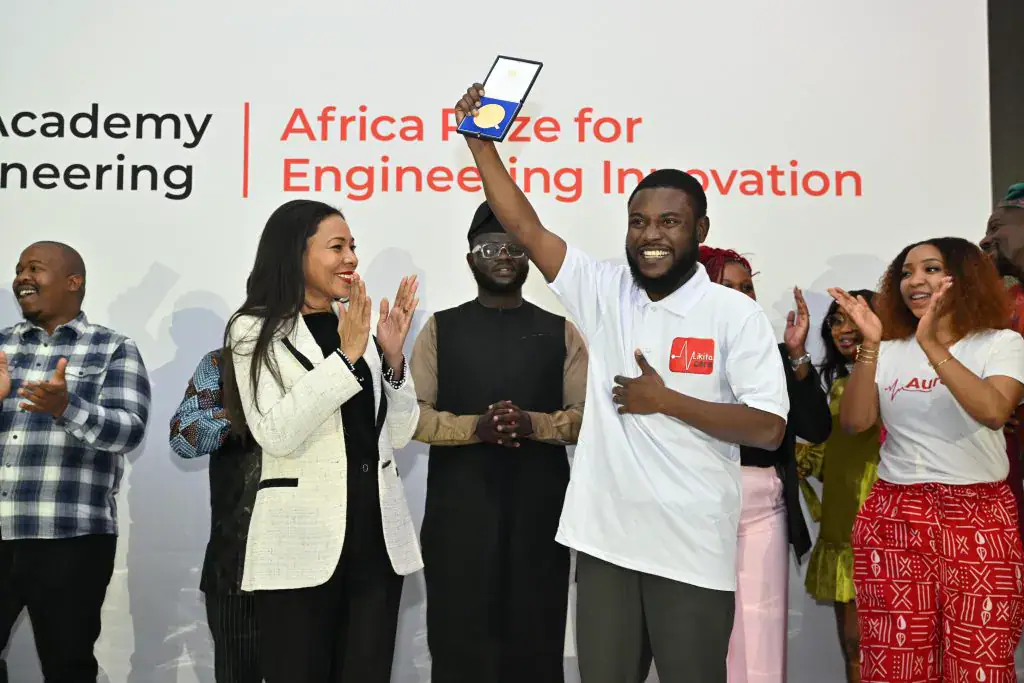
Mamane Kabirou Ousseini, a Nigerien innovator, has been named the winner of the 2026 Africa Prize for Engineering Innovation. The £50,000 award, presented at a ceremony in Johannesburg, South Africa, recognizes his medical monitoring platform, Likita Care. Ousseini is the first engineer from Niger to participate in and win the Africa Prize. His innovation aims to provide healthcare workers with reliable, real-time patient data in resource-limited settings.
Likita Care is an integrated medical monitoring platform that combines connected hardware, clinical software, and local digital manufacturing. The platform supports patient, cardiac, and prenatal monitoring, with a central dashboard allowing healthcare workers to monitor multiple patients at once. An embedded AI module helps interpret vital signs in real-time. Over 70 monitoring units have been produced and deployed in Niger, with the system used across five medical centers after being tested with over 100 patients and 4,000 collected data points.
Ousseini's journey to winning the Africa Prize began when he was working on the maintenance and repair of medical equipment in Niger's hospitals. He saw firsthand how imported monitoring devices often fell out of service due to a lack of spare parts and specialist support. This inspired him to co-found Likita Care and develop locally manufactured monitoring technology that can be maintained and repaired in Niger. With the £50,000 prize, Ousseini plans to commercialize Likita Care in Niger and expand into neighboring West African markets.
The Africa Prize for Engineering Innovation is Africa's largest award dedicated to supporting engineering innovation and impactful entrepreneurship. Founded by the Royal Academy of Engineering in 2014, the annual prize provides long-term support for innovators through funding, training, and networking opportunities. The prize has a proven legacy of scaling solutions that transform lives and address local challenges. This year's judging panel was chaired by Rebecca Enonchong FREng and included several other esteemed judges.
Alongside Ousseini, three other innovators were recognized for their outstanding work. Dyllon Randall from South Africa developed Pee-Cycling, a modular urine-to-fertilizer recovery system. Alice Muhuhu from Kenya created MoyoECG, a portable heart monitor designed to help frontline healthcare workers identify potential heart conditions. Naom Monari from Kenya developed Renal Roads, a fully equipped mobile dialysis clinic. Each of these innovators received £10,000 to support the development of their projects.
The £5,000 One-to-Watch Award, decided by audience vote, went to Johannes Amo-Aye from Ghana for his Fusion Wind Turbine, a hybrid wind and solar microgrid system. The four finalists pitched to a live audience and a panel of judges at an awards ceremony held in Johannesburg. They were selected from a cohort of 16 entrepreneurs who completed an eight-month program of training and mentoring.
The Royal Academy of Engineering offers lifelong support and connects Africa Prize alumni to global networks that can accelerate their business and technology development. The Africa Prize has been generously supported by the UK Department for Business, Innovation, Science, and Trade through the International Science Partnerships Fund. Ousseini's win is seen as an inspiration to entrepreneurs, particularly in environments where challenges are greater.
Key points
- Mamane Kabirou Ousseini wins 2026 Africa Prize for Engineering Innovation with Likita Care.
- Likita Care is a medical monitoring platform that provides real-time patient data in resource-limited settings.
- The Africa Prize for Engineering Innovation provides long-term support for innovators through funding, training, and networking opportunities.