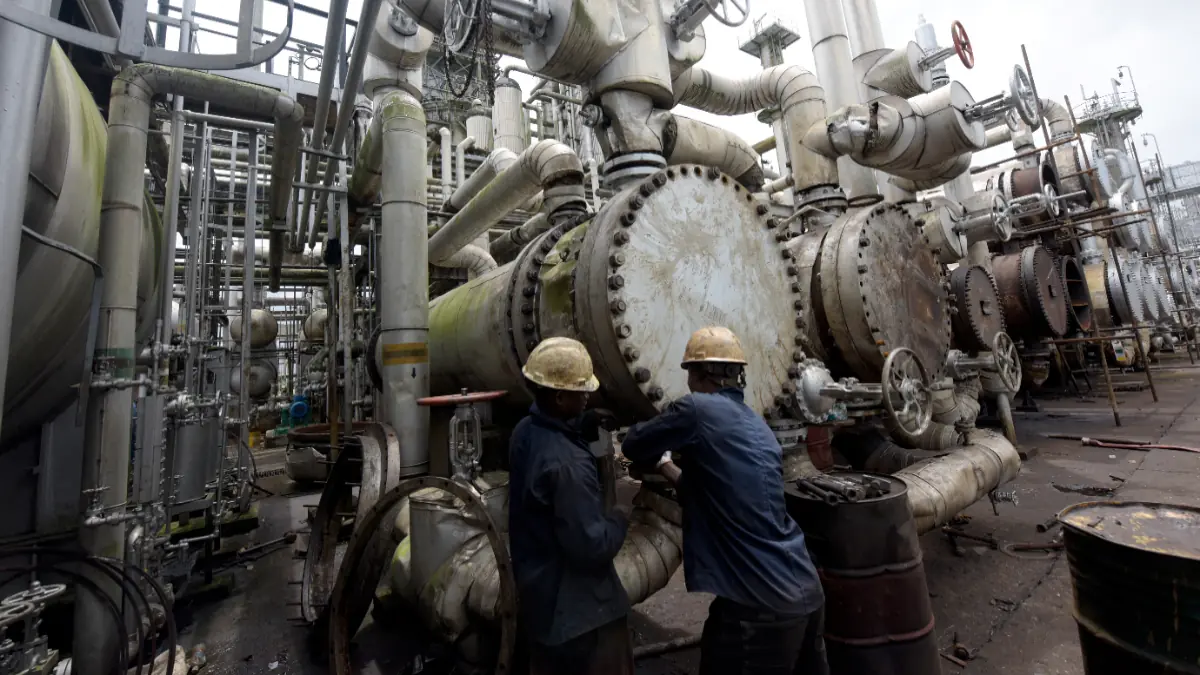
Some Nigerians and economic experts have called for the speedy rehabilitation and restart of refineries to strengthen domestic petrol supply and reduce pump prices. The stakeholders, including motorists, traders, and economic experts, made the call in Abuja, citing the continuous rise in prices of petroleum products and the attendant burden on ordinary Nigerians. They attributed the high cost of petrol to the non-functional refineries.
A commercial driver, Mr. Thomas Unongo, expressed concern over the high cost of petrol and its impact on his business. He regretted that the plan by the Federal Government to crash transportation fare by Oct. 1 was yielding minimal results due to high cost of petrol and difficulty in buying Compressed Natural Gas (CNG) at refilling stations. Unongo urged the government to ensure that the refineries are working and at full capacity.
A motorist, Mr. Friday Ogar, also called on the Federal Government to take urgent steps to fix its refineries to bring down the prices of petroleum products. He noted that the Dangote refinery, being a private entity, is more concerned about profit and not interested in affordability of its products. Ogar said Nigerians deserve affordable energy costs, having been blessed with crude oil.
A trader, Mrs. Caroline Nweke, lamented on how soaring fuel prices had affected her business, causing low productivity. She noted that Nigeria is blessed with crude and four refineries, and it is the government's responsibility to make them functional for the benefit of Nigerians and economic growth. Nweke urged the government to take action to address the issue.
An economic expert, Mr. Lawrence Nze, said reviving the refineries would boost local refining capacity, reduce dependence on imported petroleum products, and help stabilise the supply and cost of PMS. He noted that the continued non-operation of refineries forces Nigeria to rely on imported refined petroleum products, which drains foreign reserves and exposes the economy to global price volatility.
Another economic expert, Mr. Felix Odeh, said relying on imports had made Nigeria vulnerable to external shocks, such as geo-political conflicts or supply chain disruptions. He noted that operational refineries would guarantee a steady domestic supply of fuel, reduce vulnerability to external crises, and enhance Nigeria's strategic autonomy. Odeh urged the government to prioritise technical expertise over political appointments in refinery management.
The Nigerian National Petroleum Company Ltd. (NNPC Ltd.) said it was pursuing technical equity partnerships with experienced refinery operators to ensure sustainable performance of its refineries. Chinese investors have expressed strong interest in the two refineries, although no final agreement has been signed. The existing Memorandum of Understanding (MoU) allows the Chinese team to conduct technical studies and submit a proposal to NNPC.
Key points
- Reviving Nigeria's refineries can boost local refining capacity and reduce dependence on imported petroleum products.
- The non-operation of refineries forces Nigeria to rely on imported refined petroleum products, which drains foreign reserves and exposes the economy to global price volatility.
- Operational refineries would guarantee a steady domestic supply of fuel, reduce vulnerability to external crises, and enhance Nigeria's strategic autonomy.