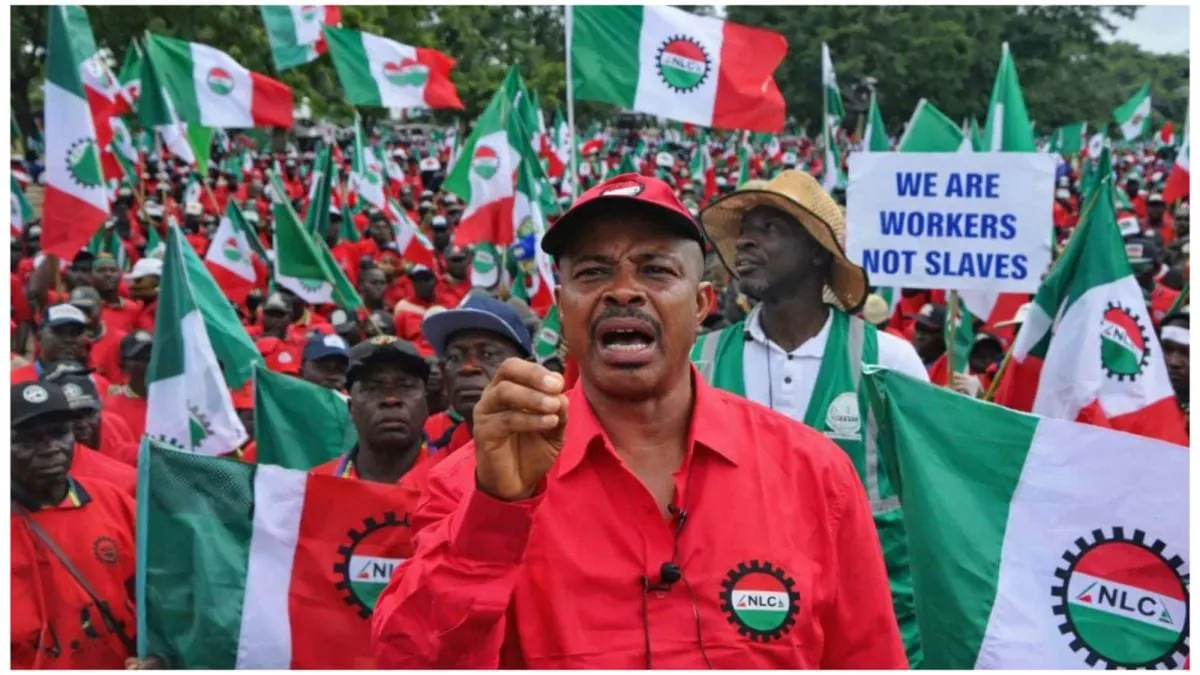
Nigerian public service workers are set to embark on a three-day warning strike from October 2 to October 4, 2026, due to the country's worsening economic conditions. The strike was declared by the Joint National Public Service Negotiating Council (JNPSNC), which represents eight public sector unions. The council cited the government's failure to respond to its demands as the reason for the industrial action. The demands include a reduction in the price of petrol, an immediate wage award for workers, and the commencement of negotiations for a new national minimum wage ahead of 2027.
The JNPSNC directed its national and state leadership to mobilise public servants across the country for the strike. The council's decision was contained in a circular dated October 1 and signed by the National Secretary of the JNPSNC, Gbenga Olowoyo. According to the circular, the strike will commence at midnight on Friday, October 2, and end on Sunday, October 4, 2026. The council urged public servants in the federal, state, and local government services to participate in the action, citing that the hardship was affecting workers, their dependants, and vulnerable Nigerians.
The economic situation in Nigeria has become increasingly difficult, with the prevailing conditions described as "unbearable and frustrating" by the JNPSNC. The council stated that the high price of petrol, which ranges from N1,450 to N2,000 per litre, and as high as N2,500 in some areas outside major cities, was placing severe pressure on workers. The council called on the government to provide an intervention fund to address landing costs and support oil and gas operators.
The JNPSNC also demanded that the government approve immediate financial relief for workers to cushion the impact of prevailing economic conditions. Additionally, the council urged the government to constitute a tripartite committee to begin negotiations for a new national minimum wage expected to become due in 2027. According to the council, beginning the process early would help prevent administrative or procedural delays in implementing any new minimum wage eventually negotiated and passed into law by the National Assembly.
The JNPSNC had given the government until September 30 to address its concerns, warning that failure to act would trigger the three-day warning strike. However, the council's October 1 circular confirmed that the warning strike would proceed. The council comprises eight public sector unions, including the Nigerian Civil Service Union, Medical and Health Workers Union, and Association of Senior Civil Servants of Nigeria.
The strike notice has been urged to reach workers nationwide by the JNPSNC. The council's leaders have been ordered to commence immediate mobilisation for the industrial action. The JNPSNC warned that the September 30 deadline was "sacrosanct," urging the government to address the demands, including through the president's Independence Day address.
The Nigerian workers' strike is centred on three major demands: a reduction in the price of petrol to N500 per litre, an immediate wage award for workers, and the commencement of negotiations for a new national minimum wage ahead of 2027. The strike is expected to affect public services across the country, with workers and their dependants bearing the brunt of the economic hardship.
Key points
- The strike is a result of the government's failure to respond to the JNPSNC's demands.
- The economic situation in Nigeria has become increasingly difficult, with the prevailing conditions described as "unbearable and frustrating" by the JNPSNC.
- The strike will commence at midnight on Friday, October 2, and end on Sunday, October 4, 2026.