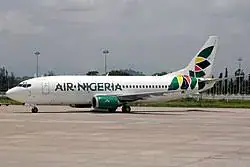
The Nigerian Senate has rejected a proposal to revive the country's defunct national airline, Nigeria Airways. Instead, lawmakers are urging the federal government to renegotiate its aviation agreement with China. This move aims to secure direct flights for Nigerian airlines, promoting stronger air connectivity between the two nations. The Senate's decision follows a motion by Senate Chief Whip, Tahir Monguno, who argued that the existing aviation arrangement needs review to address inequalities in flight operations.
During the debate, Senate President Godswill Akpabio questioned the practicality of reviving an airline that had ceased operations. He recalled that Nigeria Airways once operated a fleet of nearly 40 aircraft. Akpabio emphasized the importance of establishing a viable Nigerian-owned national carrier. However, he expressed concerns about the feasibility of restoring the defunct airline. The Senate president's comments reflected skepticism about the proposal to revive Nigeria Airways.
The Senate's decision is driven by growing economic relations and passenger traffic between Nigeria and China. According to Senator Monguno, over one million Nigerians live in China, while more than 500,000 Chinese nationals reside in Nigeria. These figures, although not independently verified, highlight the need for stronger air connectivity. Direct flights could reduce travel time, improve trade, strengthen supply chains, and limit foreign exchange outflows.
Senator Abdul Ningi expressed concern that Nigeria is not deriving sufficient economic benefits from its relationship with China. Despite expanding bilateral trade, Nigeria's economic gains are limited. Ningi's comments reflect a broader debate about the balance of Nigeria's economic relationship with China. The Senate's resolution aims to address these concerns by promoting reciprocal access for Nigerian carriers.
The Senate has called on the Federal Ministry of Aviation and Aerospace Development to renegotiate the bilateral agreement with China. Lawmakers urge the ministry to secure reciprocal operating rights for Nigerian airlines. Additionally, the Federal Ministry of Foreign Affairs is tasked with initiating diplomatic discussions with Chinese authorities. These discussions will focus on easing business visa requirements for Nigerian traders and ensuring fair allocation of airport slots.
The proposed measures aim to strengthen bilateral trade and improve travel opportunities. By promoting direct flights and easing visa requirements, Nigerian airlines can benefit more fully from the country's growing economic relationship with China. The Senate's resolution reflects a broader effort to optimize Nigeria's economic engagement with China.
The Senate's decision also serves as a warning to Chinese airlines. If Nigerian carriers continue to face restrictions on reciprocal access to Chinese airports, Nigeria may reconsider aviation privileges granted to Chinese airlines. This statement, made by Senate President Akpabio, underscores the Nigerian government's commitment to securing fair treatment for its airlines.
Key points
- The Nigerian Senate has rejected a proposal to revive the defunct Nigeria Airways.
- The Senate is pushing for direct flights between Nigeria and China.
- The goal is to promote stronger air connectivity and improve economic relations between the two nations.