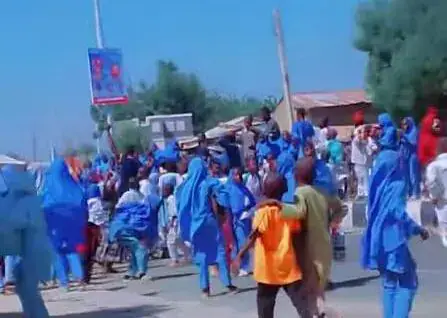
The growing desperation among Nigeria's politicians to win public support ahead of the 2027 general elections has taken a concerning turn, with schoolchildren being used for political activities. Recent viral videos show schoolchildren chanting opposing political slogans in Borno State and the Federal Capital Territory (FCT). In one instance, dozens of schoolchildren in Maiduguri, Borno State, were seen chanting "Tinubu Must Go" while running along a street.
Another video showed pupils and teachers in four public primary schools in Gwagwalada Area Council of the FCT singing "On Your Mandate We Shall Stand", the campaign anthem associated with President Bola Tinubu. The singing reportedly followed the distribution of school bags and notebooks by the PBAT Door2Door Campaign support group, led by Chief Government Ekpemudopolo, alias Tompolo.
The recurrence of such incidents suggests that politicians and education authorities have either failed to recognise the dangers of this practice or are unwilling to discourage it. As a result, children are being exposed to the corrosive tendencies of Nigerian politics, which can have long-term effects on their understanding of democratic governance and citizenship.
Children are impressionable, and their understanding of political issues is still developing. They should be allowed to mature, develop independent thinking, and form their own opinions without being recruited into the political battles of adults. The use of schoolchildren for partisan mobilisation raises questions about the role of schools in teaching civic education and promoting responsible citizenship.
Schools have a responsibility to teach pupils about democracy, elections, political institutions, citizens' rights, and responsibilities. However, civic education is fundamentally different from partisan mobilisation. Schools must not become extensions of political parties or campaign organisations, and education authorities must ensure that schools maintain their neutrality.
The incidents also raise questions about compliance with the Child Rights Act 2003, which provides safeguards against the exploitation and abuse of children. Section 1 of the Act establishes that the best interests of the child must be the primary consideration in every action concerning a child. Section 11 guarantees the protection of children from economic exploitation and from work that may be hazardous or interfere with their education.
The use of schoolchildren for partisan mobilisation is a concerning trend that must be addressed by politicians, education authorities, and parents. It is essential to protect children's innocence and ensure that they are not exploited for political gain. By doing so, we can help them develop into responsible citizens who can make informed decisions about their country's future.
Key points
- Politicians and education authorities must take steps to prevent the use of schoolchildren for partisan mobilisation.
- The Child Rights Act 2003 provides safeguards against the exploitation and abuse of children.
- Schools must maintain their neutrality and focus on teaching civic education and promoting responsible citizenship.
Reporting sources
- Keep Pupils Out Of Partisan Slogans · Leadership