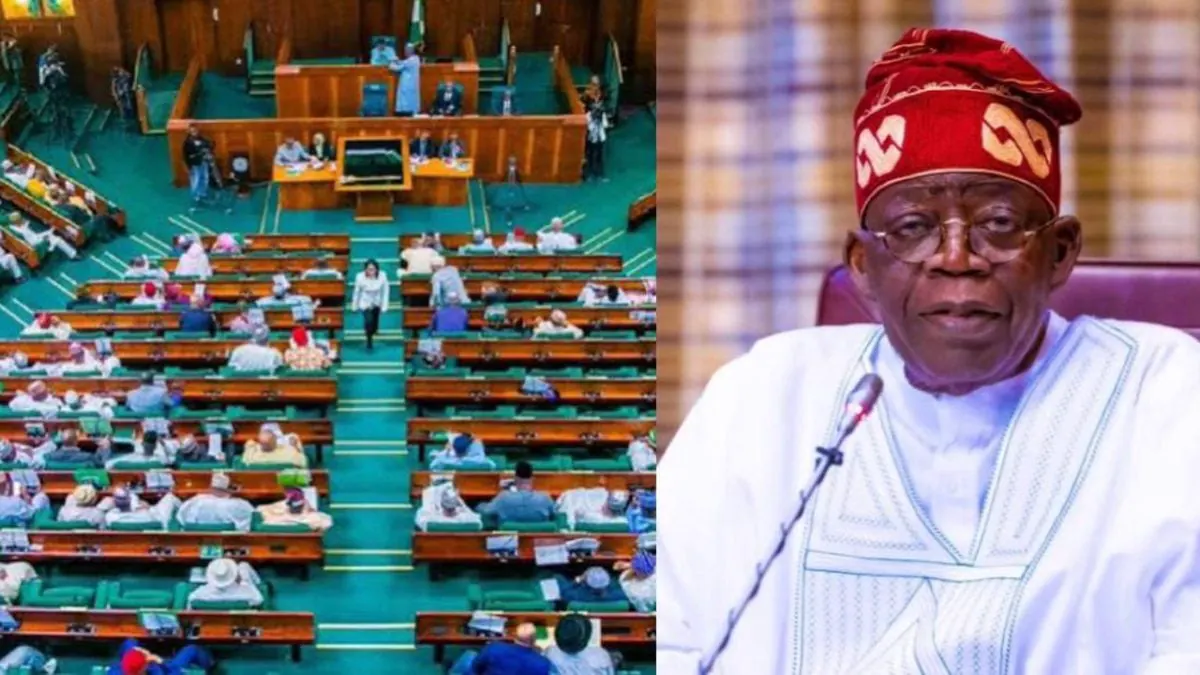
The Nigerian House of Representatives has urged President Bola Tinubu to take decisive action against rising insecurity and youth restiveness in the country. This call was made during a plenary session on Tuesday, following the adoption of a motion on a matter of urgent public importance, sponsored by Honourable Billy Osawaru. The motion highlights the government's constitutional responsibility to provide for the welfare and security of its citizens.
According to Osawaru, the current state of insecurity in Nigeria is alarming, with banditry, killings, kidnappings, cultism, and youth restiveness on the rise due to mass unemployment. Statistics from SB Morgen Intelligence reveal that over 10,000 people were killed and 7,500 kidnapped in over 1,700 security incidents as of 2024. In the first quarter of 2025 alone, 2,683 deaths, 1,107 kidnappings, and 245 kidnap incidents were recorded. The National Bureau of Statistics reports a general unemployment rate of 3.06 percent and a youth unemployment rate of 5.34 percent as of 2025.
The House also expressed concern about the high number of out-of-school children in Nigeria, which stands at over 13.5 million, the highest globally. This situation creates an environment where young people can be easily recruited by criminal organizations. Osawaru noted that several sectors with high youth employment potential, such as agriculture and manufacturing, have collapsed or are underperforming. For instance, Nigeria's agricultural sector suffers from post-harvest losses exceeding 40 percent due to a lack of storage and processing facilities.
The lawmakers observed that Nigeria's solid minerals sector, which has over 44 mineral types worth about $700 billion, contributes only about 0.5 percent to the country's GDP. In contrast, countries like South Africa contribute around 10 percent. The House also noted that illegal mining has become a source of funding for bandits in the North-West, according to reports from the Nigerian Extractive Industries Transparency Initiative and the Global Initiative Against Transnational Organized Crime.
To address these challenges, the House urged the government to declare a "National Youth Jobs Emergency" and prioritize the revival of key dying sectors. The lawmakers also called on the government to revive the textile industries in Kaduna and other states, which would create job opportunities for the unemployed and address youth restiveness. Additionally, the House advocated for the appropriation of funds for modern storage facilities and agro-processing clusters in each geopolitical zone.
The House also underscored the need to amend the Mining Act to formalize artisanal miners, establish six Mineral Processing Zones, and deploy security to stop illegal mining that funds banditry in the North-West. Furthermore, the lawmakers tasked the government and security agencies to secure the safe rescue of 116 schoolchildren and other persons abducted in Borno State. The resolution was passed following the adoption of a motion under urgent public importance, sponsored by Honourable Midala Balami.
In another development, the House repealed and extended the capital component of the 2025 Appropriation Act from September 30 to December 31. The Executive bill was considered and passed after the consideration of the 2025 Appropriation Act at the Committee of Supply, chaired by the Deputy Speaker, Hon. Benjamin Kalu. The Majority Leader, Honourable Julius Ihonvbere, solicited the support of members to amend the Appropriation (Repeal and Enactment) Act, 2025.
Key points
- The Nigerian House of Representatives has called on President Bola Tinubu to address rising insecurity and youth restiveness by revitalizing dying economic sectors.
- The lawmakers urged the government to declare a "National Youth Jobs Emergency" and prioritize the revival of key sectors.
- The House also tasked the government and security agencies to secure the safe rescue of 116 schoolchildren and other persons abducted in Borno State.