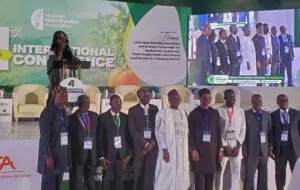
Nigerian plant breeders and stakeholders in the agriculture sector have emphasized the need for stronger funding, investment in infrastructure, research, and breeding innovations to address food security challenges. This call to action was made at the 4th International Conference of the Nigerian Plant Breeders’ Association (NPBA), held on September 23-24, 2026, at the Nicon Luxury Hotel in Abuja. The conference brought together a diverse group of participants, including researchers, seed companies, farmers, scholars, financial institutions, development partners, investors, and government representatives.
The conference, themed “Leveraging Breeding Innovations and Strategic Partnerships for Agribusiness Investment, Stable Supply Chain and National Food Security in a Changing Climate,” focused on the importance of plant breeding in building climate-resilient and disease-resistant crops. A discussion panel, moderated by Prof. Sunday Makinde, highlighted the need for aggressive funding for the agricultural innovation ecosystem and deeper private-sector integration. The panel emphasized that plant breeding is fundamental to achieving food security.
Dr. Solomon Afuape, Director and Research Coordinator of the Sweet Potato Programme, noted that inadequate infrastructure is a significant discouragement for investment in agriculture. He stated that investors risk losing substantial resources if critical infrastructure and support systems required for agricultural production are not adequately addressed. Afuape cited examples of major agro-companies that invested billions of naira but failed within five years due to inadequate power and transportation.
Afuape stressed that increased government funding for agricultural research is crucial, emphasizing that the number of funding agencies is less important than the resources available for research. He also highlighted the need for Nigeria to increase agricultural productivity rather than continually expanding cultivated land, as agricultural land competes with other uses. Afuape noted that limited land resources necessitate increased productivity to achieve food sufficiency.
Prof. Muhyideen Oyekunle, a maize breeder at the Institute for Agricultural Research, Ahmadu Bello University, Zaria, urged researchers to partner with institutions whose mandates align with their innovations. Such partnerships, he noted, can help researchers develop stronger proposals and access funding locally and internationally. This collaboration is essential for advancing agricultural research and achieving food security.
Prof. Richard Akinwale of the Department of Crop Production and Protection, Obafemi Awolowo University, emphasized the impact of environmental factors on plant performance. He noted that environmental factors account for the largest variation in plant performance and urged plant breeders to collaborate with agro-climatologists and soil scientists. This collaboration can help reduce environmental effects and develop crops capable of coping with multiple stresses.
The stakeholders at the conference concluded that a multi-faceted approach is necessary to achieve food sufficiency in Nigeria. This approach includes increased funding for agricultural research, investment in infrastructure, and strategic partnerships between researchers, institutions, and the private sector. By working together, Nigeria can develop climate-resilient and disease-resistant crops, increase agricultural productivity, and ensure a stable food supply.
Key points
- Nigerian plant breeders call for stronger funding and infrastructure to combat food security challenges.
- Increased government funding for agricultural research is crucial for achieving food sufficiency.
- Partnerships between researchers, institutions, and the private sector are essential for advancing agricultural research and achieving food security.