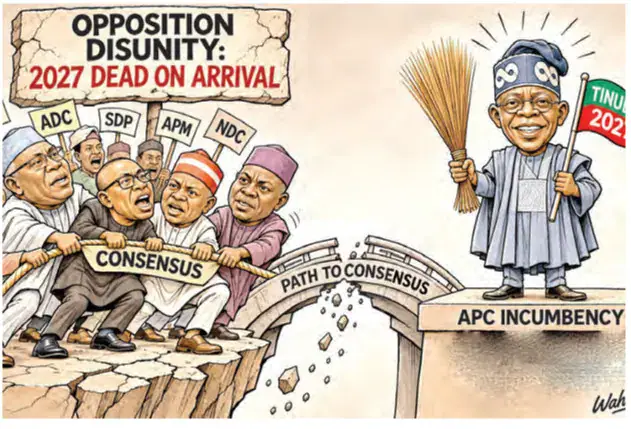
Nigerian opposition parties are set to meet on Monday, 30th November, to agree on a presidential consensus candidate for the 2027 general polls. The meeting comes as various parties and groups, including the Allied Peoples Movement (APM) and the African Democratic Congress (ADC), have been mapping out frameworks for unity. The drive for an opposition consensus gained momentum during the Abuja summit in August 2026.
Governor Seyi Makinde, the APM presidential candidate, has signalled his intention to step down for the crisis-ridden ADC. This development is seen as a significant move towards unity among opposition parties. Prominent politicians have publicly implored contenders such as Atiku Abubakar, Peter Obi, and Adewole Adebayo to prioritise a unified ‘cabinet-in-waiting’ over individual ambition.
The opposition parties believe that to defeat the incumbent administration led by President Bola Ahmed Tinubu, they must reduce the 2027 presidential race to a two-horse race. Former Archbishop of the Abuja Archdiocese, John Cardinal Onaiyekan, has consistently maintained that without unity of purpose within the opposition, the prospects of defeating the incumbent are already dead on arrival.
Pro-consensus-candidate advocates are citing the opposition’s past success in 2015, when they united behind a single candidate, as a reason to repeat this strategy. Many are calling for power to be retained at all costs, given the need to maintain the power-sharing formula between the North and South. This call has become imperative, given former Vice President Atiku Abubakar’s determination to wrest power from the present administration.
Atiku Abubakar’s ability to mount his last presidential bid is being weakened by the constant reminder that power must reside in the South, and that if he wants power, he must wait for the North’s turn in 2031. With the retired Customs officer turning 80 this week, he may reject calls to withdraw from the race and wait for 2031, when he will be 85.
Despite the opposition’s commitment to defeating Tinubu next year, clouds of uncertainty remain. Unlike in 2023, when religious factors were deployed during the polls, religion has become less attached to the campaigns. The softening of positions on the Muslim-Muslim ticket is reflected in the performance profile of the Tinubu administration, which its former supporters are accusing of favouring more Christians in appointments.
The opposition’s roadblock to defeating Tinubu lies in their ability to unite behind a single candidate. If successful, they may be able to mount a strong challenge to the incumbent administration. However, if they fail to unite, their chances of winning the 2027 presidential poll may be slim. The meeting on Monday is expected to provide clarity on the opposition’s strategy.
Key points
- Opposition parties to meet on Monday to agree on a presidential consensus candidate.
- Atiku Abubakar's ability to mount his last presidential bid is being weakened by the power-sharing formula between the North and South.
- The opposition believes that to defeat Tinubu, they must reduce the 2027 presidential race to a two-horse race.
Reporting sources
- An Opposition In Disunity · Leadership