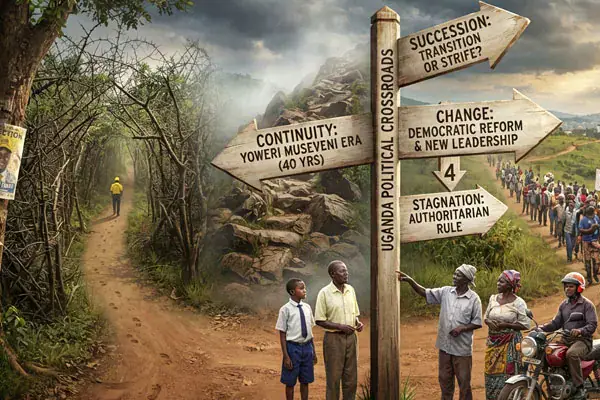
Many Ugandans believe their country has reached a critical juncture, sparking debate about its political future. Some citizens see the current state of affairs as positive, while others disagree, citing concerns about the underlying structure and dynamics of the government. The columnist, Moses Khisa, is among those who think Uganda is at a particularly perilous crossroads. This perspective is rooted in the country's 40-year political history.
In 1986, Uganda's new rulers promised a fundamental change, shifting away from abuse of power and lawlessness to a state of accountable government, respect for the rule of law, freedom, and democracy. More than four decades later, the country has made some progress in curbing the power of the gun and promoting civilian authority. However, recent developments suggest that Uganda's trajectory has deviated from the 1986 promise of fundamental change.
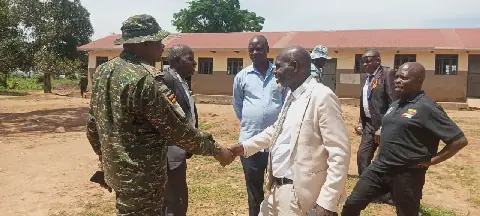
The hollowing out of civilian institutions and the rise of military-backed displays of authority mark a significant departure from the initial promise. Today, it is challenging to argue that uniformed personnel are accountable and subordinate to elected civilian leaders. The source of public authority appears to be coercive force rather than people power at the ballot. This shift has raised concerns about Uganda's return to its troubled past.
However, some analysts argue that Uganda has not simply returned to its past but is instead recreating a more unpleasant present. The current standards and yardsticks make past abuses of power far worse, and the silence of individual and institutional voices in the face of excesses is disheartening. For instance, high-ranking officials and institutions have remained silent despite clear abuses of due process and violations of rule of law principles.
The abuse of prosecutorial authority today is the worst Uganda has experienced since 1986. The inability of Parliament to summon its oversight powers and check Executive authority is also stark. The country's situation has become increasingly uncertain, with mounting anxiety and pervasive fear. The writing had long been on the wall about the need to renegotiate the terms of Uganda's political system.
The ground has shifted rapidly in recent years, making talk of renegotiating and rewriting rules seem out of step. Uganda is now at a moment when many outcomes are possible. History shows that political power is rarely as settled as it looks, and even small events can change a nation's course in unexpected ways. The country's future hangs in the balance, with various possibilities emerging.
As Uganda navigates this critical juncture, its leaders and citizens must consider the country's 40-year political history and the initial promise of fundamental change. The situation demands a re-examination of the rules of engagement governing a viable future. Ultimately, the outcome will depend on the actions of Uganda's leaders and citizens, who must work together to shape the country's trajectory.
Key points
- Uganda's trajectory has deviated from the 1986 promise of fundamental change, with the hollowing out of civilian institutions and a rise in military-backed displays of authority.
Reporting sources
- Thinking about Uganda’s political crossroads · Daily Monitor