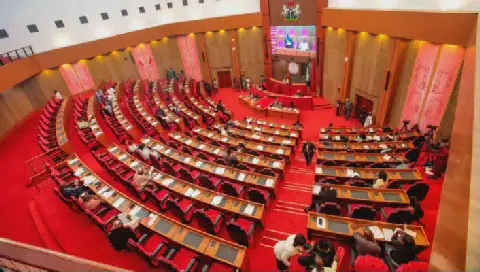
The President of the General Court-Martial, Air Vice Marshal H.I. Alhaji, has vowed to continue the trial of 36 Nigerian military personnel accused of plotting to overthrow President Bola Tinubu. The defendants have been on a nine-day hunger strike to protest their detention and alleged rights violations by military authorities. Sources close to the matter told SaharaReporters that the defendants had gone without food for nine days.
The hunger strike has sparked a heated debate between the court president and defence lawyers, who argue that proceeding with the trial while their clients remain on hunger strike undermines their constitutional right to a fair hearing. The lawyers claim that some defendants are physically unfit to stand trial due to the prolonged hunger strike. One defence lawyer raised concerns about the prosecution's handling of additional documents.
The defence lawyer argued that the prosecution should have served the documents at the addresses of the various defence law firms instead of repeatedly summoning lawyers to collect them at the court premises. Only 17 defence lawyers had collected the additional evidence due to the prosecution's insistence on the existing arrangement. The court president dismissed the argument that the hunger strike should prevent the continuation of the trial.
Air Vice Marshal Alhaji cited his personal experience with fasting, saying he had gone without solid food for two weeks and still appeared in court. He maintained that the defendants' decision not to eat was voluntary and should not automatically prevent the court from performing its responsibilities. The court president directed defence counsel to submit a formal written application if they wanted to challenge the continuation of proceedings on medical grounds.
Defence lawyers strongly opposed the court's position, insisting that it needed to consider the physical condition of the accused persons and the circumstances that led to their hunger strike. They argued that the court had a responsibility to protect its own integrity by ensuring that the complaints triggering the protest were properly addressed before the proceedings continued.
The defence lawyers also criticised the court's failure to adequately address repeated complaints by the defendants and their legal representatives. They claimed that the defendants were not on hunger strike because they were not hungry but to draw attention to issues they believed had been neglected by the military authorities.
Air Vice Marshal Alhaji acknowledged that some defendants had embarked on a hunger strike and that the court was aware of their complaints against the military authorities. He insisted that the issues could not all be resolved within the courtroom and required engagement with the relevant military authorities outside the proceedings. The court had previously directed the military authorities to allow the defendants access to their families and lawyers.
Key points
- The court-martial has continued despite a nine-day hunger strike by the 36 defendants.
- Defence lawyers argue that proceeding with the trial undermines the defendants' constitutional right to a fair hearing.
- The court president has directed defence counsel to submit a formal written application if they want to challenge the continuation of proceedings on medical grounds.