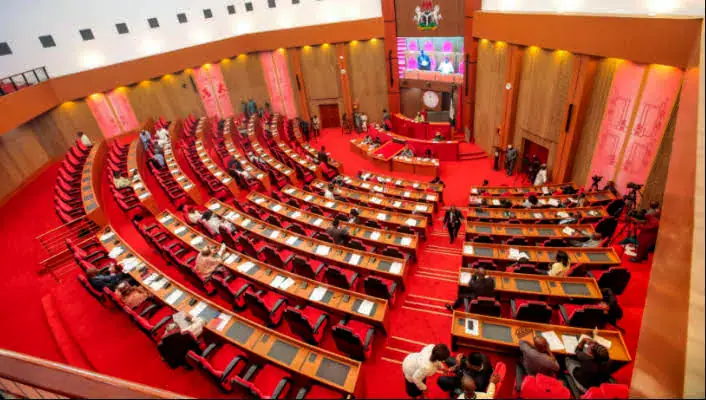
The Nigerian Senate has expressed concerns over the inadequate supply of Liquefied Petroleum Gas (LPG) to the domestic market, despite the country's efforts to reduce cooking gas prices. The Senate Committee on Gas Resources, led by Jarigbe Jarigbe, met with stakeholders in the gas sector to discuss LPG exports, revenue remittances, and local availability. The meeting aimed to address the supply shortfall and its implications for consumers. The committee is working to establish the reasons behind the shortage and find measures to increase domestic supply and bring down prices.
The Senate's investigation is driven by the need to ease the burden of rising cooking gas prices on Nigerians. Presidential Executive Order 9, signed by President Bola Tinubu on February 13, 2026, aims to alleviate the suffering of the masses by ensuring a stable LPG supply. Jarigbe emphasized that LPG must be supplied to the domestic market for the benefit of the common man. He noted that industry operators have raised concerns about the composition of LPG produced, particularly the ratio of propane to butane, which influences export decisions.
The ratio of propane to butane in LPG is 80-20 for exports, but Jarigbe argued that this composition can be adjusted through blending to make the product more suitable for local consumption. He suggested that the ratio could be reversed to 20% propane and 80% butane for domestic use. The committee is determined to get to the root of the issue and work towards increasing domestic supply and reducing prices. Jarigbe assured that the committee is working for Nigerians and aims to make the price of gas more affordable.
According to the Nigeria Customs Service, 190.8 metric tonnes of LPG were exported in 2024, while 32.8 metric tonnes were recorded in 2025, totaling 223.699 metric tonnes for the two years. However, the Customs Service has no record of LPG exports at Escravos in 2026. Deputy Comptroller-General of Customs, Caroline Kemen Niagwan, explained that exports require clearance certificates from the Federal Ministry of Industry, Trade and Investment, as well as declarations by exporters through the Customs automated system.
The Nigerian Upstream Petroleum Regulatory Commission (NUPRC) revealed that the offshore facility at Escravos was originally designed for LPG evacuation for export. The facility operates under a joint venture between the Federal Government, represented by the Nigerian National Petroleum Company Limited (NNPCL), and Chevron, with export arrangements already in place. NUPRC's Enorense Amadasun stated that the commission has engaged the operator to explore opportunities to redirect some of the LPG to the domestic market.
Chevron had issued a public request in 2024 inviting Nigerian LPG off-takers to discuss arrangements for supplying the local market. Amadasun disclosed that the commission is working with Chevron to redirect some of the LPG to the domestic market. The committee member, Aniekan Bassey, emphasized the importance of examining accountability, regulation, and the management of petroleum resources. The committee is committed to legislative interventions that promote transparency, strengthen institutional accountability, and protect Nigeria's economic interests.
The Senate committee is expected to resume its engagement with stakeholders next Tuesday. The investigation aims to address the supply shortfall and find solutions to reduce cooking gas prices. The committee's efforts are crucial in ensuring a stable LPG supply and alleviating the suffering of Nigerians. Key points include the need for a stable LPG supply, the importance of adjusting the propane to butane ratio, and the engagement with stakeholders to find solutions.
Key points
- The Senate is investigating LPG export arrangements amid a domestic supply shortage.
- The committee aims to increase domestic supply and reduce cooking gas prices.
- Industry operators have raised concerns about the composition of LPG produced.