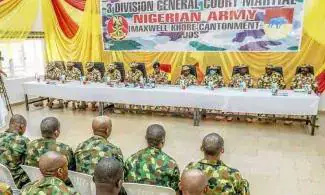
A dramatic incident unfolded in a Nigerian military court-martial on Wednesday as the court president, Air Vice Marshal H.I. Alhaji, ordered the removal of a defence counsel due to his alleged aggressive and combative behaviour. The court-martial is trying 36 military personnel accused of plotting to overthrow President Bola Tinubu. Alhaji accused the lawyer of displaying a disrespectful attitude towards the court and attempting to interrupt proceedings despite being assured an opportunity to speak.
According to Alhaji, the defence counsel had repeatedly tried to speak but the court wanted to address preliminary issues first, including the timeline of documents and discs provided to the defence team. The court president maintained that the lawyer's lack of patience and aggression led to his removal from the courtroom. Alhaji emphasized that the court would not tolerate misconduct and that no participant in the proceedings should consider themselves superior or inferior to another.
Alhaji defended his decision, stating that he had tolerated the lawyer's behaviour for a considerable period but could no longer accept his combative attitude. The court president issued an outright ban on the lawyer's participation in subsequent proceedings, stating that his client could engage another legal representative. With many lawyers in Nigeria, Alhaji said he would rather allow the trial to suffer prolonged adjournments than permit the lawyer to return to the courtroom.
The court president called on other lawyers and individuals present in the courtroom to serve as witnesses to the defence counsel's misconduct. Alhaji described the lawyer's alleged conduct as unacceptable and barbaric, emphasizing that he would not tolerate such behaviour in the courtroom. He pointed out that many people in the courtroom had higher knowledge and education but were behaving professionally.
Beyond the confrontation with the defence counsel, Alhaji addressed several issues raised during Wednesday's proceedings, including reports of a hunger strike by some detained military personnel. The court president understood that the hunger strike was connected to the detainees' demand for family visitation. He also acknowledged the defence's complaints concerning the documents and discs supplied to them.
Alhaji maintained that the issue of service had already been addressed and insisted that the court was prepared to hear any other legitimate concerns raised by the defence. He emphasized that the court had never denied the lawyers an opportunity to speak, stressing that they only needed to exercise patience while the proceedings followed the required order.
Another defence counsel appealed for calm and reminded Alhaji of his previously demonstrated composure and tolerance during proceedings. The court-martial continues with the remaining lawyers representing the accused military personnel. The incident highlights the challenges in ensuring due process and maintaining order in high-profile trials.
Key points
- The court-martial is trying 36 Nigerian military personnel accused of plotting to overthrow President Bola Tinubu.
- The defence counsel was removed due to his alleged aggressive and combative behaviour towards the court.
- The court president issued an outright ban on the lawyer's participation in subsequent proceedings.