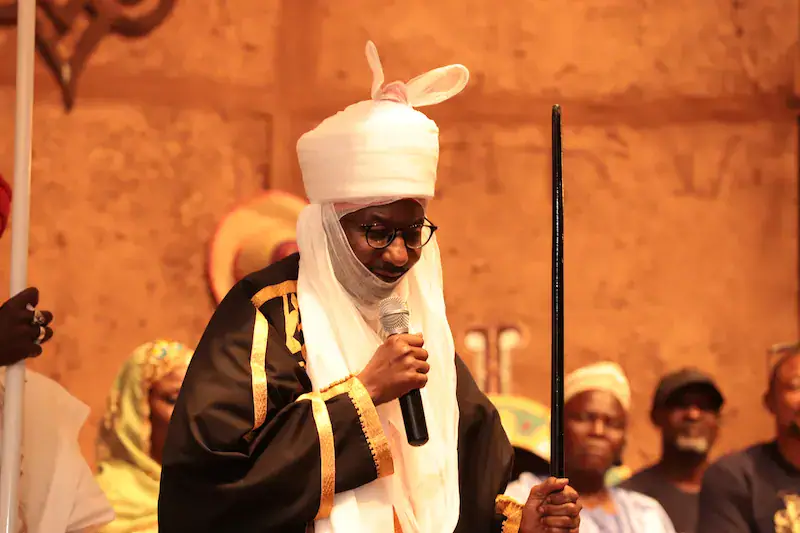
Prominent Nigerian business and economic leaders have emphasized that current economic reforms and improving growth figures will amount to little unless they translate into higher household incomes, better living conditions, productive investments, and employment opportunities for millions of citizens. They made their interventions at the Oxford Global Think Tank Leadership Conference, themed, “Leadership for a Prosperous Future.” The conference brought together several notable figures, including the Emir of Kano, Muhammadu Sanusi II, and former President of the African Development Bank, Dr. Akinwumi Adesina.
Sanusi II, a former Governor of the Central Bank of Nigeria, cautioned against interpreting improvements in macroeconomic indicators as evidence that the economy is delivering prosperity to ordinary Nigerians. He noted that while the economy had recorded growth of about 4.5 per cent and some key indicators had improved following recent policy adjustments, the quality and inclusiveness of the expansion remain questionable. Sanusi pointed to the decline in GDP per capita since 2023 as an indication that aggregate economic performance does not necessarily translate into improved individual welfare.
Atedo Peterside, a businessman and investment banker, expressed concerns that economic reforms appear to be working primarily for the rich, while 140 million poor Nigerians lack adequate safety nets. He stressed the need for a more inclusive growth model anchored on strong institutions, private sector investment, technological advancement, and human capital development. Peterside's comments highlight the challenges facing Nigeria's economic policymakers in ensuring that growth benefits all segments of society.
Arunma Oteh, former Director-General of the Securities and Exchange Commission, emphasized the importance of domestic capital mobilisation for long-term development. She argued that Nigeria must focus on mobilizing domestic savings and investments to drive sustainable economic growth. Oteh's remarks underscored the need for Nigeria to develop a robust domestic capital market to support economic development.
Dr. Akinwumi Adesina, former President of the African Development Bank, highlighted the critical role of Africa's youth in driving economic transformation. He stressed that with the right support, Africa's youth can be a major force for economic growth and development. Adesina's comments reflect the growing recognition of the need to invest in human capital, particularly the youth, to drive sustainable economic growth.
Dr. Bosun Tijani, Minister of Communications, Innovation and Digital Economy, emphasized the importance of knowledge and technology in determining long-term prosperity. He argued that Nigeria must prioritize investments in education, innovation, and digital infrastructure to drive economic growth and development. Tijani's remarks reflect the growing recognition of the need for Nigeria to develop a knowledge-based economy.
The economic leaders' perspectives converged on the need for a more inclusive growth model that prioritizes strong institutions, private sector investment, technological advancement, and human capital development. They emphasized that the country's economic recovery must be measured beyond headline Gross Domestic Product figures, stressing that persistent poverty, weak investment, inadequate infrastructure, and institutional deficiencies continue to undermine the benefits of reforms.
Key points
- Economic leaders stress need for inclusive growth model.
- Sanusi II cautions against interpreting GDP growth as evidence of prosperity.
- Adesina highlights critical role of Africa's youth in driving economic transformation.