The Executive Director, Strategy and Benchmarks at S&P Global Energy, Joel Hanley, has stated that Nigeria and West Africa have the potential to become a major pricing hub for petroleum products. This is due to the region's refining and trading landscape undergoing significant changes. The emergence of the Dangote refinery has altered the dynamics of the West African petroleum market. West Africa is already an energy hub, but increasing volumes of refined products supplied from Nigeria provide an opportunity for the region to develop benchmarks that better reflect local market conditions.
According to Joel Hanley, West Africa's traditional dependence on European pricing benchmarks is changing due to the growing flow of petroleum products from Nigeria, particularly from the Dangote refinery in Lekki. For many years, pricing has been linked to European assessments and benchmarks. However, these benchmarks primarily reflect European market conditions and may not fully capture developments in West Africa. Developing and strengthening price assessments for markets in Lekki, Lagos, and Lomé could provide a pricing mechanism that better reflects the dynamics of the West African market.
S&P Global assesses gasoline, gasoil, and jet fuel markets in West Africa, as well as several crude oil grades from Nigeria and other African producers. The company's role is to ensure that market participants understand how its price assessments are developed, particularly because the figures are used in commercial contracts and investment decisions. This is crucial in providing transparency and integrity to the market. By having a local presence, S&P Global aims to provide greater transparency on the changing market dynamics in West Africa.
The Senior Reporter, West Africa Refined Products at S&P Global Energy, Matthew Tracy Cook, said the Dangote refinery has significantly changed the structure of the West African petroleum products market. Nigeria is transitioning from being largely a price taker to playing a greater role in price formation within the regional market. The refinery is contributing significant volumes of products to the regional market, creating new supply flows and changing the traditional pattern of petroleum products being shipped from Europe into West Africa.
On discussions around a possible return of petrol subsidy in Nigeria, Matthew Tracy Cook said participants at an S&P Global event in Lagos expressed opposition to such a move. A return to subsidy could complicate the development of a free market and affect marketers and traders seeking to establish West Africa as a major trading and pricing hub. Market-based pricing would allow regional benchmarks to reflect actual supply and demand conditions. This would be beneficial for the development of a transparent and efficient market.
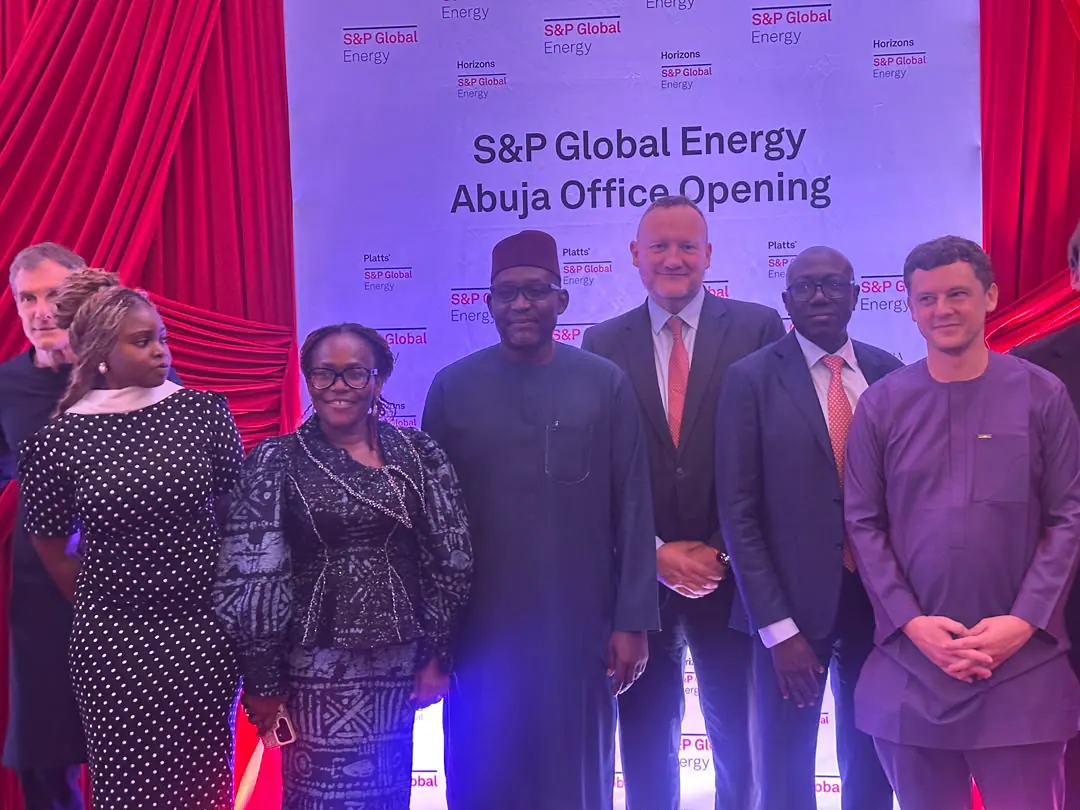
Nigeria's Minister of State for Petroleum Resources (Oil), Heineken Lokpobiri, described S&P Global as strategic to Nigeria's energy sector. He welcomed the company's decision to establish an office in Abuja, saying Nigeria would continue to play its role in the global energy landscape. The minister added that Nigeria looked forward to working closely with S&P Global to ensure that the country does not take the relationship for granted.
The Chief Executive Officer of the Nigerian Midstream and Downstream Petroleum Regulatory Authority (NMDPRA), Farouk Ahmed, said S&P Global's Abuja office would provide the company with a closer base from which to engage with Nigeria and the wider West African market. He believes that Nigeria has the capacity to supply petroleum products to other West African countries, potentially strengthening its role in the region's energy economy. The ultimate goal is to make Nigeria the anchor of West Africa and turn West Africa into a true regional economy.
Key points
- S&P Global believes that West Africa has the opportunity to be a pricing hub due to its changing refining and trading landscape.
- The Dangote refinery has significantly altered the dynamics of the West African petroleum market.
- A return to subsidy in Nigeria could complicate the development of a free market and affect marketers and traders.