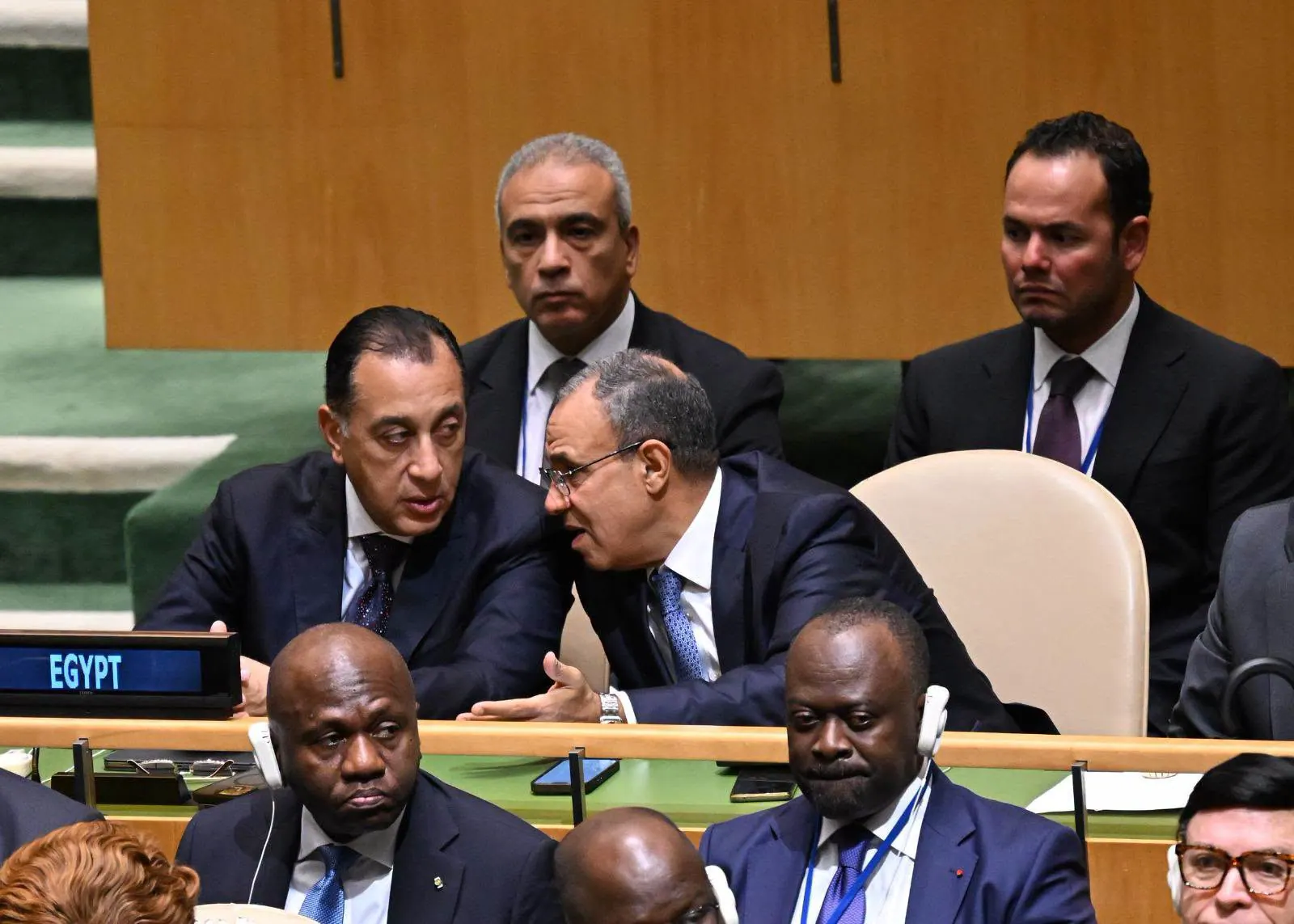
Egypt is set to address four key regional issues at the United Nations General Assembly, including the situation in Sudan, the construction of Ethiopian dams on the Nile River, US-Iranian tensions, and the situation in Gaza. Egyptian Prime Minister Mustafa Madbouly and Foreign Minister Badr Abdelatty are participating in the high-level meeting in New York. According to a member of the Egyptian delegation, these issues are high on Egypt's agenda due to the country's strategic location and its role in regional politics.
On the Sudan issue, Egypt is pushing for an extension of the UN Security Council's ban on arms shipments to Darfur, but without expanding it to the entire country. This stance is driven by Egypt's concerns about the balance of power between the Sudanese army and the Rapid Support Forces (RSF) militia. Egypt reportedly supports the Sudanese army led by Abdel Fattah al-Burhan and rejects any measures that could be seen as equating the two forces. This position is also influenced by Egypt's concerns about the potential for regional instability.
Egypt is also closely monitoring the situation regarding the construction of Ethiopian dams on the Nile River, particularly the Grand Ethiopian Renaissance Dam (GERD). Egypt and Sudan, the two downstream countries, are concerned that the dam could reduce their water shares. According to a diplomatic source, Egypt is working to prevent the construction of additional dams on the Blue Nile, which could further exacerbate the water shortage. The source also noted that the UAE is supporting Ethiopia's efforts to build new dams, which Egypt sees as a threat to its national interests.
The Iranian-US tensions are another key issue on Egypt's agenda at the UN. Egypt is seeking to promote a peaceful resolution to the conflict, which has had significant regional implications, including the Yemen crisis. According to a government source, Egypt has received assurances from the Houthi group that they do not intend to block the Bab al-Mandab strait or target ships transiting to the Suez Canal, except for Saudi vessels supporting the Yemeni government. However, these assurances are fragile and could change if the US were to launch a military strike against Iran.
Egyptian Foreign Minister Badr Abdelatty met with his Iranian counterpart, Abbas Araghchi, on the sidelines of the UN General Assembly. The two ministers discussed ways to reduce tensions between Iran and the US. According to a diplomatic source, the chances of a US military strike against Iran appear to be receding, at least in the short term. However, the situation remains unpredictable, and Egypt is working to promote a peaceful resolution to the conflict.
Egypt is also participating in a quadrilateral meeting with Saudi Arabia, Turkey, and Pakistan to discuss regional issues, including the situation in Yemen. The meeting, which took place on the sidelines of the UN General Assembly, aimed to promote coordination and cooperation among the four countries on regional issues. Egypt's participation in these meetings reflects its commitment to regional diplomacy and its role as a key player in Middle Eastern politics.
The situation in Gaza is another key issue that Egypt is expected to address at the UN. While details of Egypt's approach to the Gaza issue are scarce, it is likely that Egypt will seek to promote a peaceful resolution to the conflict and support efforts to alleviate the humanitarian crisis in Gaza. Egypt's role in regional diplomacy and its commitment to promoting peace and stability in the Middle East are likely to be key themes of its participation in the UN General Assembly.
Key points
- Egypt to discuss Sudan, Ethiopian dams, Iran-US tensions, and Gaza situation at the UN General Assembly
- Egypt seeks to promote a peaceful resolution to the US-Iranian conflict and prevent the construction of additional Ethiopian dams on the Nile River
- Egypt's participation in regional diplomacy reflects its commitment to promoting peace and stability in the Middle East