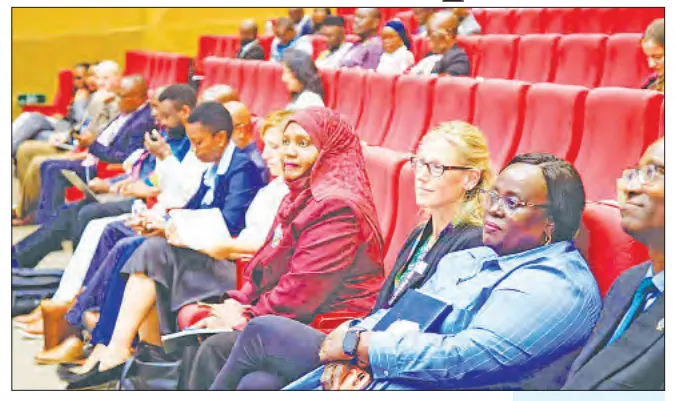
For decades, African universities have played a central role in producing knowledge, training professionals, and conducting research on the continent's most pressing challenges. However, a more difficult question is increasingly confronting higher education institutions: what happens to that knowledge after it is produced? The 2026 Annual Meeting of the Alliance for African Partnership (AAP) was hosted by the University of Dar es Salaam (UDSM) under the theme "Reimagining Higher Education for Africa's Future: Leadership, Innovation and Global Partnerships."
The meeting brought together university leaders, researchers, policymakers, entrepreneurs, innovators, and industry representatives from Africa and beyond. They emphasized that African universities need partnerships that leave behind people, institutions, research capacity, innovation, and solutions. UDSM Vice-Chancellor Prof William Anangisye stated that universities must rethink how they prepare young Africans for a rapidly changing world. "We cannot prepare young Africans for tomorrow using only the assumptions and structures of yesterday," Prof Anangisye said.
Africa's changing economic and social landscape is placing new demands on universities. A youthful population, rapid technological advances, evolving labor markets, and mounting climate pressures require higher education institutions to prepare graduates for more than conventional employment. Prof Anangisye insisted that universities must equip young people with the knowledge, skills, and creativity to generate new ideas, solve real-world problems, and contribute to economic transformation.
UDSM Deputy Vice-Chancellor–Research, Prof Nelson Boniface, said producing knowledge is only part of the university's responsibility. He emphasized that African challenges are too interconnected to be addressed by individual disciplines or institutions working separately. Prof Boniface stressed that scientists, social scientists, humanities scholars, policymakers, entrepreneurs, and communities must work together through interdisciplinary and transdisciplinary research.
The discussion at UDSM also challenged the traditional image of the university as mainly a place for lectures, examinations, and degrees. Ms Faraja Kota, Founder of Shule Direct, described the modern university as a "boiling pot of innovation." This environment allows researchers, students, entrepreneurs, industry, and communities to interact rather than operate in separate spaces.
For African universities, the value of international partnerships should not be measured only by the amount of funding received or the number of conferences held. Dr Laura McIntyre, Deputy Vice-Chancellor for Academic Affairs at Michigan State University, said collaboration allows institutions to combine their strengths. "We can do more when we partner together. Institutions of higher education play a critical role," Dr McIntyre said.
The AAP brings together 12 institutions from 10 African countries, anchored by Michigan State University. Its participating institutions provide an opportunity to exchange experience across different economic, educational, and social environments. The partnerships aim to connect academic knowledge with practical experience and translate knowledge into action, ultimately contributing to addressing complex challenges and improving people's lives.
Key points
- African universities require partnerships that go beyond signing agreements or implementing individual projects to address pressing challenges.
- Partnerships should focus on developing people, institutions, research capacity, innovation, and solutions.
- Universities must rethink how they prepare graduates for a rapidly changing world, equipping them with skills to generate new ideas and solve real-world problems.