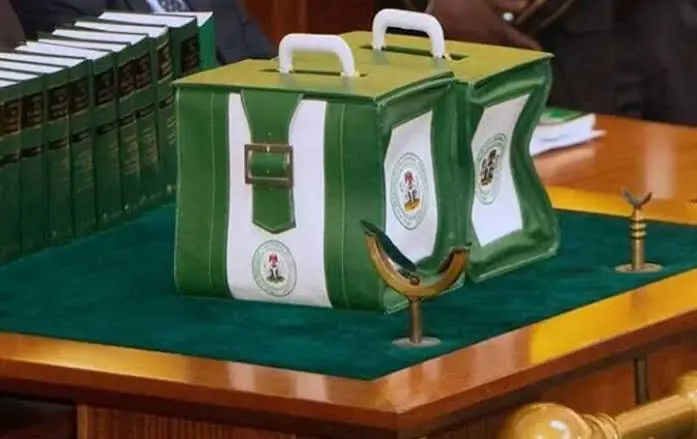
Nigeria is currently operating three budget cycles, a situation that has led to a serious governance problem. The Budget Office of the Federation has started receiving inputs for the 2027 Appropriation Bill, and it is imperative that the government addresses the enduring weaknesses of Nigeria's public finance system. A budget should be a contract between the government and the people, providing clarity on public resource allocation within a defined period.
The country's struggle with delayed budget passage, late commencement of implementation, and extensions has blurred the boundaries between fiscal years. This has particularly damaged capital expenditures, with projects carried over and new ones added to the next budget. As a result, the government is implementing multiple layers of commitments simultaneously, without Nigerians having a clear picture of which project belongs to which budget.
The overlapping budget cycles have made accountability difficult, with Ministries, Departments, and Agencies (MDAs) blaming delayed releases for poor performance, while the government points to budgetary provisions as evidence of its commitment. The citizen sees little or no change on the ground in terms of budget implementation, with projects appearing in successive budgets without completion.
The National Assembly has a constitutional power of appropriation, but it should not end with approving enormous figures for the executive arm of government. Legislators must interrogate the implementation of previous budgets before approving new ones, ensuring that taxpayers get maximum benefit for public funds. There should be no automatic assumption that every project carried over from one year deserves another allocation.
To address this issue, the federal government should produce a comprehensive inventory of ongoing capital projects, including when each project was first appropriated, its location, amount approved, amount released, amount spent, percentage of completion, and estimated amount required for completion. This would expose the extent to which Nigeria has been budgeting repeatedly for projects that remain incomplete.
The Budget Office must also guard against dressing up old projects as new ones and ensure a central mechanism for tracking capital projects from their first appearance in the budget until completion. The government should distinguish between genuine multi-year projects and poorly implemented projects that are merely carried forward due to government failure to execute them.
To improve the budget process, Nigeria needs to move away from producing budgets that look impressive on paper but are unrealistic in execution. The government should prioritize fewer projects, adequately fund them, and ensure their completion. Transparency must become central to the 2027 budget process, with Nigerians able to access information on budget releases and project implementation without depending on official press statements.
Key points
- The 2027 budget should be better planned, more realistic, more transparent, and more closely tied to measurable outcomes.
- Nigeria's budget reform must be part of the administration's agenda to reform the economy and improve public-sector efficiency.
- The government must ensure that budget preparation begins early enough for the new fiscal year to enable the Senate and House of Representatives to consider the estimates for passage from January 1 of the fiscal year.