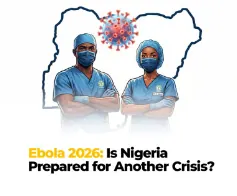
The Nigeria Centre for Disease Control and Prevention (NCDC) has heightened surveillance and preparedness measures against Ebola disease following the confirmation of an imported case in Kenya. The Kenyan case involved a citizen who had been living in the Democratic Republic of Congo (DRC) and travelled to Kampala, Uganda, before flying to Nairobi, where he tested positive for the Bundibugyo virus, one of the viruses that causes Ebola disease.
The NCDC has stressed that there is no confirmed case of Ebola disease in Nigeria as of October 6, 2026. Director-General of the NCDC, Dr Jide Idris, outlined measures being taken by the Federal Government to prevent the importation and spread of the virus. These measures include enhanced early detection, isolation and referral of suspected cases, laboratory diagnosis, infection prevention and control, contact tracing, risk communication, and protection of healthcare workers.
The confirmed Kenyan case highlights the continuing risk of Ebola being imported through international travel and population movement, including the possibility of transmission into Nigeria. The NCDC is working with the Federal Ministry of Health and Social Welfare, Port Health Services, state governments, and other partners to strengthen Nigeria's preparedness and response capacity. A national Ebola preparedness tabletop simulation exercise was conducted to test existing response arrangements and identify gaps requiring further attention.
The NCDC has urged Nigerians to remain calm but be vigilant and adhere to basic preventive measures. The public is advised to practise regular hand hygiene, avoid contact with the blood or body fluids of anyone who is ill, particularly persons displaying symptoms suggestive of Ebola disease. Nigerians are also warned to avoid contact with the bodies of people who have died from unknown illnesses and handling sick or dead wild animals.
The agency has also cautioned against consuming raw or poorly cooked bushmeat, which can expose people to infections capable of crossing from animals to humans. Travellers from affected areas have been advised to monitor their health for 21 days after leaving an affected area and seek prompt medical attention if they develop symptoms. The NCDC emphasized the importance of early disclosure of travel history and possible exposure to Ebola when seeking medical care.
For healthcare workers, the NCDC's preparedness measures place renewed emphasis on infection prevention and control, given the high consequences of delayed recognition or inadequate protection when dealing with suspected Ebola cases. The agency's response reflects the critical importance of detecting suspected Ebola infections early, isolating affected persons promptly, and preventing exposure of health workers and members of the public.
The NCDC maintains that there is no confirmed Ebola case in Nigeria, but with an imported case already confirmed in Kenya and linked to an outbreak in the DRC, health authorities are strengthening surveillance rather than waiting for transmission to reach Nigerian territory. The message from the agency is one of vigilance without panic: strengthen surveillance, identify suspected cases early, isolate and test promptly, trace contacts, and ensure that Nigerians understand the risks associated with travel, exposure to infected body fluids, and unsafe handling of animals or human remains.
Key points
- The NCDC has heightened surveillance and preparedness measures against Ebola disease following Kenya's confirmation of an imported case.
- The agency is working with partners to strengthen Nigeria's preparedness and response capacity, including enhanced early detection, isolation, and referral of suspected cases.
- The public is advised to practise basic preventive measures, including regular hand hygiene, avoiding contact with ill persons or their body fluids, and not handling sick or dead wild animals.