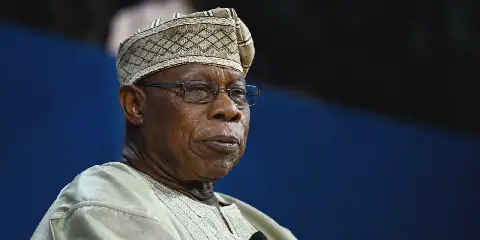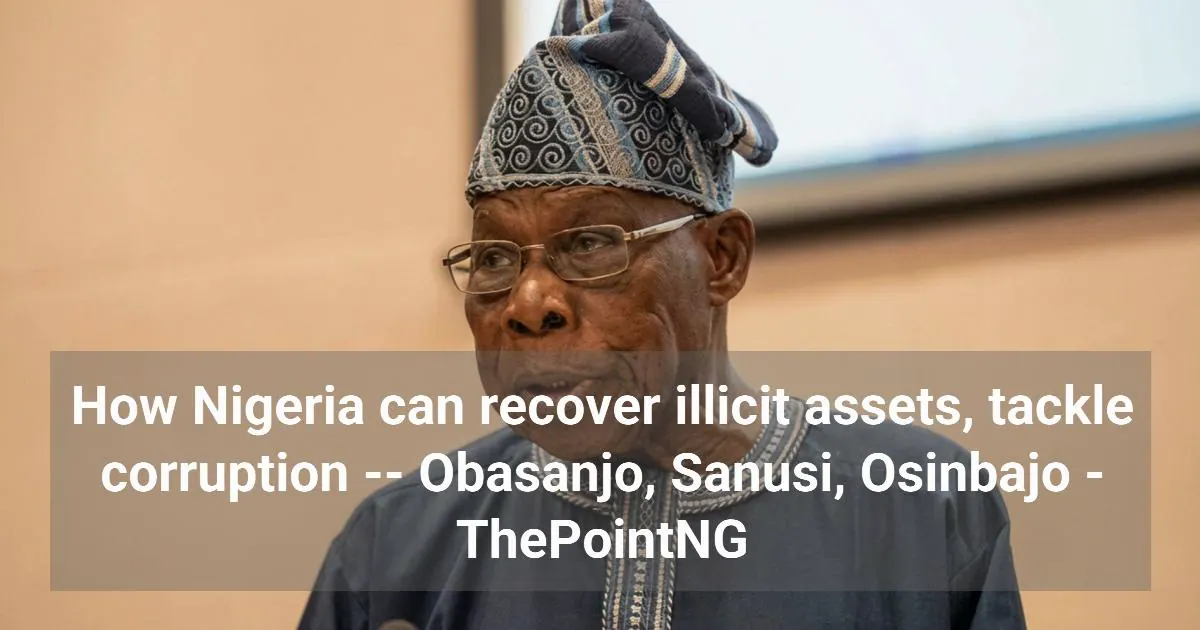
On September 26, 2026, key national figures converged in Lagos for the public presentation of "Unexplained Wealth: A Trilogy of Nigerian Financial Law," a three-volume publication authored by anti-corruption lawyer Wahab Shittu, SAN. The event, chaired by Obasanjo, brought together prominent individuals to discuss Nigeria's approach to unexplained wealth and the broader fight against corruption.
During the event, Obasanjo emphasized that corruption is fundamentally incompatible with progress, warning that it will continue to hinder Nigeria's development. He noted that the diversion of public resources places a heavier burden on citizens, particularly those already living in poverty. According to Obasanjo, corruption and development are "strange bedfellows" that cannot coexist.
Obasanjo shared his personal experience in the anti-corruption campaign, tracing his involvement to his years in the military as a military prosecutor and member of court-martials dealing with corruption-related cases. He recalled that his commitment deepened after leaving office as military Head of State and becoming a farmer, when he was approached by Peter Eigen, a former World Bank official who later founded Transparency International.
Emir of Kano, Muhammadu Sanusi II, drew attention to how anti-corruption laws are enforced, arguing that legislation alone will not solve the problem. Sanusi emphasized that investigators, prosecutors, and members of the judiciary must apply the law without political considerations influencing who is investigated or prosecuted.
Former Vice President Yemi Osinbajo focused on the need to protect people who acquired their property legitimately. Osinbajo's position, delivered by his former Chief of Staff, Ade Ipaye, stressed that efforts to recover suspected illicit assets should be grounded in constitutional safeguards and should not automatically put legitimate property at risk.
The author of the book, Wahab Shittu, highlighted the central challenge of creating an effective system that can separate legitimate prosperity from illicit enrichment. Shittu stressed that reliable records are essential to determining how assets were acquired and called for a system that gives legitimate owners the opportunity to establish the source of their wealth.
Key stakeholders, including book reviewer Olanrewaju Fagbohun, SAN, also contributed to the discussion, warning against assuming that an individual's inability to produce conventional documentation automatically means illegal acquisition. The discussion emphasized the need for a clear, fair, and constitutionally sound approach to asset recovery in Nigeria.
Key points
- Former President Olusegun Obasanjo emphasized that corruption is fundamentally incompatible with progress and development in Nigeria.
- Emir of Kano, Muhammadu Sanusi II, stressed the need for consistent and fair enforcement of anti-corruption laws.
- Wahab Shittu highlighted the importance of reliable records in determining how assets were acquired and the need for a system that separates legitimate prosperity from illicit enrichment.