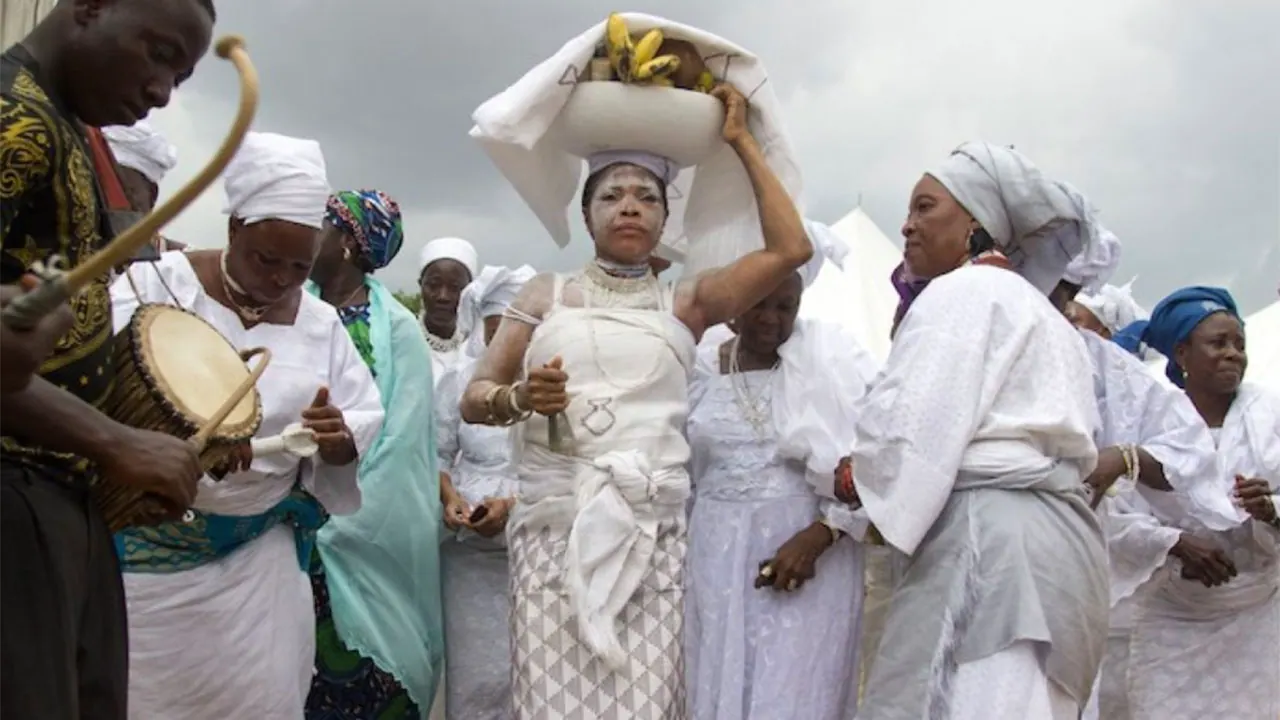
The recent declaration of August 20 as a work-free day by Lagos, Ogun, and Oyo states to commemorate Isese Day marks a significant recognition of Yoruba cultural and religious heritage in Nigeria. This move is a welcome development in the preservation of the country's diverse indigenous traditions. However, it also raises important questions about the duty to preserve culture and the need for discernment in protecting cultural practices. As Nigeria continues to navigate its complex cultural landscape, the recognition of Isese Day presents an opportunity for reflection on the importance of cultural preservation.
The preservation of culture is a vital aspect of Nigerian society, and languages, oral traditions, festivals, arts, knowledge systems, and historical practices that enrich society should be protected. However, customs that violate human dignity, public health, equality, or other legitimate social values should evolve or be jettisoned. Isese Day points to an increasingly visible expression of Yoruba cultural identity, and beyond the recognition, it is essential to take the discourse past the granting of a day off to workers. The focus must shift to what it means to preserve culture and ensure that it is done in a way that is respectful and responsible.
The recognition of Isese Day also highlights the importance of cultural preservation in the face of colonialism, religious intolerance, supposed modernization, and declining interest among the younger generation. However, there are grounds for optimism, given the 2008 inscription of Ifa, an extensive corpus of texts, mathematical formulas, history, philosophy, and knowledge transmitted through Yoruba communities, on the Representative List of the Intangible Cultural Heritage of Humanity. This UNESCO inventory has demonstrated that the preservation of Nigeria's cultural attributes can have scholarly and developmental dimensions.
To ensure the preservation of cultural heritage, states must use the occasion of Isese Day to encourage documentation, research, translation of oral literature, preservation of indigenous languages and cultural values, archival work, apprenticeships, and responsible cultural tourism. This will help to promote a deeper understanding and appreciation of Yoruba culture and ensure its continued relevance in modern times. Furthermore, the recognition of Isese Day by Lagos, Ogun, and Oyo states sets a precedent for other states to follow and highlights the need for a more inclusive approach to cultural preservation.
The constitutional premise for the recognition of Isese Day is rooted in Section 38 of the Constitution, which guarantees freedom of thought, conscience, and religion, and to manifest and propagate religion or belief in worship, teaching, practice, and observance. This principle applies not only to Christianity and Islam but also to traditional religion, and it is the responsibility of government to grant equal protection, dignity, and freedom to adherents. The three states have done well in correcting an old imbalance in the public perception of indigenous faiths.
However, caution must be exercised to avoid turning the public recognition of Isese Day into political theatre. After the holiday is over, the three states should be able to demonstrate that their intentions were genuinely about preserving culture and enhancing policy. This will be tested by sustained and renewed commitment to sacred spaces, the preservation of traditional archives, or state-backed support for learning traditional arts and knowledge. The states must also be mindful of the potential risks of politicization and ensure that the recognition of Isese Day does not become a tool for political manipulation.
Ultimately, the recognition of Isese Day presents an opportunity for Nigeria to celebrate its cultural diversity and promote a more inclusive approach to cultural preservation. By recognizing and preserving the cultural heritage of the Yoruba people, the country can promote a deeper understanding and appreciation of its rich cultural landscape. The declaration of public holidays has further pushed Isese into the spotlight, and what the states do hereafter by way of policy and how the adherents manage the newfound recognition will be crucial in determining the future of cultural preservation in Nigeria.
Key points
- The recognition of Isese Day by Lagos, Ogun, and Oyo states marks a significant step towards preserving Nigeria's cultural heritage and promoting cultural diversity.
- The preservation of culture must be done discerningly, protecting practices that enrich society while evolving or jettisoning those that violate human dignity or public health.
- The recognition of Isese Day presents an opportunity for Nigeria to promote cultural tourism, preserve traditional arts and knowledge, and promote a more inclusive approach to cultural preservation.