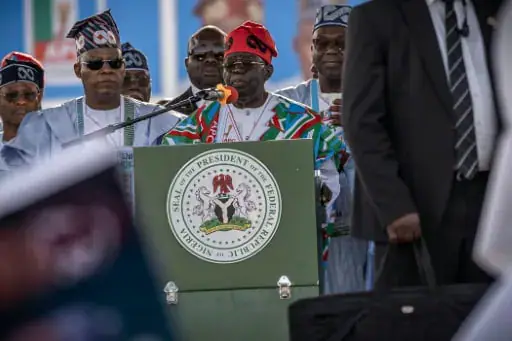
President Bola Ahmed Tinubu of Nigeria has written to the National Assembly requesting a loan of $20 billion dollars and £1 billion pounds to expand critical infrastructure in various sectors, including electricity, transportation, agriculture, healthcare, education, water supply, security, employment generation, and public financial management reforms. The loan request comes at a time when the country is grappling with a massive diversion of subsidy proceeds by 33 out of 36 governors of the ruling party.
The loan request has sparked controversy, with critics arguing that it is unnecessary and may be used for purposes other than its intended use. Nigeria's debt profile has risen significantly under the previous administration, from N12 trillion in 2015 to N87 trillion in 2023. The current administration has seen the debt profile rise to N149 trillion within three years of Tinubu's presidency. The country's subsidy regime has been a major contributor to its debt burden.
President Tinubu's request for a $20 billion loan has been met with skepticism, with many questioning the need for further borrowing. The country's population of 250 million people, with more than half living in poverty, raises concerns about the fiscal discipline of the government. Critics argue that the government should focus on recovering looted subsidy funds rather than seeking new loans.
The issue of loan repayment has also been raised, with a reference to a $127 million external loan borrowed by former Anambra State governor Peter Obi. Despite years of servicing the loan, the outstanding balance remains $92 million, which is still being deducted from the state's FAAC allocation. This has led to concerns that the new loan may pose similar repayment challenges in the future.
The author of the article, Obinna Akukwe, has urged the National Assembly to reject the loan appeal, citing concerns about the integrity of the disbursement of the loan. Akukwe argues that the loan portfolio of N72 trillion within three years is a "frightening mortgage of our national heritage." He suggests that instead of seeking new loans, the government should focus on recovering looted funds and applying prudential fiscal discipline.
Akukwe advises President Tinubu to seize swaths of the FAAC allocations from January 2027 and divert them to critical infrastructure projects. He also suggests that the government should use an executive order to stop governors from looting FAAC allocations. The author argues that the government should apply the same fiscal discipline that Tinubu used as governor of Lagos State when his allocations were seized by the federal government.
The loan request is seen as a significant development in Nigeria's economic landscape, with implications for the country's debt burden and infrastructure development. The National Assembly's decision on the loan request will be closely watched, as it may have far-reaching consequences for the country's economic future. The government's ability to manage its debt and implement fiscal discipline will be crucial in determining the success of its economic policies.
Key points
- President Tinubu's $20 billion loan request has sparked controversy amid concerns about Nigeria's rising debt burden and the need for fiscal discipline.
- Critics argue that the loan is unnecessary and may be used for purposes other than its intended use, and that the government should focus on recovering looted subsidy funds.
- The loan request has raised concerns about the country's ability to manage its debt and implement fiscal discipline, with implications for its economic future.