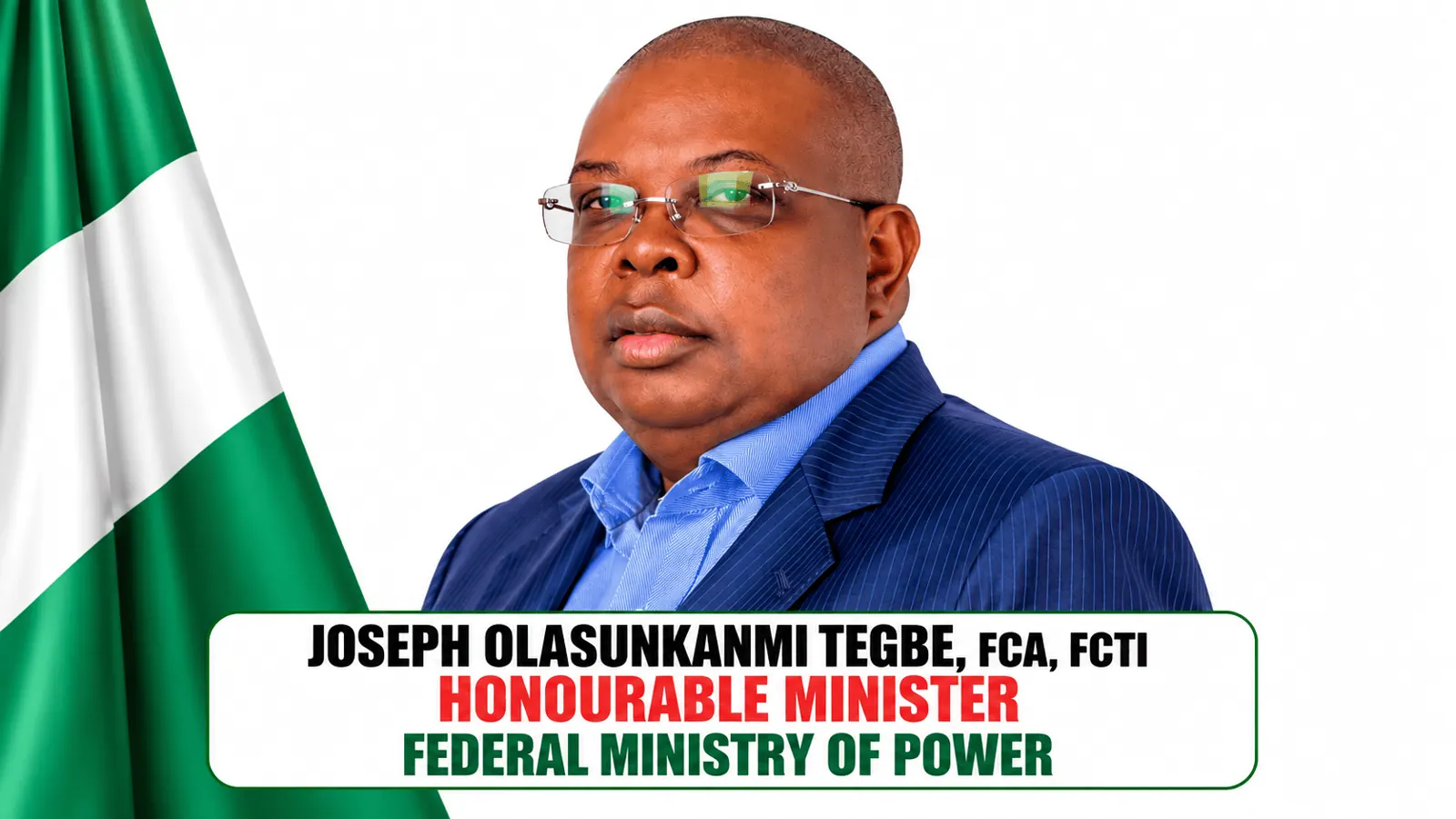
When Joseph Tegbe took over as Minister of Power, many observers were skeptical about the potential for change in the ministry. However, 100 days into his appointment, Tegbe has demonstrated a deliberate effort to harmonize coordination across the power value chain. Upon assuming office, Tegbe outlined a clear mandate to provide reliable and affordable electricity for every Nigerian home, business, and industry. A major bottleneck in Nigeria's power sector has long been the challenge of distributing generation to the last mile due to aging transmission infrastructure.
Under Tegbe's leadership, a concerted effort is ongoing to replace legacy assets, with massive infrastructure upgrades across key Lagos transmission substations in Apapa, Ijora, Alausa, and Lekki. A combined 840MVA of new capacity equipped with modern automation and SCADA systems has been commissioned and added to the grid. This includes upgraded infrastructure at Alausa, which added a new 100MVA transformer to increase capacity to 205MVA, adding 80MW. The upgrades have significantly enhanced the grid's capacity and efficiency.
The Ministry under Tegbe's leadership has also successfully cleared over 300 long-abandoned containers from the ports, releasing critical equipment for immediate deployment by the Transmission Company of Nigeria (TCN) to strengthen grid stability. This move has complemented the infrastructure upgrades and is expected to improve the overall performance of the grid. Additionally, a comprehensive technical audit of the national grid is underway, which will propel the overhaul of major energy corridors.
On September 22, Nigeria's power sector recorded a total available generation of 5,403.3 MW, according to the Daily Load Allocation Table issued by the National Control Centre (NCC) in Osogbo. This milestone demonstrates the progress being made in the power sector under Tegbe's leadership. Another central pillar of Tegbe's plan is improved stakeholder engagement, with private consultations with state governors to address asset vandalism and community interference.
Tegbe has initiated a strategic partnership with the Economic and Financial Crimes Commission (EFCC) and the Inspector-General of Police, IGP Tunji Disu, to establish a specialized joint task force dedicated to safeguarding power infrastructure as critical national assets. This move aims to address the challenges of vandalism and ensure the protection of power infrastructure. Tegbe has also addressed long-standing disputes over estimated billing, following constructive engagement with regulators and operators.
To ensure seamless implementation of the Electricity Act 2023, Tegbe established and chairs a nine-member inter-agency committee, featuring representatives from NERC, State Electricity Regulatory Commissions (SERCs), the Nigeria Governors' Forum, Operators, and the Bureau of Public Enterprises. This committee is tasked with resolving operational bottlenecks and aligning sub-national electricity markets. Tegbe's regulatory philosophy prioritizes fairness and consumer protection, ensuring that market rules protect operators, investors, and electricity consumers alike.
Tangible operational gains are emerging, including the revival of the 450-Megawatt Alaoji Open Cycle Power Plant in Abia State, which had been dormant for three years. The Minister has also facilitated private-sector-led investments, including a 50MW dedicated power plant to energize the Idu Industrial Cluster and a 625MW coal-fired power plant in Enugu State. With a focus on workforce development, Tegbe's strategic roadmap recognizes that structural reforms require a skilled, motivated workforce to drive the power sector forward.
Key points
- Nigeria's power sector records 5,403.3 MW generation under Minister Tegbe's leadership
- Massive infrastructure upgrades across key Lagos transmission substations
- Improved stakeholder engagement and protection of power infrastructure