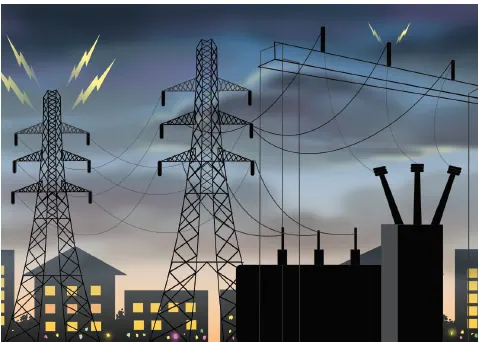
Nigeria's power crisis remains a significant challenge, with millions of people relying on generators and inverters for electricity. The national grid is fragile, and the gap between installed capacity and actual supply is substantial. According to Azu Ishiekwene, Nigeria has not solved its electricity crisis, and no serious Minister of Power should pretend otherwise. However, it is essential to acknowledge that progress is being made, albeit slowly.
Minister Joseph Tegbe, who has been in office for barely three months, inherited a structurally weak sector. The Nigerian Electricity Regulatory Commission [NERC] reports that the installed grid-connected capacity stands at 13,625MW, while the average available capacity in April 2026 was only 4,286MW. This means that only about a third of the available capacity was utilised for dispatch. The sector's debt backlog is approximately N3.3 trillion, with only 27% of GenCos' invoices being paid, which chokes gas supply, generation, and maintenance.
Tegbe's predecessor, Minister Adelabu, described the grid as old and dilapidated in January 2025, stating that the government was merely managing it pending a major overhaul. The grid has experienced frequent disturbances, including five collapses in 2024 alone. However, before June, generation and transmission hovered between 3,700MW and 4,700MW. In the weeks leading up to Tegbe's 100-day briefing in September, the power output crossed 5,000MW, with a peak of 5,330MW in August and September.
NERC's August factsheet corroborates the progress made, with an average available capacity of 4,758MW and 4,102MW utilised. One notable achievement is the return of the 375MW Alaoji plant, which had been offline for three years. Additionally, interventions in Lagos and Abuja have unlocked 912MW of additional capacity through new transformers and a 300MVA transformer.
The released 300 containers of critical power equipment, long stranded at the ports, are expected to boost the power sector. This move addresses a quintessentially Nigerian paradox – unfinished projects in the field and equipment stuck in ports. While these developments may not immediately light up every home, they represent physical additions to the system.
Another significant achievement is the installation of 350,000 meters during Tegbe's first 100 days, taking cumulative installations to 1,004,260 as of August. Metering is a crucial aspect of the power sector, and this progress will help to reduce the financial burden on consumers and improve revenue collection for power companies.
While challenges persist, the progress made under Minister Tegbe's leadership is noteworthy. The sector's debt backlog and infrastructure challenges remain significant hurdles, but the measurable shift at the system level and physical additions to the grid are encouraging signs. As the power sector continues to evolve, it is essential to acknowledge the efforts being made to address the long-standing challenges.
Key points
- Nigeria's power sector shows signs of progress under Minister Joseph Tegbe, with a measurable shift in power output and physical additions to the grid.
- The sector's debt backlog and infrastructure challenges remain significant hurdles, but progress is being made.
- The installation of 350,000 meters during Tegbe's first 100 days is a notable achievement, taking cumulative installations to 1,004,260.