The 81st United Nations General Assembly, UNGA 81, recently took place amidst significant global challenges that have tested the ability of world leaders to find solutions. The theme of this year's assembly, "Restoring trust, managing transformation: A United Nations that delivers for all," reflects the immense pressures on the UN system. The ongoing conflicts in Ukraine and between the US and Iran have emerged as serious challenges to the post-Second World War order.
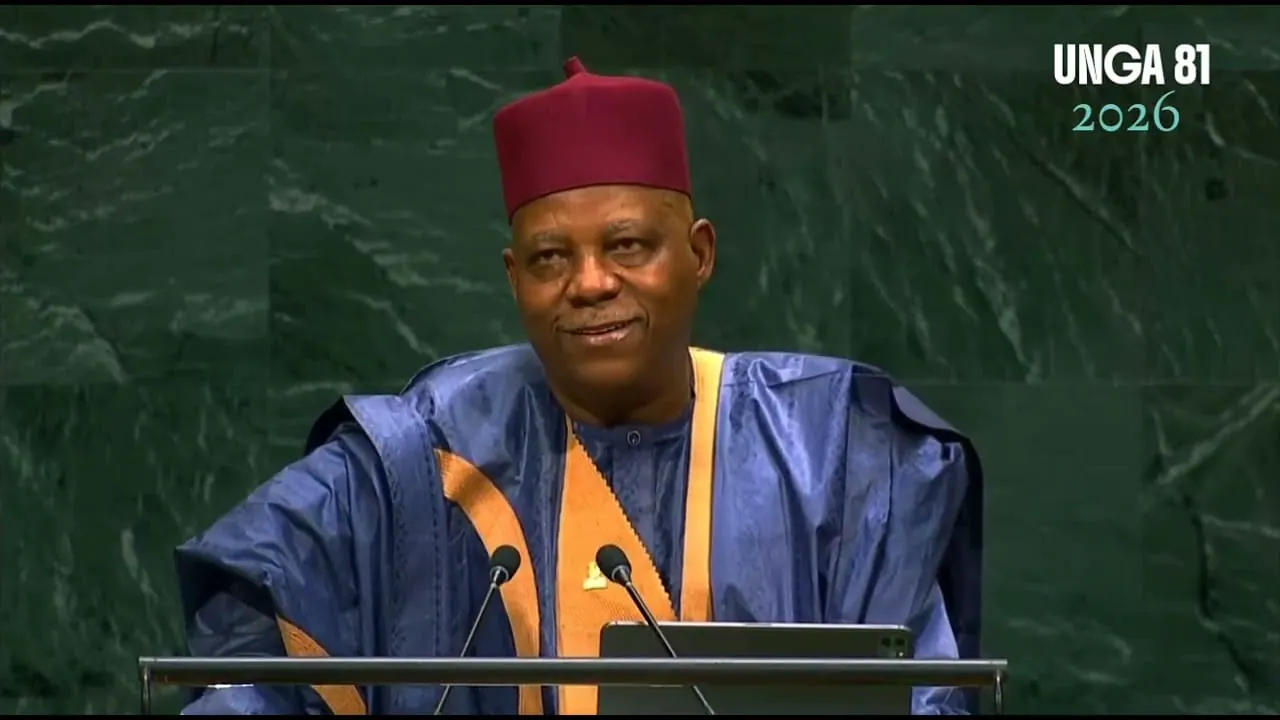
The Nigerian delegation, led by Vice-President Kashim Shettima, delivered President Bola Ahmed Tinubu's address to the Assembly, focusing on four key areas. The speech emphasized the need for reform of the UN Security Council to include additional permanent members beyond the current five. Nigeria's case for two permanent seats for Africa, with one seat for Nigeria, was based on its contributions to African and global peacekeeping and conflict-resolution efforts.
Vice-President Shettima's address highlighted Nigeria's interventions in Liberia, Sierra Leone, and Darfur, Sudan, as examples of its commitment to peacekeeping. However, the speech was criticized for not addressing fundamental issues such as migration, which affects Nigerians and Africans disproportionately. Africans seeking opportunities and safer lives abroad face restrictive immigration policies, suspicion, and mistreatment.
The international community has been urged to address the issue of migration and ensure that mobility, opportunity, and human dignity are not determined by nationality or place of birth. Another critical issue not addressed by Nigeria's speech was the indiscriminate proliferation and sale of arms, which has fueled conflicts and caused human and material losses in Africa.
The uncontrolled availability of weapons to warring parties has been a major concern, and the international community has been called upon to strengthen measures to curb the illicit flow of arms into conflict zones. It was also noted that President Bola Tinubu did not attend the UNGA, missing an opportunity for direct engagement with other world leaders on issues such as insecurity and economic reforms.
Nigeria's participation in UNGA 81 was seen as less robust than expected, particularly for a country that has historically considered itself a leading voice in Africa and an important player in international affairs. The country's voice appears to be losing some of its resonance at a time when the international system is undergoing profound changes.
Africa faces complex internal and external challenges that require coordinated action, strategic vision, and credible leadership. As the continent's most populous country and one of its largest economies, Nigeria has a responsibility to provide leadership at both the regional and continental levels. Daily Trust has called for a recalibration of Nigeria's foreign policy to reflect its manifest destiny and project and protect the interests of African and Black people across the world.
Key points
- Nigeria's participation in UNGA 81 highlighted the need for stronger leadership and a more robust foreign policy to address global challenges and promote African interests.
- The country's delegation focused on reform of the UN Security Council, international financial system, climate change, and multilateral security.
- Nigeria's voice in international affairs appears to be losing resonance, and the country must reclaim its leadership role in Africa and the wider Black world.