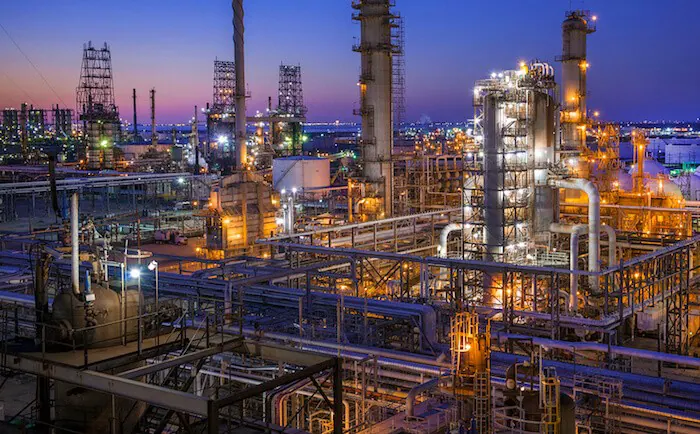
Nigeria's oil industry is experiencing a significant shift as the country has started to refine its own crude oil, ending decades of import dependence. The start-up of the Dangote refinery in Lagos and the revival efforts at state-owned plants have led to a surge in domestic refining capacity. However, operators are now facing a new challenge: accessing enough crude oil to feed the refineries. Crude output has been hovering below Nigeria's OPEC quota due to theft, pipeline vandalism, underinvestment, and ageing fields.
The Independent Petroleum Producers Group (IPPG) estimates that domestic refineries could require more than 1.5 million barrels of crude oil per day in the medium term. This is close to Nigeria's current liquids output of 1.68 million barrels per day. Adegbite Falade, chairman of the IPPG, warned that if refinery demand rises to 1.5 million barrels per day while production stays near 1.6 million, the system will have a very narrow margin for export commitments, government revenue requirements, and OPEC obligations.
The Crude Oil Refiners Association of Nigeria (CORAN) has expressed concerns about the difficulties faced by domestic refineries in accessing crude oil on commercially viable terms. CORAN chairman, Momoh Oyarekhua, said that despite Nigeria's abundant crude resources, some domestic refineries continue to face challenges in accessing crude oil. He called for the full institutionalization of the Naira-for-Crude initiative, with transparent eligibility and access for qualifying domestic refineries, including modular refineries.
CORAN has laid out a list of demands to address the crude supply challenges faced by domestic refineries. These include a domestic crude pricing template that recognizes quality, delivery point, and avoided international logistics costs. The association also wants stronger enforcement of the Domestic Crude Supply Obligation under Section 109 of the Petroleum Industry Act. Additionally, CORAN is seeking crude swaps and proximity-based supply, so that producing assets near a refinery can feed it directly.
Oil producers have responded that redistributing existing barrels will not be enough to meet the demands of domestic refineries. Falade said that Nigeria cannot refine barrels that are not produced and that the answer to rising domestic refining demand is to create more barrels. The IPPG, which represents 34 indigenous exploration and production companies, accounts for more than half of Nigeria's oil and gas output.
Falade emphasized that Nigeria has the geological and technical capacity to produce more crude oil, but faces commercial and logistical challenges. He called for a shift from mandates to bankable contracts and from opaque discounts to transparent market pricing. His four priorities were growing the production base, protecting and modernizing evacuation infrastructure, building a true domestic crude market, and positioning Nigeria as a regional refining and petrochemical hub.
The Nigerian oil industry is at a critical juncture, with the success of the refining boom dependent on the availability of crude oil. The industry is working to address the challenges of crude supply, with a focus on increasing production, improving infrastructure, and developing a more transparent and efficient market. The outcome will have significant implications for Nigeria's economy, energy security, and role in the global oil market.
Key points
- Nigeria's oil refining boom faces challenges due to a shortage of crude oil supply, with refiners requiring 1.5 million barrels per day.
- The industry is working to address the challenges of crude supply, with a focus on increasing production, improving infrastructure, and developing a more transparent and efficient market.
- The success of the refining boom will have significant implications for Nigeria's economy, energy security, and role in the global oil market.