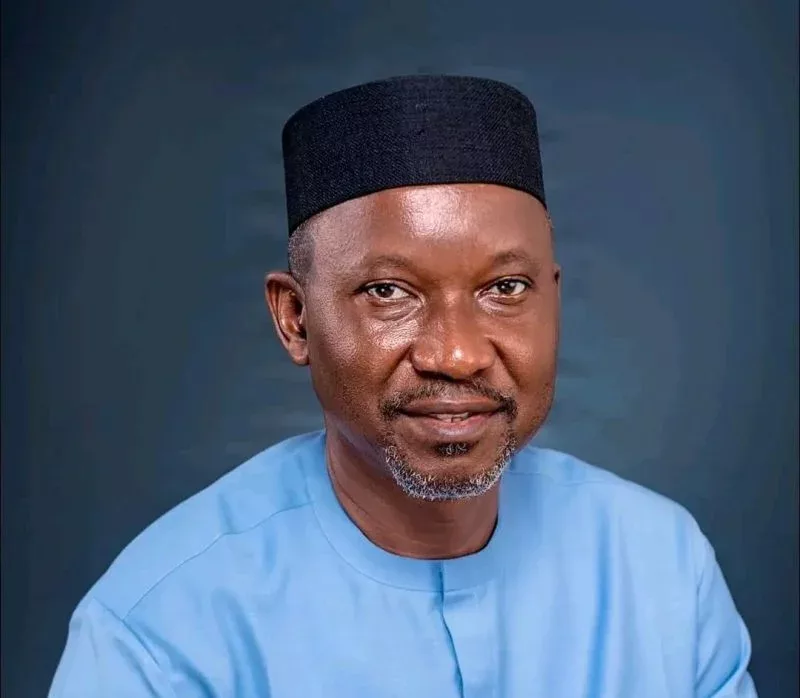
The Minister of State for Petroleum Resources (Gas), Dr. Ekperikpe Ekpo, announced that the National Economic Council (NEC) has approved N185 billion to settle validated legacy debts owed to upstream gas producers in Nigeria. According to Ekpo, this move aims to improve gas supply to power plants and strengthen investor confidence in Nigeria's gas sector. The minister emphasized that settling these debts is crucial for restoring commercial discipline and improving supply reliability across the gas-to-power value chain.
Ekpo provided updates on several gas infrastructure projects, including the OB3 Gas Pipeline, which is 100% complete and has a capacity to transport two billion cubic feet of gas daily. The pipeline's completion is expected to unlock over 500 million standard cubic feet per day of additional domestic gas supply. Furthermore, the Ajaokuta-Kaduna-Kano (AKK) Gas Pipeline is approximately 95% complete. These projects are part of Nigeria's efforts to expand its gas infrastructure and increase domestic gas supply.
The Midstream and Downstream Gas Infrastructure Fund (MDGIF) has attracted significant investment, with N671 billion in public funding and N1.6 trillion in private investment. The fund covers 31 projects and 205 infrastructure assets, which are expected to deliver about 475 MMscf/D to the domestic market. Ekpo highlighted that the Federal Government is targeting around $30 billion in gas investment by 2030, demonstrating its commitment to developing Nigeria's gas sector.
Ekpo reported significant progress in the adoption of Compressed Natural Gas (CNG) and Liquefied Petroleum Gas (LPG). CNG conversions have increased from about 11,000 vehicles in 2023 to over 120,000, with the government targeting at least one million CNG-powered vehicles and up to 1,000 refueling stations nationwide. Additionally, the government aims to provide LPG access to five million households by 2030, with the distribution of 27,000 free LPG cylinders per state already underway.
President Bola Tinubu has approved the extension of the National Grassroots LPG Penetration Programme to 2060, providing a long-term pathway for the wider adoption of cleaner cooking energy across Nigeria. This initiative aims to increase access to cleaner cooking energy and reduce the country's reliance on traditional biomass. Ekpo emphasized that the government's gas agenda is focused on raising production, expanding infrastructure, and attracting investment.
The government has made progress in reducing gas flaring, with 42 companies awarded contracts to convert flare gas into energy, feedstock, LPG, CNG, and power. Ekpo stated that regulatory and commercial measures will be sustained to end routine gas flaring by 2030. Nigeria's growing role in international energy organizations will also be leveraged to advocate for increased gas investment and promote transparent markets and affordable energy access.
Ekpo concluded that Nigeria's gas agenda prioritizes improving gas supply to the power sector and ensuring that producing communities benefit from the sector. The country's participation in international energy organizations will be used to promote a just energy transition and advocate for increased investment in the gas sector. Key initiatives, including the NEC's approval of N185 billion to clear legacy gas debts, are expected to play a crucial role in achieving these objectives.
Key points
- The National Economic Council (NEC) has approved N185 billion to settle validated legacy debts owed to upstream gas producers in Nigeria.
- The OB3 Gas Pipeline is 100% complete and has a capacity to transport two billion cubic feet of gas daily.
- The Federal Government is targeting around $30 billion in gas investment by 2030.