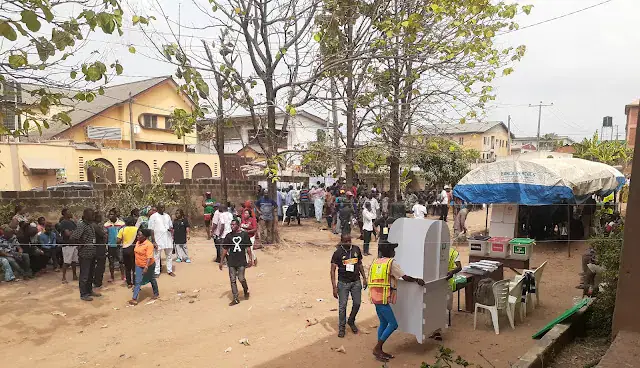
Nigeria Democratic Congress (NDC) chieftain Patrice Akwara stated that any decision to postpone the 2027 elections due to health concerns must be based on verifiable evidence of an emergency. The party is preparing for the elections as scheduled, with no indication from the Independent National Electoral Commission (INEC) of a postponement. Akwara emphasized the need to distinguish between responding to a genuine public health crisis and disrupting the electoral process without sufficient justification.
The NDC's comments followed a warning by the Director-General of the Nigeria Centre for Disease Control and Prevention (NCDC), Dr. Jide Idris, that a widespread Ebola outbreak could create public health concerns affecting the elections. However, Idris stated that there was no immediate reason to postpone voting and that a postponement decision fell outside his authority. INEC's published calendar still lists January 16, 2027, for the presidential and National Assembly elections.
Akwara expressed confidence in the party's campaign preparations, stating that "we can't wait to defeat this government." He also emphasized that opposition parties and civil society organizations would scrutinize the government's actions and insist on INEC's independence. Akwara pointed to international scrutiny of a possible health emergency, saying that "the international community is also watching."
According to Section 24 of the Electoral Act 2026, INEC can postpone an election if a serious breach of the peace is likely or if natural disasters or other emergencies make conducting it impossible. The section requires a cogent and verifiable reason for postponement and directs the commission to appoint another date for the affected area or areas. Akwara argued that a crisis serious enough to prevent voting would require an assessment involving health and electoral authorities.
The NCDC recorded one confirmed Ebola case and 62 contacts linked to that patient as of October 29. The patient, a woman with a recent travel history to Uganda, tested positive in Abuja on October 20 and was medically evacuated to Switzerland on October 26. Contact tracing and follow-up continued after her departure. Two suspected cases in Adamawa State tested negative after two rounds of laboratory testing.
Akwara also challenged the government's decision to approve ₦10 billion for emergency preparedness, questioning its spending priorities against the condition of primary healthcare facilities. He described communities with inadequate facilities, shortages of basic medicines, and poorly motivated health workers. Akwara suggested that a large emergency allocation could create opportunities for political misuse.
The Presidency announced on June 9 that President Bola Tinubu had approved the ₦10 billion funding to strengthen preparedness and support public health emergency operations. The fund is intended to support responses to Ebola and other diseases, including Lassa fever, with activities such as surveillance, laboratory testing, and contact tracing. Akwara maintained that Nigerians should scrutinize the administration's performance across healthcare and other sectors.
Key points
- The Nigeria Democratic Congress seeks verifiable evidence of a health emergency before considering a postponement of the 2027 elections.
- The NCDC has recorded only one confirmed Ebola case in Nigeria as of October 29.
- The government's ₦10 billion allocation for emergency preparedness has been questioned by the NDC.